
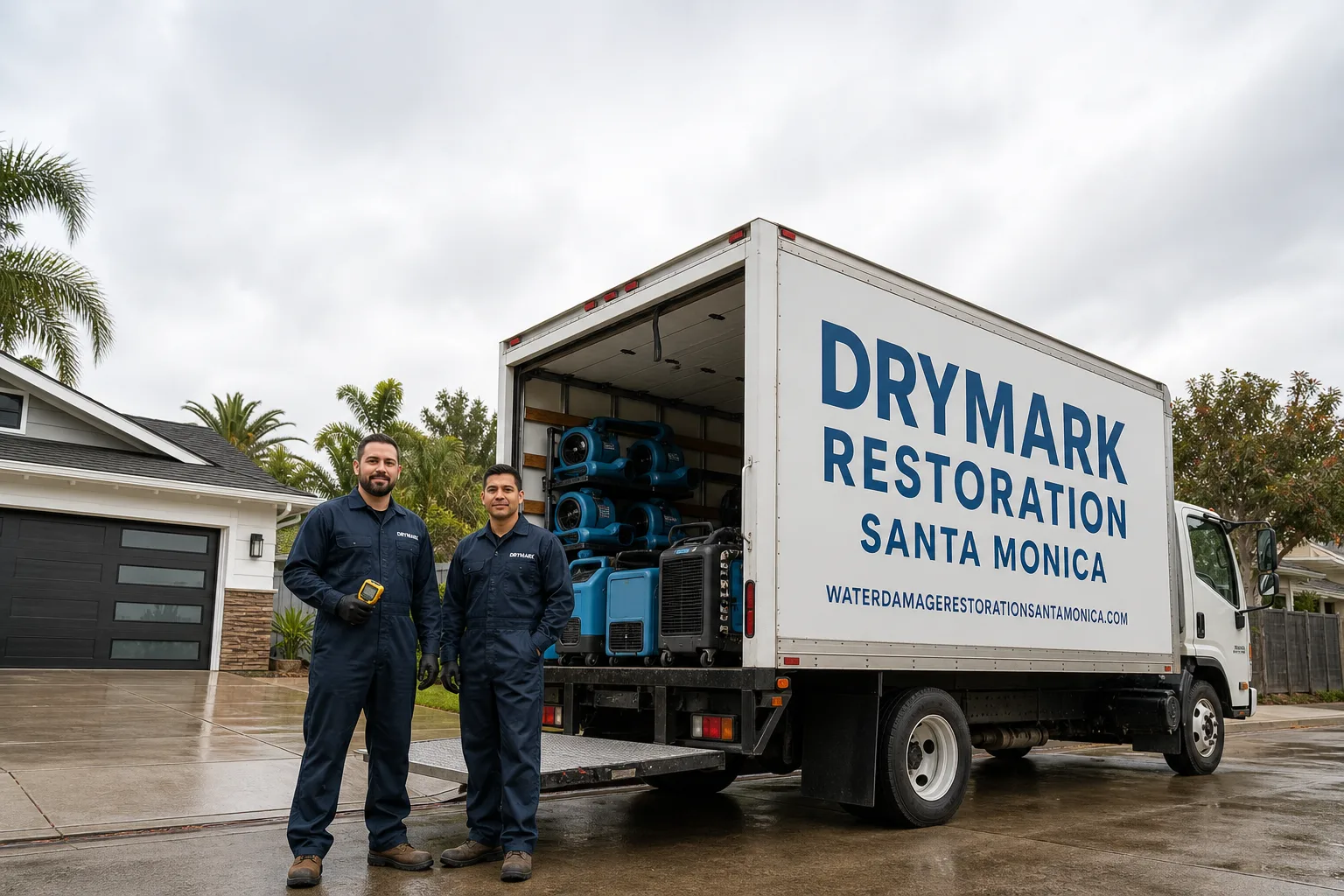
Free visual inspection and a written scope of work before any mitigation begins - photos, moisture readings, and drying logs go in your claim file
The scope we write is the scope we bill. Anything new gets shown to you, in writing, before we touch it.
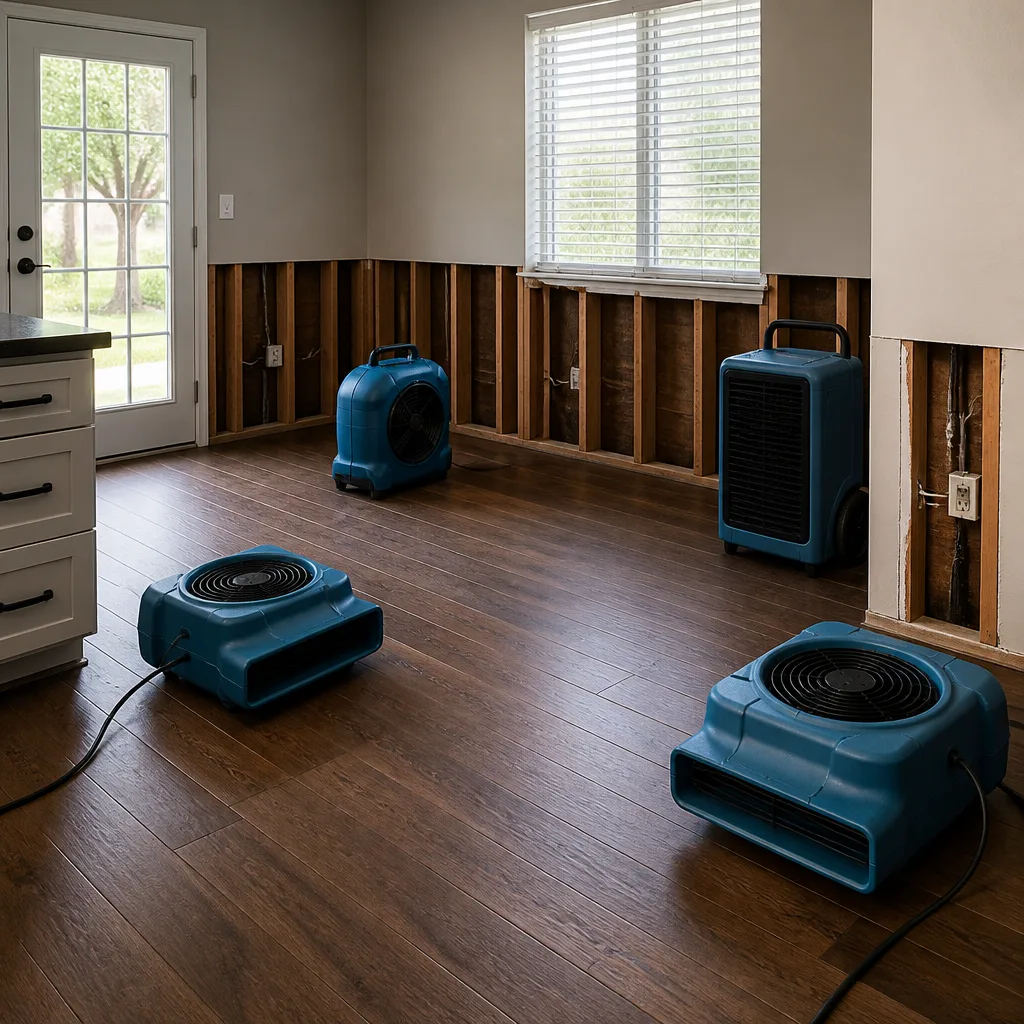
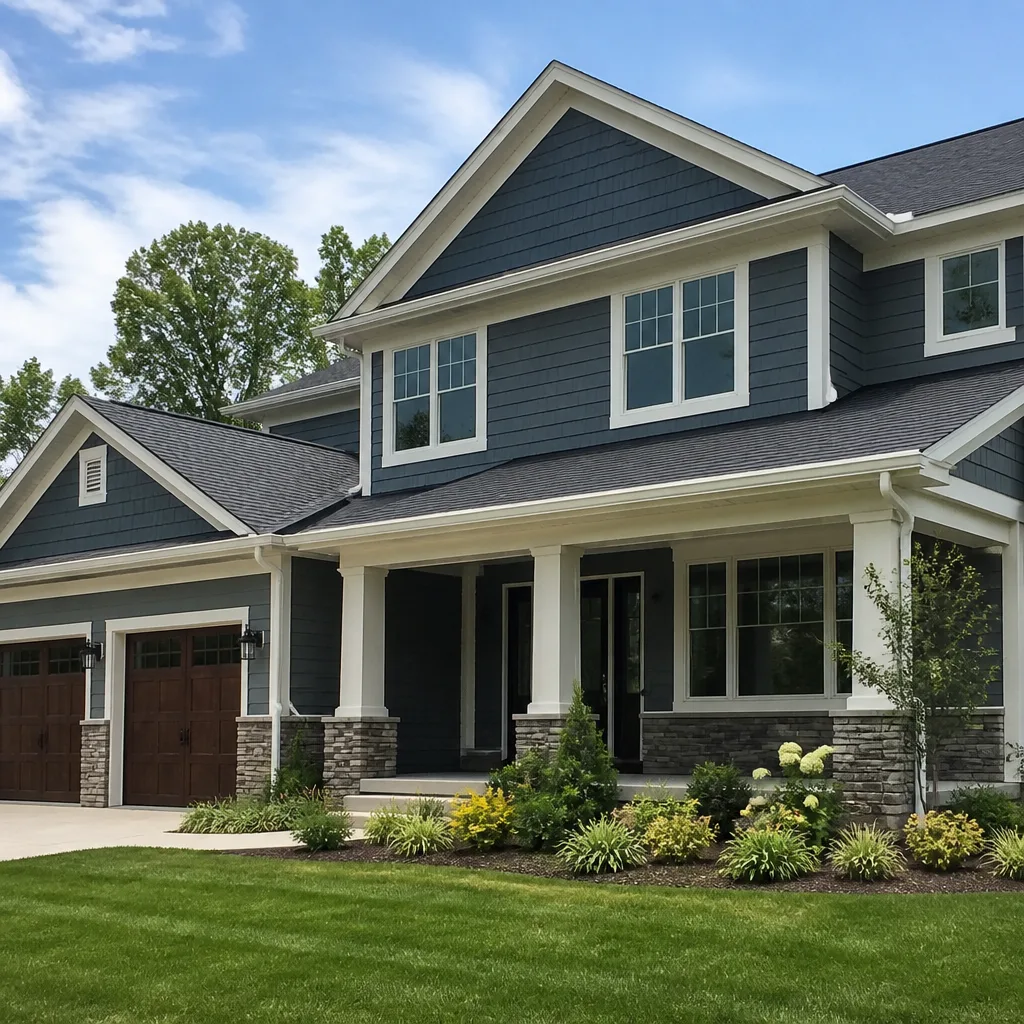
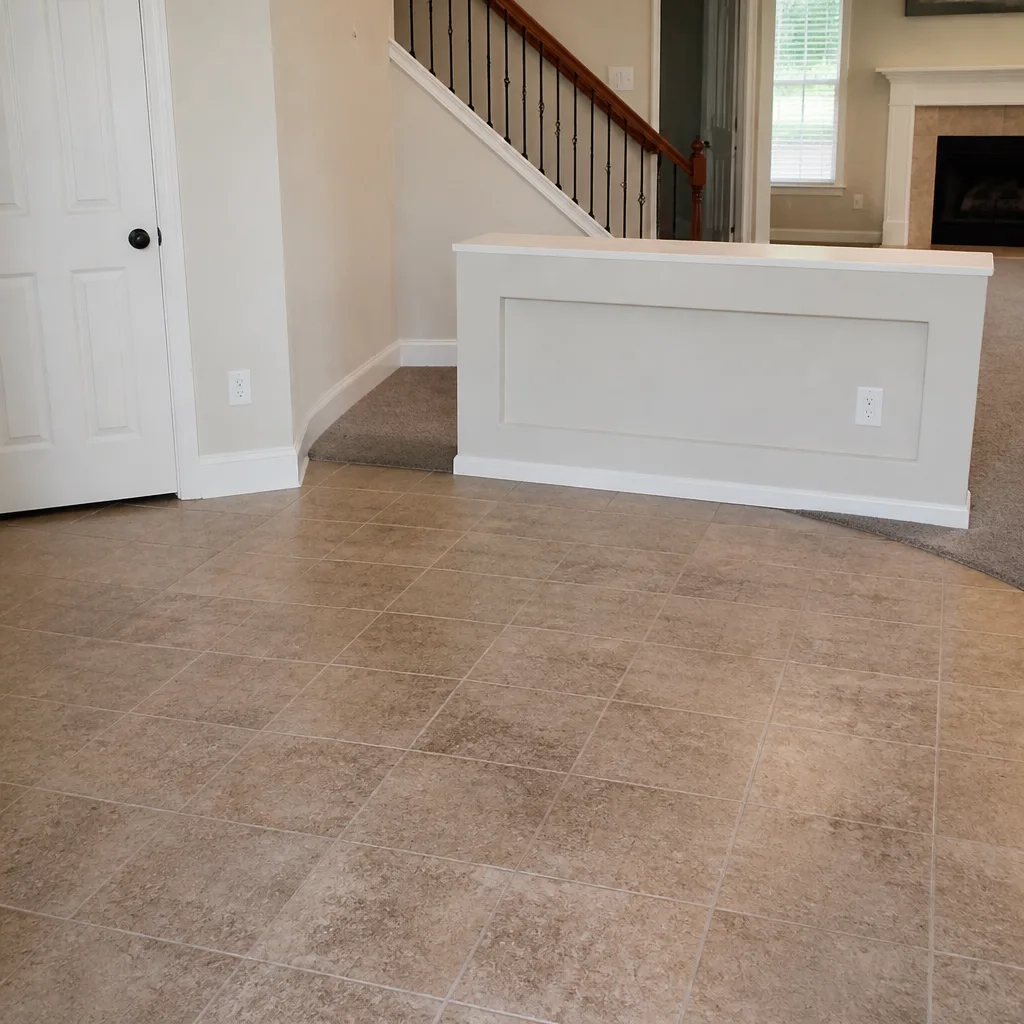
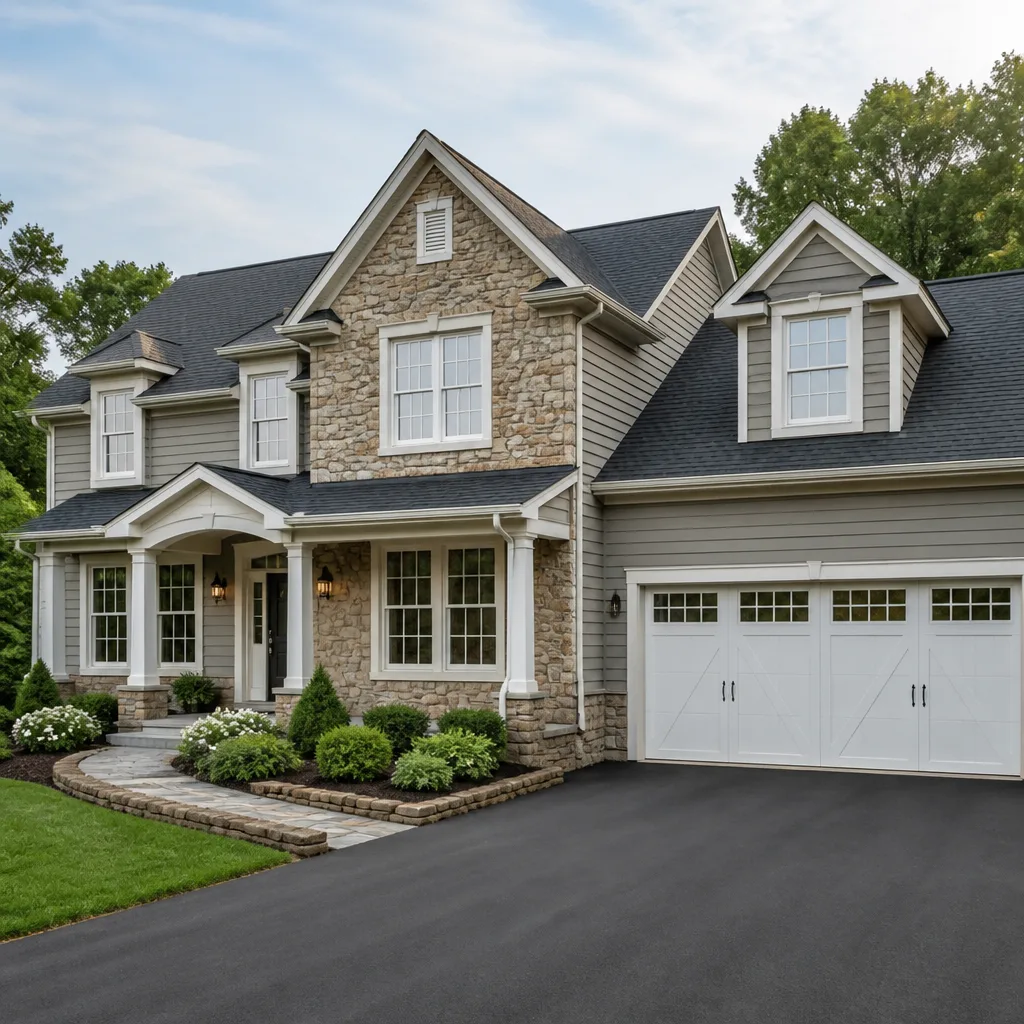
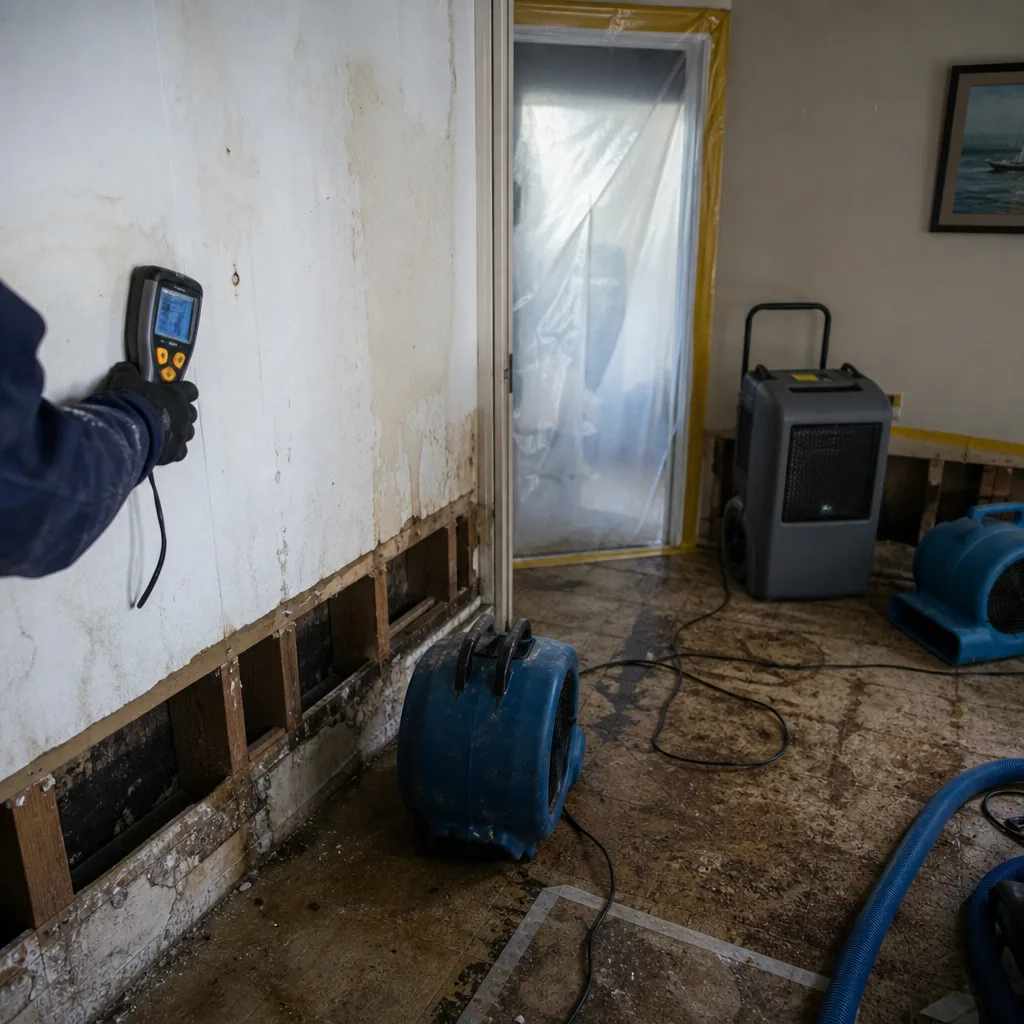 Before
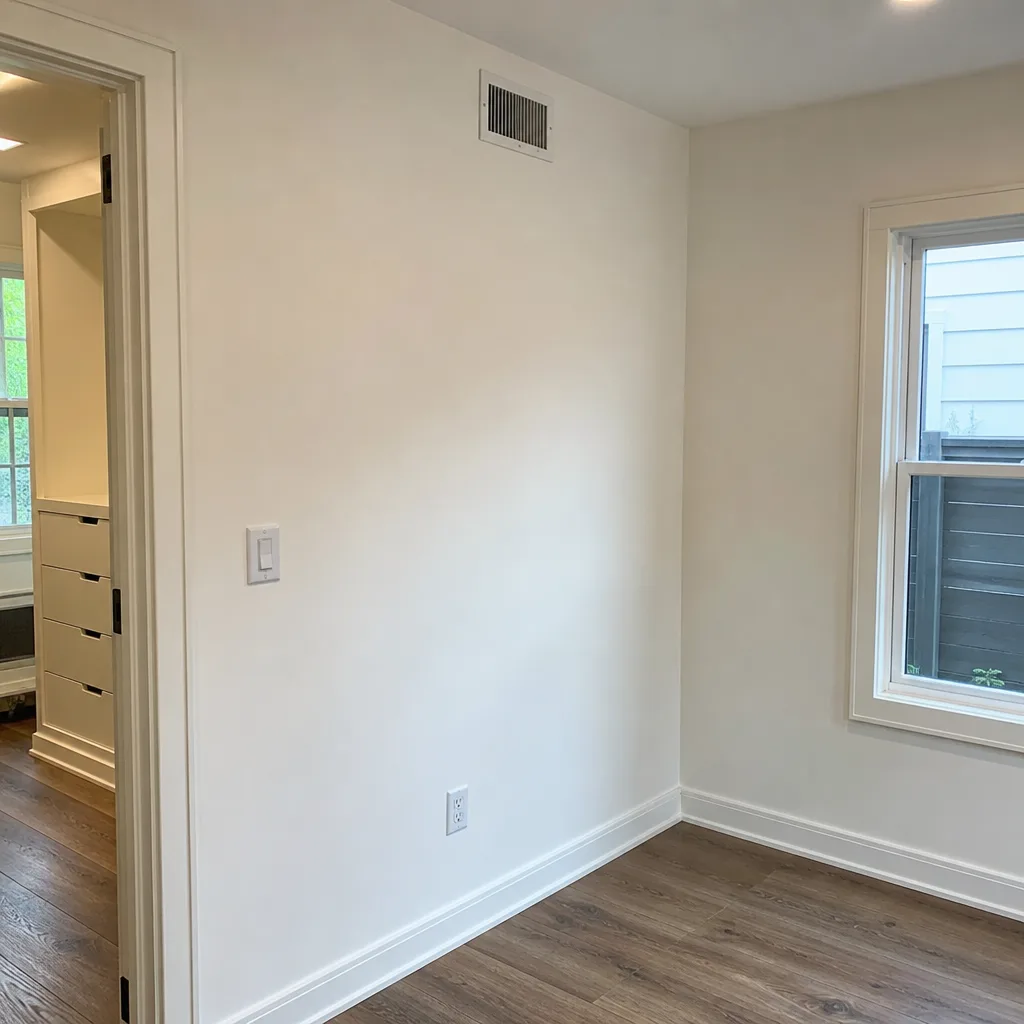 After
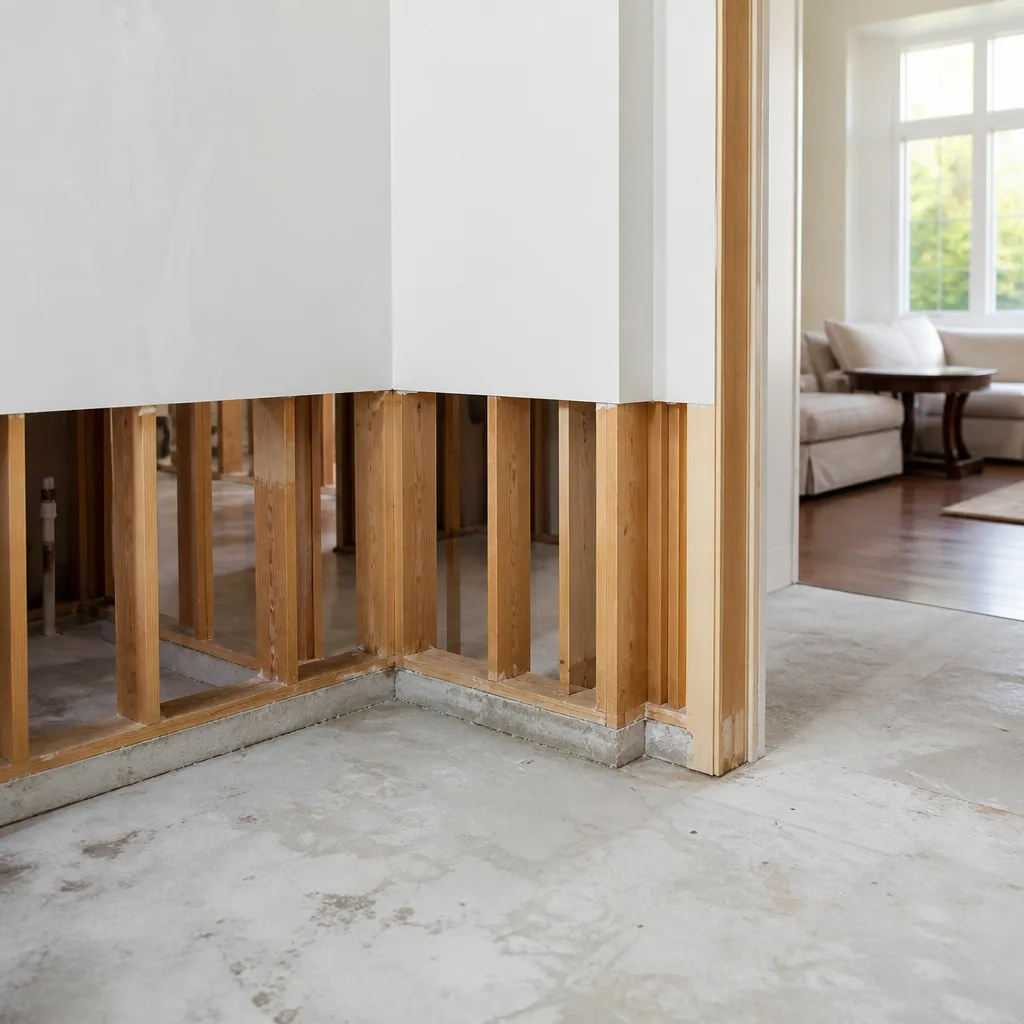
After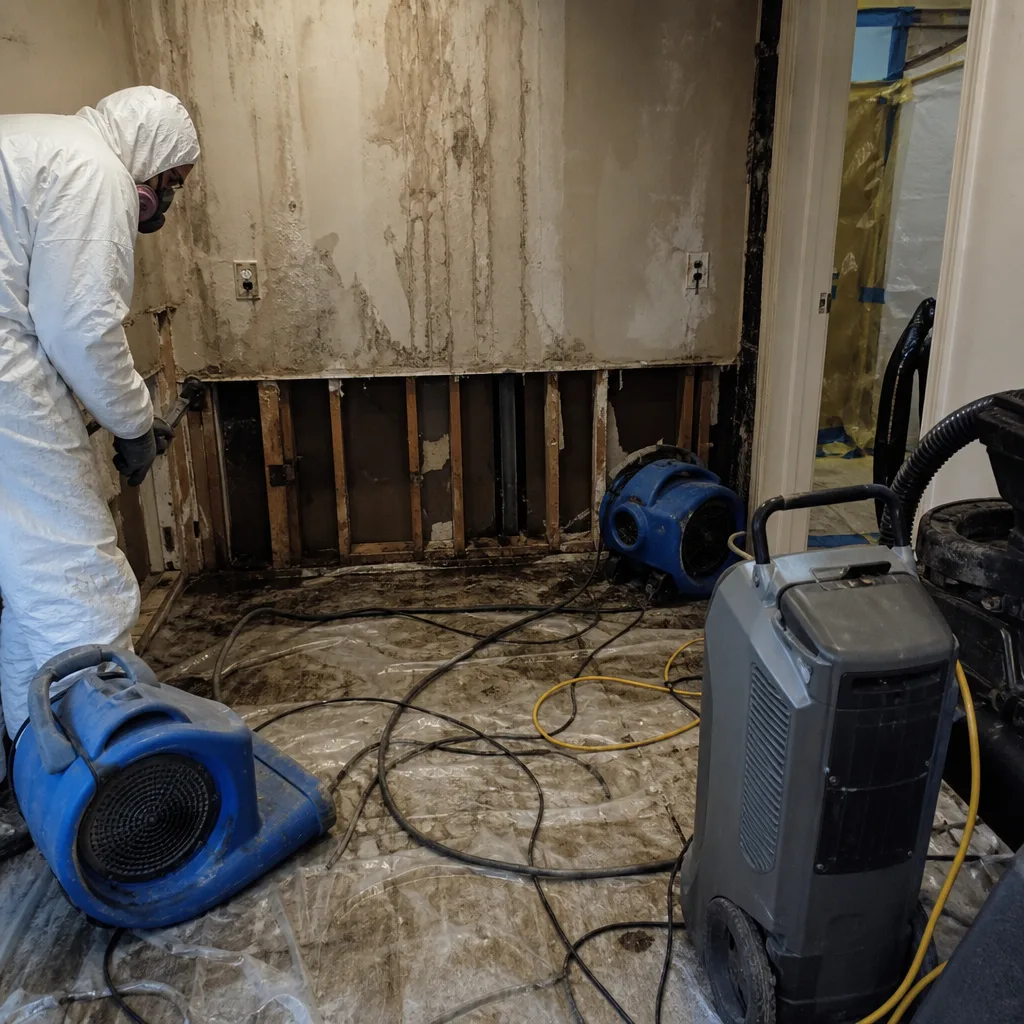 Before
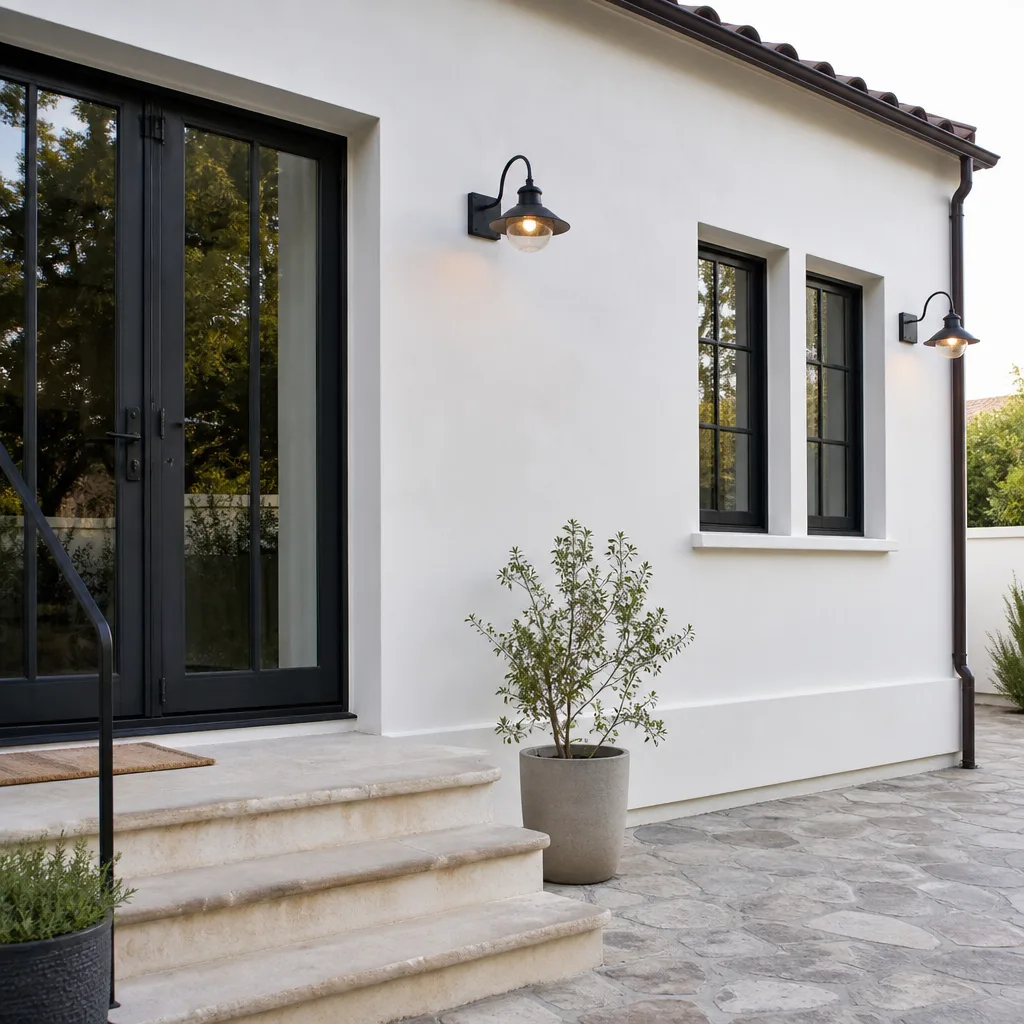 After
After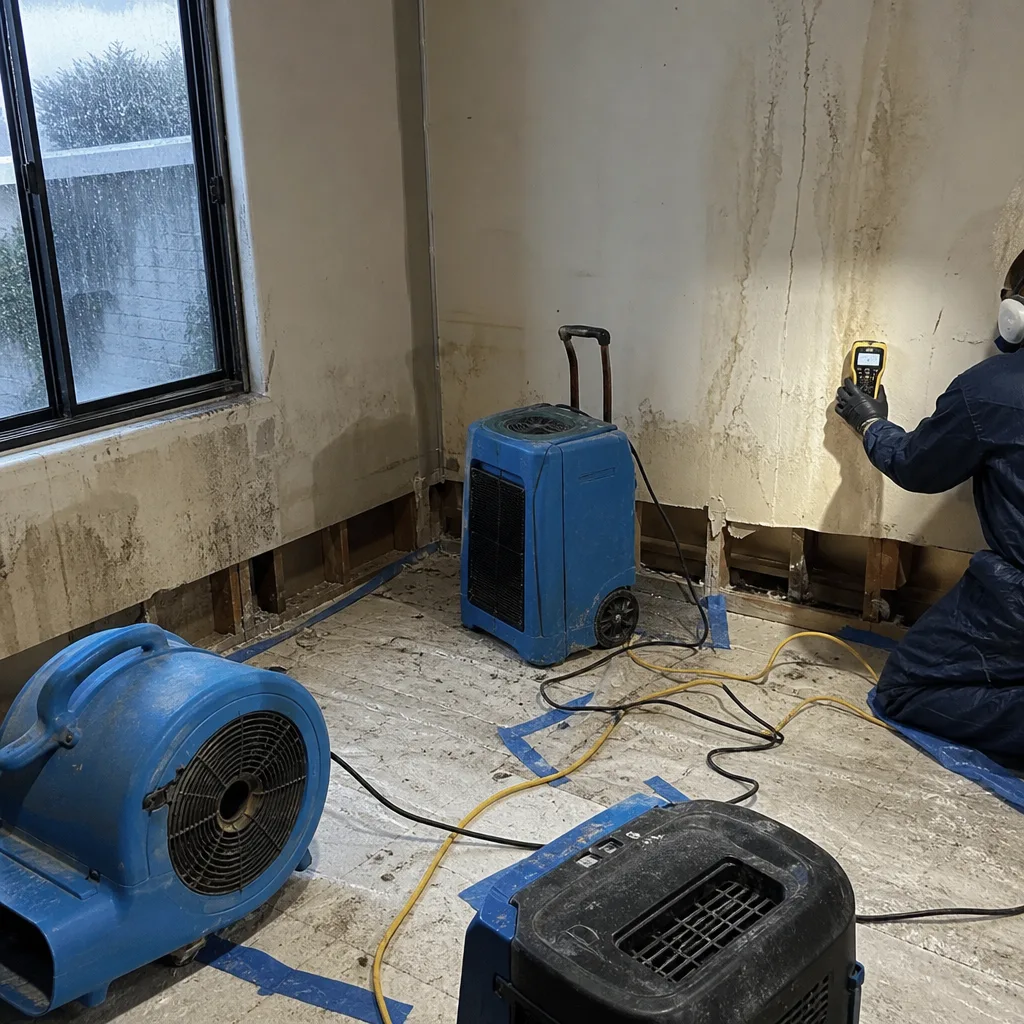 Before
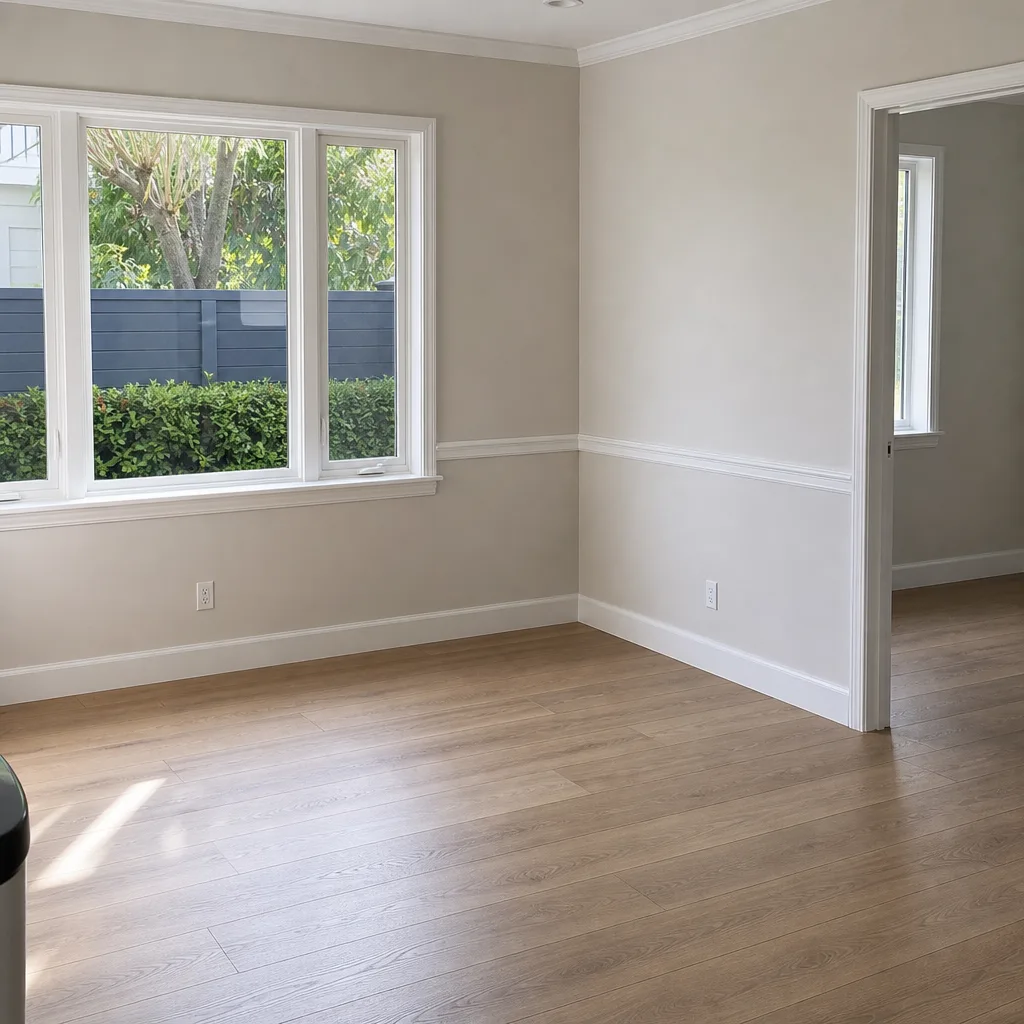 After
AfterFast, Reliable Mold Remediation Across Topanga
Mold remediation in Topanga typically runs $2,800-$7,500 for a standard residential job, with full-service inspection, containment, removal, and air quality restoration completed over 3-7 days depending on canyon access. Because Topanga Canyon Boulevard closes during post-fire mudslides and red-flag warnings, our crews pre-stage Dri-Eaz and Phoenix drying equipment inside the canyon when conditions demand it - so we’re already nearby when you call. Our Los Angeles office coordinates dispatch directly to Topanga properties, and a live person answers every call at (213) 816-0810, 24 hours a day, 7 days a week.
We’ve restored more than 12,000 homes since 2011, every one with a written price before work started and a photo record on every visit. In Topanga, that documentation matters even more than usual. The compound fire-then-flood cycle here - chaparral fires strip canyon slopes bare, winter rains push ash-laden debris and mud through partially burned structures - means we routinely find layered damage: fire char, smoke contamination, and subsequent water or mud intrusion in the same building. Mold doesn’t wait for the road to reopen. Our Mold Remediation team plans for that reality.
Why DryMark Restoration Santa Monica Is Topanga’s Preferred Mold Remediation Company
Topanga homeowners measure contractors by what they can document, not by how friendly they sound on the phone. We’re independently owned and operated under The Haven Standard, founded in 2011 by a former claims adjuster who built the company around the documentation gap that costs homeowners their insurance claims. That origin shapes how we work in Topanga: every job gets a written scope and price before anyone starts work, every visit produces a dated photo record, and every invoice includes the moisture logs and psychrometric data - temperature, relative humidity, vapor pressure differential - that turn restoration bills into payable claims.
Our response time to Topanga is coordinated from our Los Angeles office, with crews familiar with canyon access patterns, seasonal closure risks, and the specific building types common here. We know the 1960s wood-frame cabins off Old Topanga Road, the custom hillside builds with owner-built additions, and the properties still running private septic systems that complicate water-damage scoping. When Topanga Canyon Boulevard is open, we can typically have a technician on-site for assessment within hours. When it’s closed, our pre-staged equipment is already inside the canyon.
We offer a Free Second Opinion on any competitor’s written estimate - bring us another company’s scope and we’ll review it at no charge. And every job is covered by our 365-Day Done Right Promise: if it’s not done right, we make it right. That’s Haven Standard, Clause 3, and it’s stamped on every contract, not offered as a verbal afterthought.
Our Mold Remediation Services in Topanga
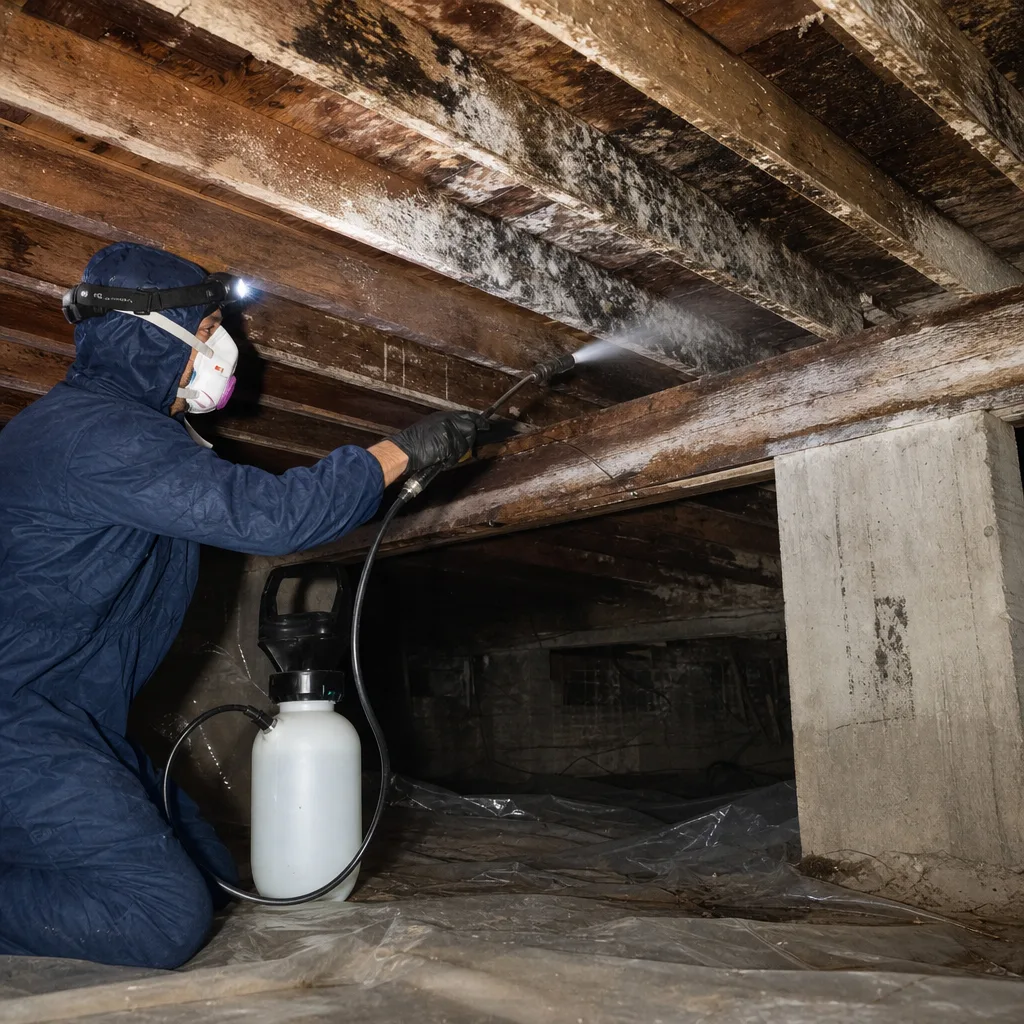
Mold Inspection & Testing
A proper mold inspection in Topanga starts with understanding how water got in - and in this canyon, that often means tracing fire-then-flood damage through unconventional building envelopes. We use moisture meters, thermal imaging, and air sampling to map contamination, but we also inspect for the hidden moisture reservoirs that 1960s cedar shake roofs and original single-pane windows create. Our inspection reports include affected square footage, material classifications, and a written scope with line-item pricing before any work begins. Haven Standard, Clause 1.
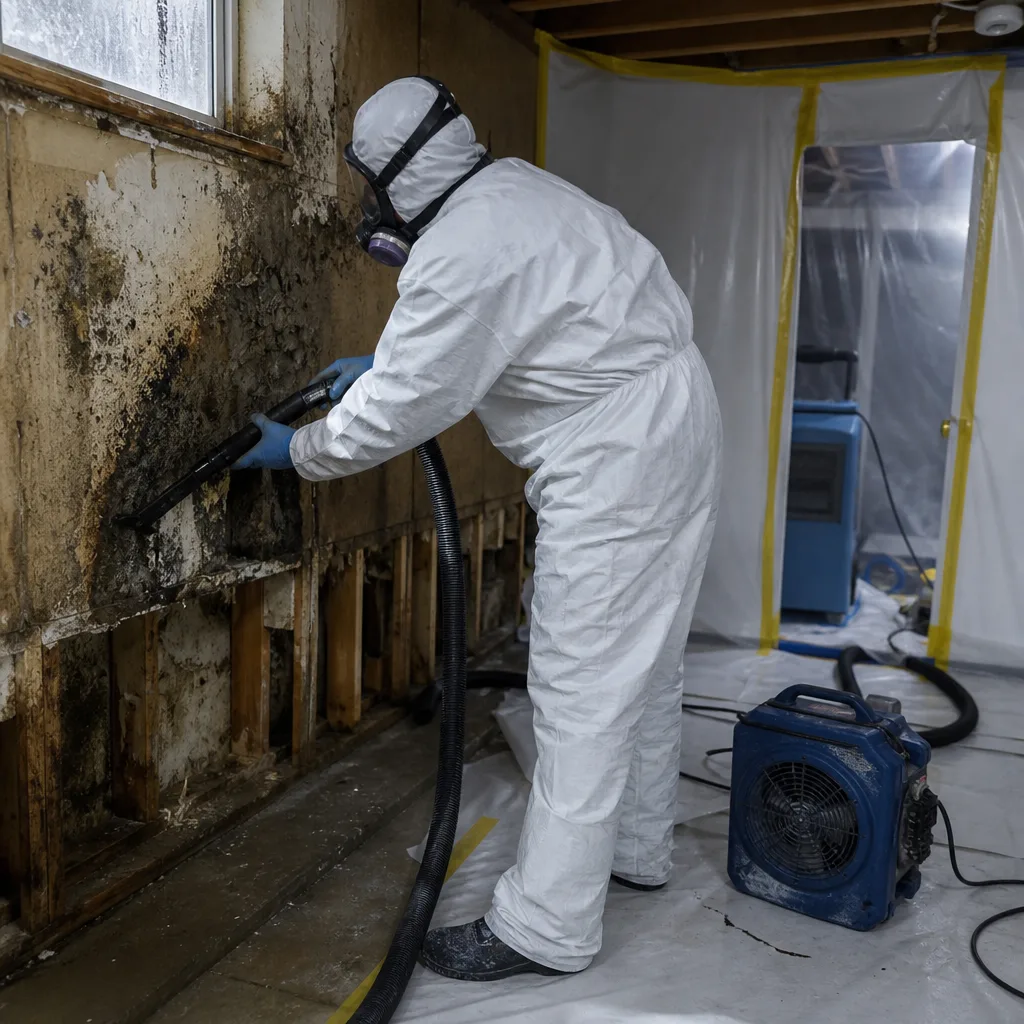
Mold Removal
Removal in Topanga frequently means working in structures that have already sustained fire and water damage, where mold is established in wallboard, framing, and insulation that may also carry smoke residue. We build containment barriers, establish negative air pressure with HEPA filtration, and remove contaminated materials by trade-standard classification - Category 1, 2, or 3 depending on the water source. All debris is documented by photo and disposed of per California hazardous materials protocols. The written price covers removal, disposal, and surface antimicrobial treatment; reconstruction is scoped separately if needed.
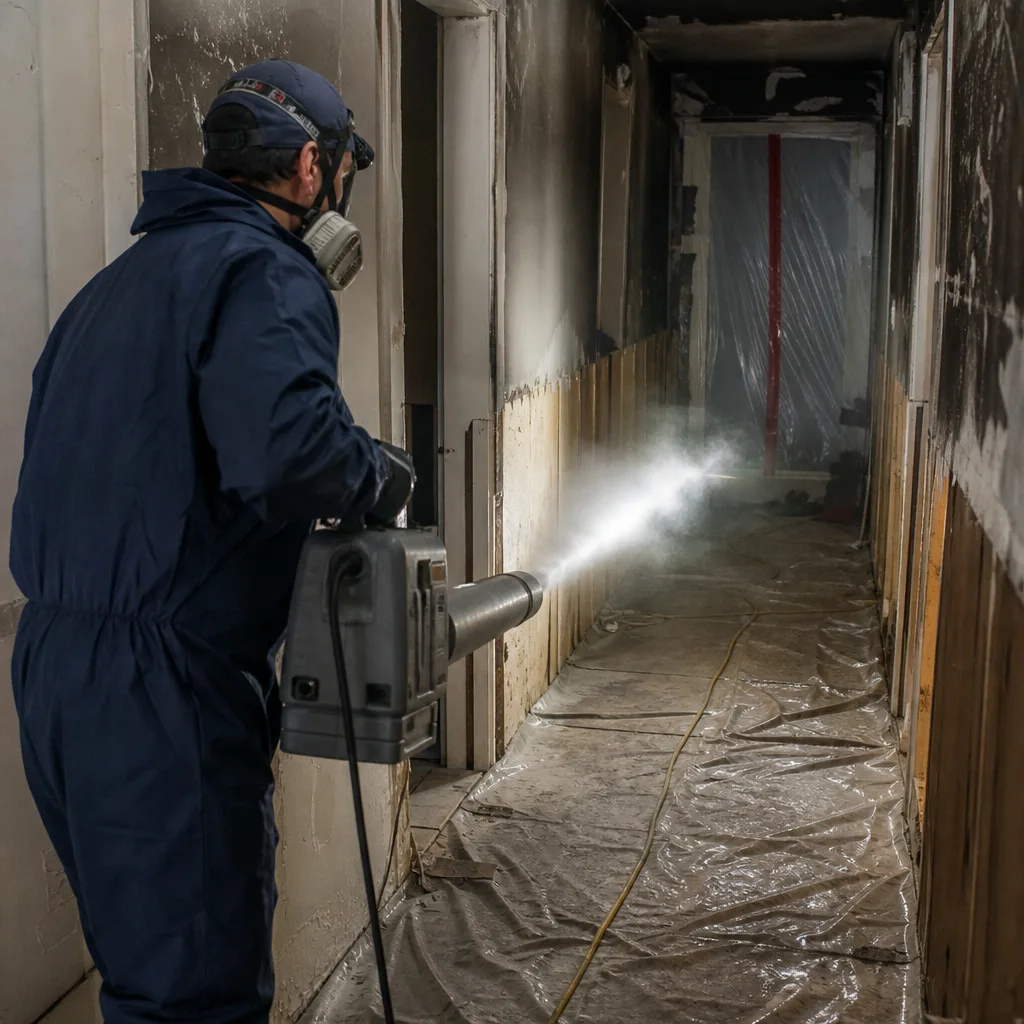
Black Mold Remediation
Stachybotrys and other toxigenic molds require enhanced containment and PPE protocols, but the core difference is documentation: insurers scrutinize black mold claims heavily, and incomplete photo records or missing moisture logs are common reasons for denial. Our black mold jobs in Topanga include full-room containment, air scrubbers running continuously, sealed disposal, and a post-remediation clearance test with lab results included in your file. Every step is photographed and logged.
Air Quality Restoration
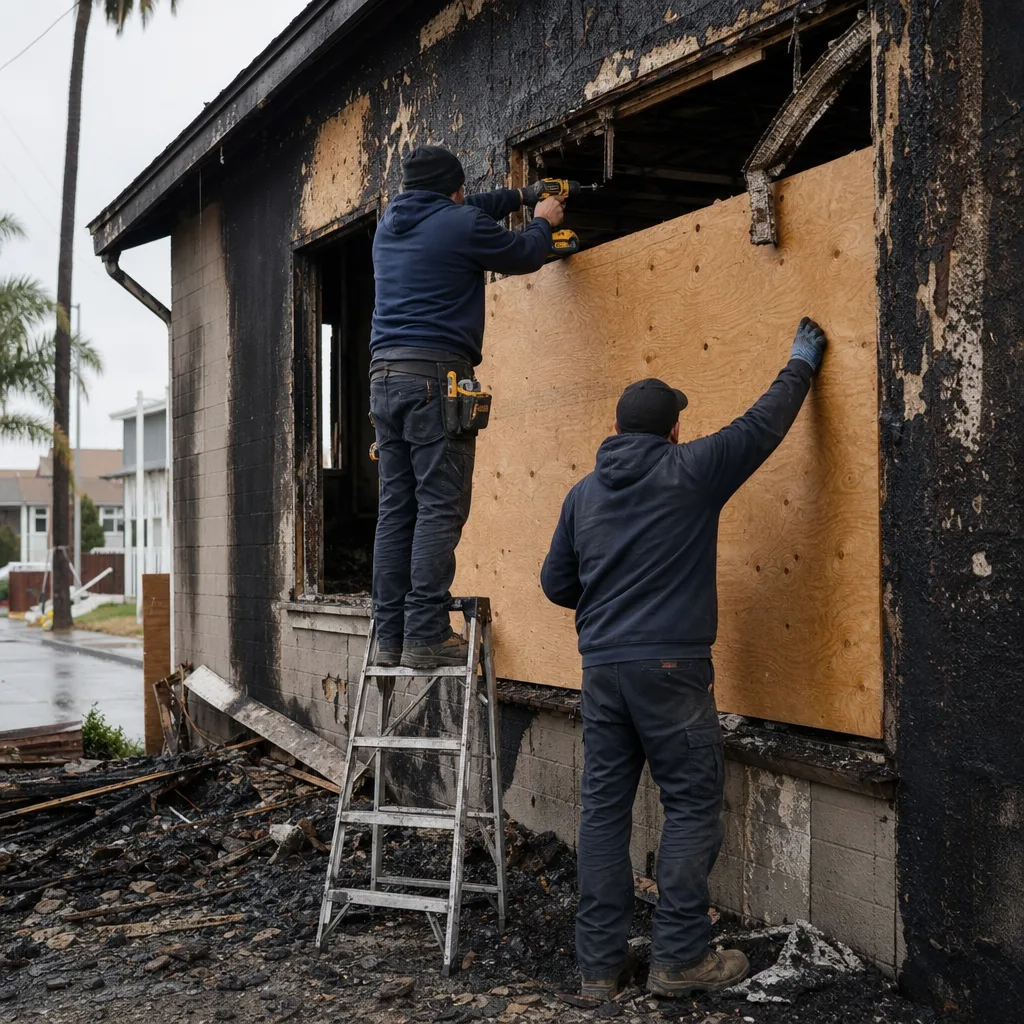
After mold removal, Topanga’s tight hillside cabins - many with unvented crawl spaces and owner-built additions that bypassed standard HVAC design - need more than a surface wipe. We deploy HEPA air scrubbers and calculate air changes per hour based on room volume, then verify results with post-remediation air sampling. For properties affected by the compound fire-then-flood cycle, we also address residual smoke particulates and ash that standard mold protocols might miss. The goal is documented, measurable air quality, not just “fresh-smelling.”
Moisture & Humidity Control
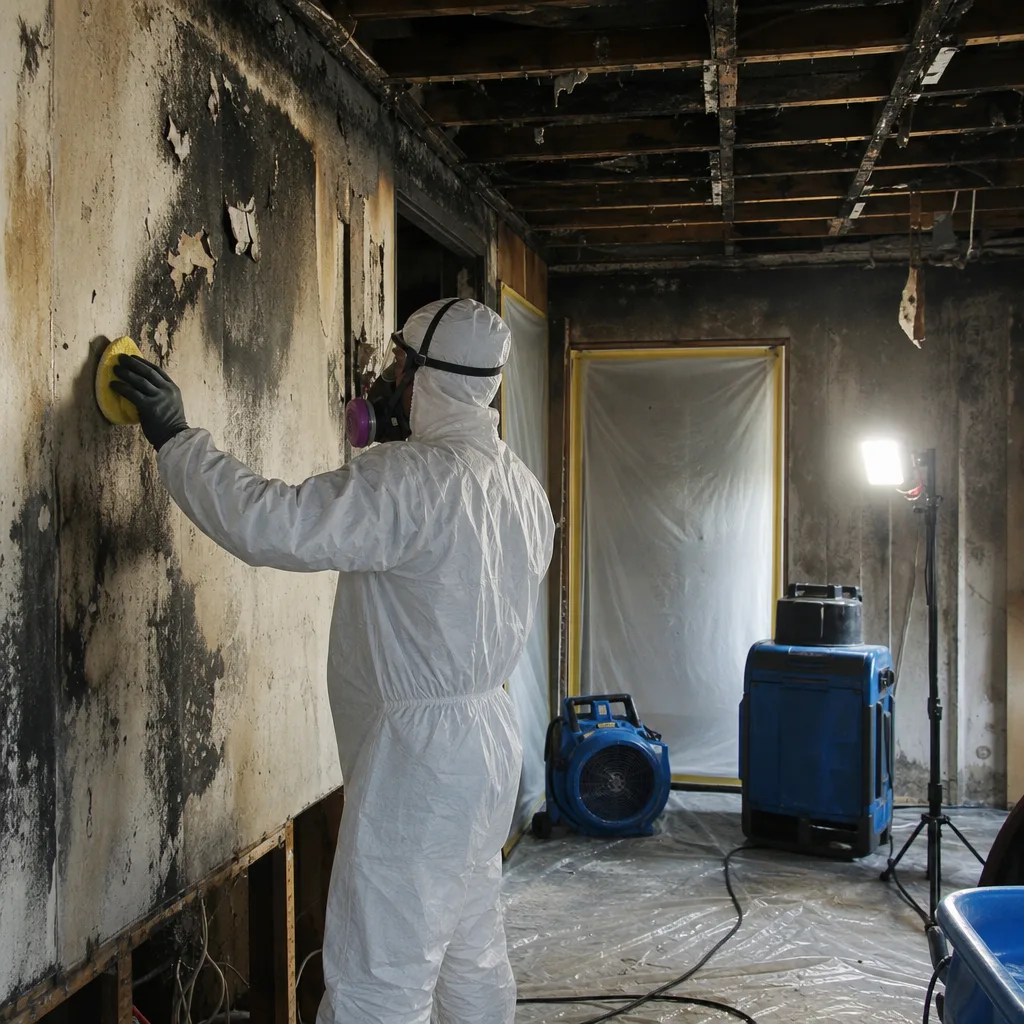
Psychrometric data drives every drying decision we make. In Topanga, where Santa Ana winds can drop humidity abruptly and winter storms can saturate structures for days, we monitor vapor pressure differential - the force that moves moisture from wet materials into dry air - and adjust our Phoenix and XPOWER dehumidifiers accordingly. Daily drying logs track temperature, relative humidity, and specific humidity at each job site. These logs are included in your documentation package and submitted with insurance claims.
Crawl Space Treatment
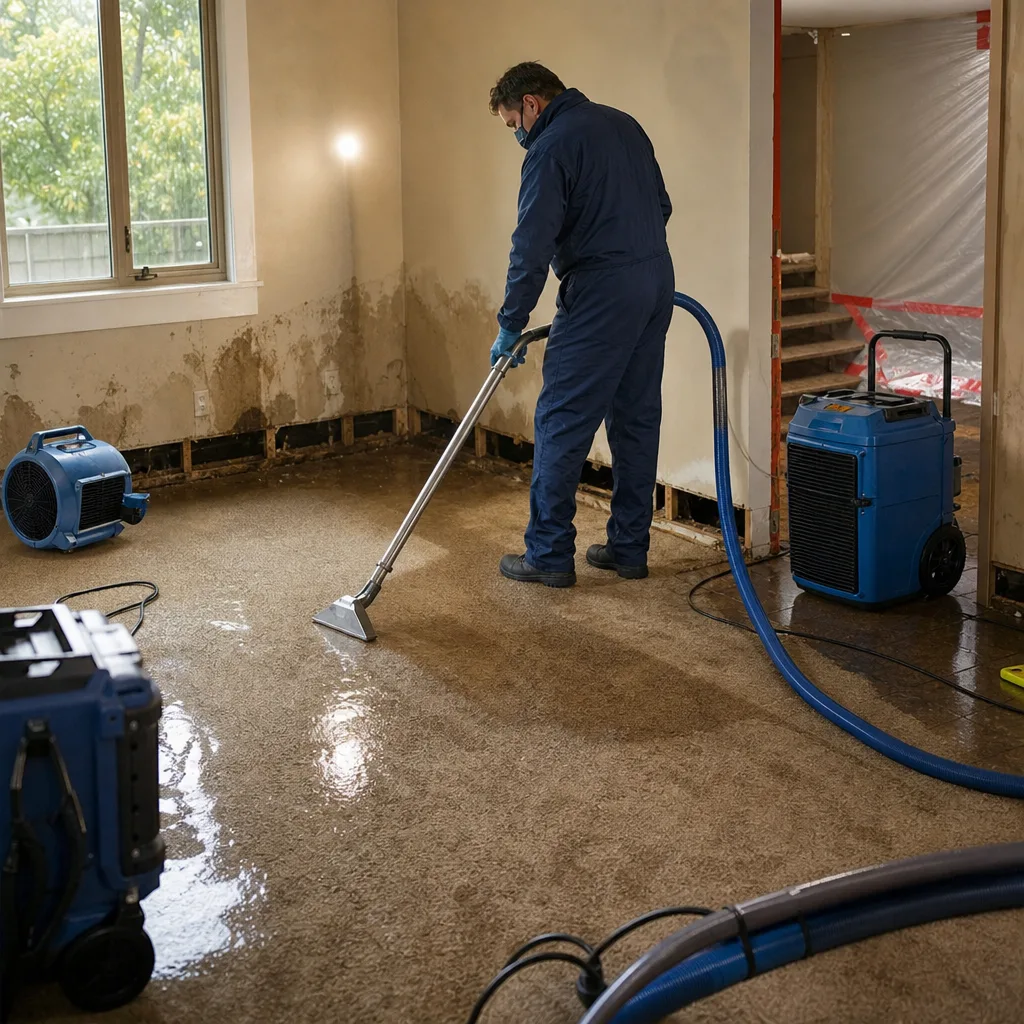
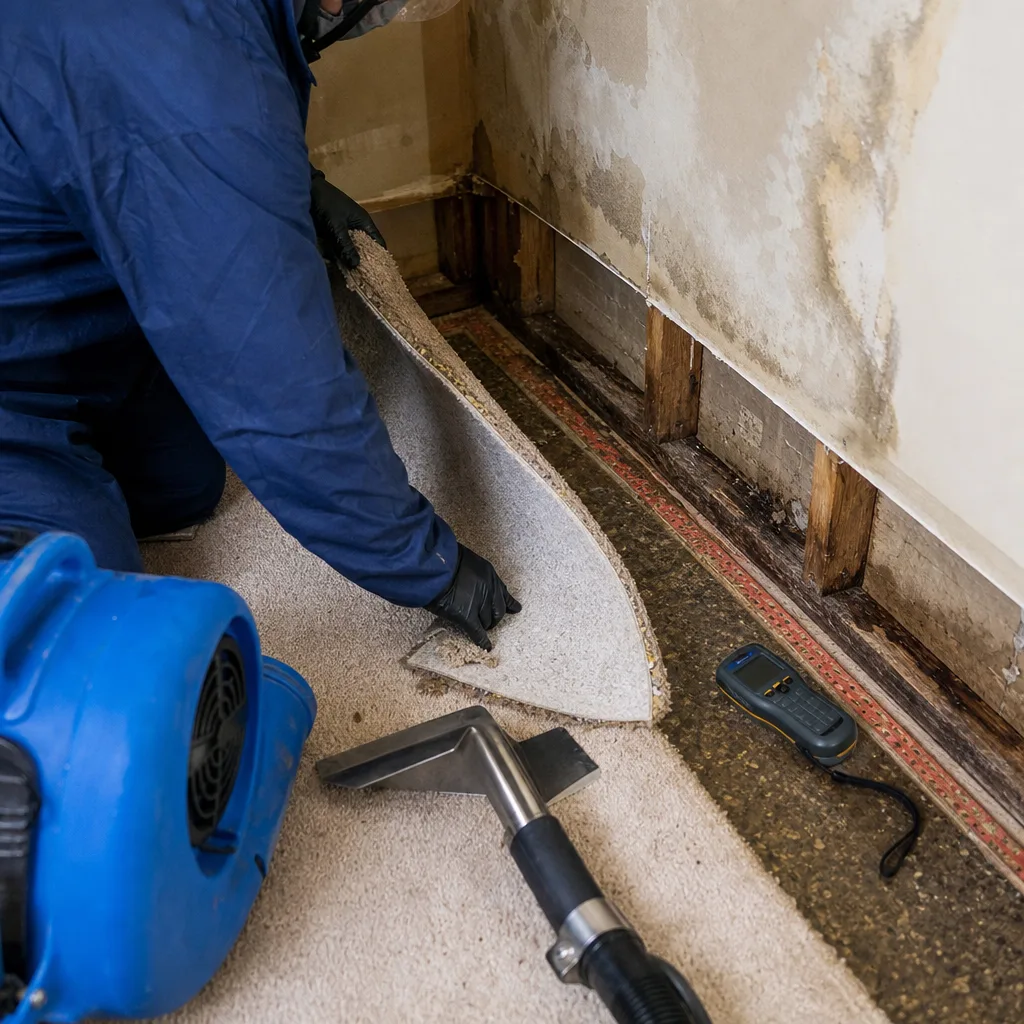
Topanga’s steep lots and private septic systems mean crawl spaces are often unvented, improperly drained, and inaccessible without specialized equipment. We’ve treated crawl spaces beneath 1960s cabins where Category 3 water from firefighting runoff migrated under the foundation and sat undetected for weeks. Our process: full moisture mapping, vapor barrier assessment, targeted drying with Injectidry systems, and antimicrobial treatment. If the crawl space needs structural drying beyond surface treatment, we scope it in writing before cutting access.
What happens when you call
- 1
A real person answersNo phone trees - you reach a local pro.
- 2
You get an upfront price rangeHonest numbers before anyone is dispatched.
- 3
A background-checked tech heads outLicensed & insured, dispatched right away.
- 4
You approve before work beginsNothing starts until you say go.
 Before
 After
AfterTrusted Brands We Service in Topanga
Our equipment fleet includes professional-grade drying systems from Dri-Eaz, Phoenix, and XPOWER - brands that produce the documented performance data insurers expect to see on restoration invoices. We stock HEPA filtration, dehumidification, and air movement equipment sufficient for multiple concurrent Topanga jobs, and we maintain pre-staged reserves inside the canyon during red-flag periods. B-Air units supplement our standard fleet for smaller containment zones in tight hillside cabins. Every machine is logged by serial number and runtime for your job file.
Common Mold Remediation Problems We See in Topanga Homes
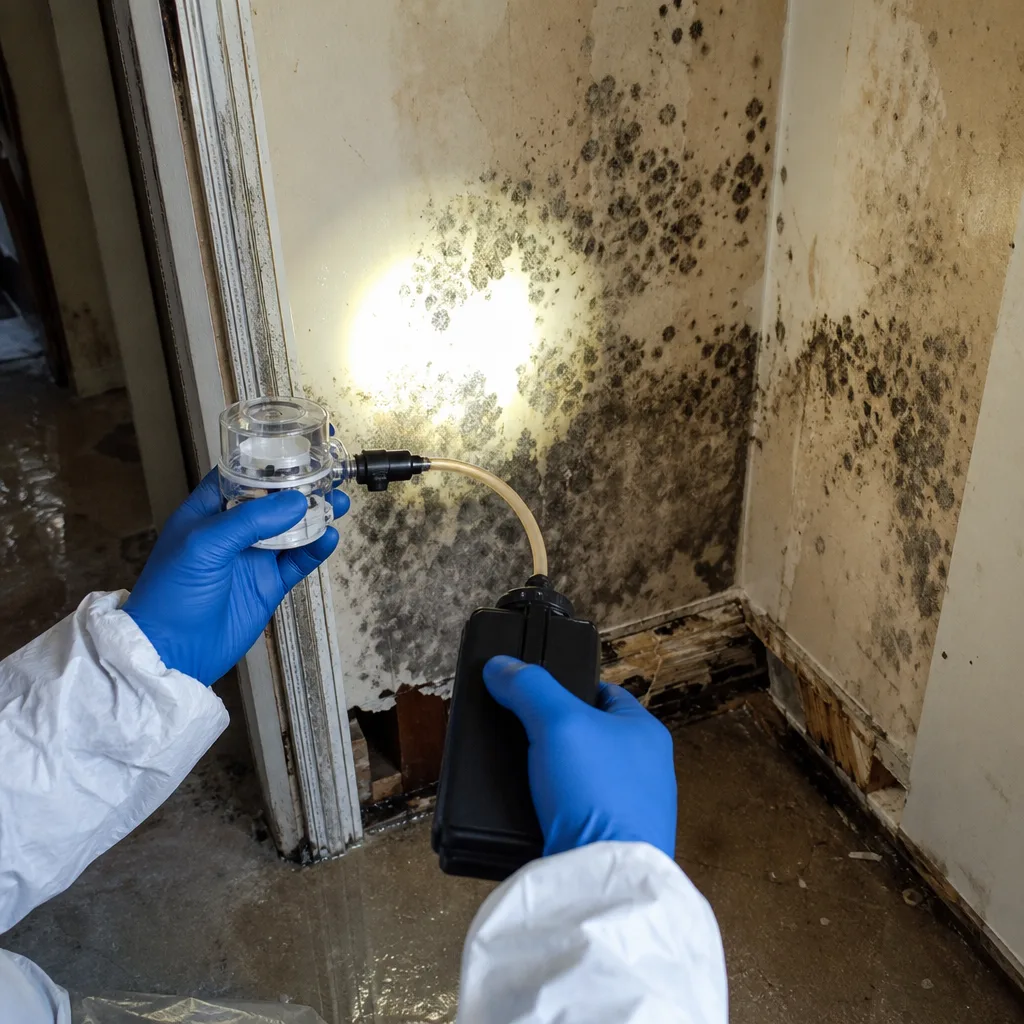
- Mold established before crews can access the property. Topanga Canyon Boulevard closures after fire or mudslide events routinely last 24-48 hours - the exact window in which mold growth begins on wet drywall. By the time access clears, visible colonization is often already present, requiring more invasive removal than early mitigation would have needed.
- Hidden moisture in legacy building materials. Cedar shake roofs, wood siding, and original single-pane windows in 1960s cabins absorb smoke and moisture during fire-then-flood events. Moisture mapping that stops at interior surfaces misses these reservoirs, which re-feed mold after a “completed” dry-out.
- Unpermitted additions with no drainage detailing. Owner-built structures on steep Topanga lots frequently lack proper flashing, vapor barriers, or foundation drainage. Category 2 or 3 water from firefighting or debris flows migrates into wall cavities and unvented spaces where standard air movers cannot reach without invasive containment and pack-out.
- Compound contamination: mold plus smoke/ash. The fall-fire, winter-flood cycle leaves structures with simultaneous mold, smoke, and ash contamination. Cleaning for one without addressing the others leaves odor and health hazards that resurface, and insurers may dispute scope if documentation doesn’t clearly separate the perils and their required treatments.
Pricing for Mold Remediation in Topanga, CA
Mold inspection and testing in Topanga typically runs $350-$650 for a standard residential assessment, including moisture mapping, air sampling, and a written scope with line-item pricing. Mold removal and remediation for a contained area - single room, limited wall cavity - generally falls between $2,800 and $4,500. Whole-home remediation involving multiple rooms, crawl space treatment, and air quality restoration ranges from $5,500 to $7,500, with complex hillside properties or extensive fire-then-flood compound damage occasionally exceeding that range.
Factors that affect your specific price: affected square footage, material type and depth of contamination, accessibility constraints on steep lots, whether the structure also carries fire or smoke damage requiring separate scope, and whether crawl space or HVAC treatment is needed. We deliver a written price before any work starts, every time, with no scope-creep additions once the crew is inside. Haven Standard, Clause 1. Estimates are free, and we offer a Free Second Opinion on any competitor’s written estimate.
| Service | Typical Range in Topanga |
|---|---|
| Mold Inspection & Testing | $350 - $650 |
| Contained Mold Removal (single area) | $2,800 - $4,500 |
| Whole-Home Remediation + Air Quality | $5,500 - $7,500 |
| Crawl Space Treatment (add-on) | $1,200 - $2,800 |
We Also Serve Cities Near Topanga
Our crews work throughout the Santa Monica Mountains corridor and adjacent communities. We regularly handle Mold Remediation in Topanga and nearby Pacific Palisades, Sherman Oaks, Santa Monica, and Venice. Each market has distinct building stock and climate patterns, but our documentation-first approach - written price, photo record, daily moisture logs - applies consistently across every job.
Serving Topanga, CA - Our Local Coverage Area
We’re based in the Topanga area and know this community well. Use the map below to see our service coverage - if you’re nearby, we can almost certainly help.
FAQs - Mold Remediation in Topanga
Topanga Canyon Boulevard closures after fire or mudslide events can lock crews and equipment out of the canyon for 24-48 hours - the critical window when mold establishes on wet materials. Even when access is clear, steep lots, unpermitted additions, and private septic systems require more invasive moisture mapping and containment than standard flatland construction. Call (213) 816-0810 for a written timeline with your estimate.
This is the compound fire-then-flood cycle that defines Topanga restoration: chaparral fires strip vegetation from canyon slopes, winter rains send debris flows through partially burned structures, and the combination of firefighting water, mud intrusion, and absorbed smoke residue creates ideal mold conditions in wood-frame cabins with original single-pane windows and cedar shake roofs. We map moisture through all affected layers, not just visible surfaces. Call us for a Free Second Opinion if another company scoped only the mold without addressing the underlying water source.
Yes. Private septic systems in Topanga can fail or backflow during ground saturation events, converting what appears to be Category 2 water into Category 3 - grossly contaminated, requiring more extensive removal and antimicrobial protocols. We test and document water category at the outset; if septic involvement is suspected, we scope accordingly and photo-document for your insurer. The category determination affects both health protocols and claim coverage.
We do. When red-flag warnings issue for the Santa Monica Mountains, we move Dri-Eaz and Phoenix dehumidifiers, air movers, and HEPA scrubbers to pre-arranged staging points inside Topanga Canyon. This practice developed after the 2018 Woolsey Fire, when Boulevard closures kept us from reaching a partially burned cabin off Old Topanga Road for two days while mold established. Pre-staging is available to existing clients and by arrangement for properties in high-risk zones; call to discuss.
Unpermitted additions often lack vapor barriers, proper flashing, or foundation drainage, so water migrates into wall cavities and subfloor spaces that standard drying cannot reach. We start with invasive moisture mapping - sometimes requiring selective demolition to trace the water path - then build containment, remove contaminated materials, and dry structural members with Injectidry systems before antimicrobial treatment and reconstruction scoping. The written price includes all phases; nothing is added once work begins. Haven Standard, Clause 1.
Ready for a written estimate? Call (213) 816-0810 now. A live person answers 24 hours a day, 7 days a week. We’ll schedule a Topanga assessment, deliver a written price before any work starts, and document every visit with a photo record included in your file. Free Second Opinion available on any competitor’s written estimate.
Written by Alicia Brennan, Owner at Back to Dry Restoration, serving Topanga and surrounding communities since 2011.