
Last updated September 23, 2026
Free visual inspection and a written scope of work before any mitigation begins - photos, moisture readings, and drying logs go in your claim file
The scope we write is the scope we bill. Anything new gets shown to you, in writing, before we touch it.
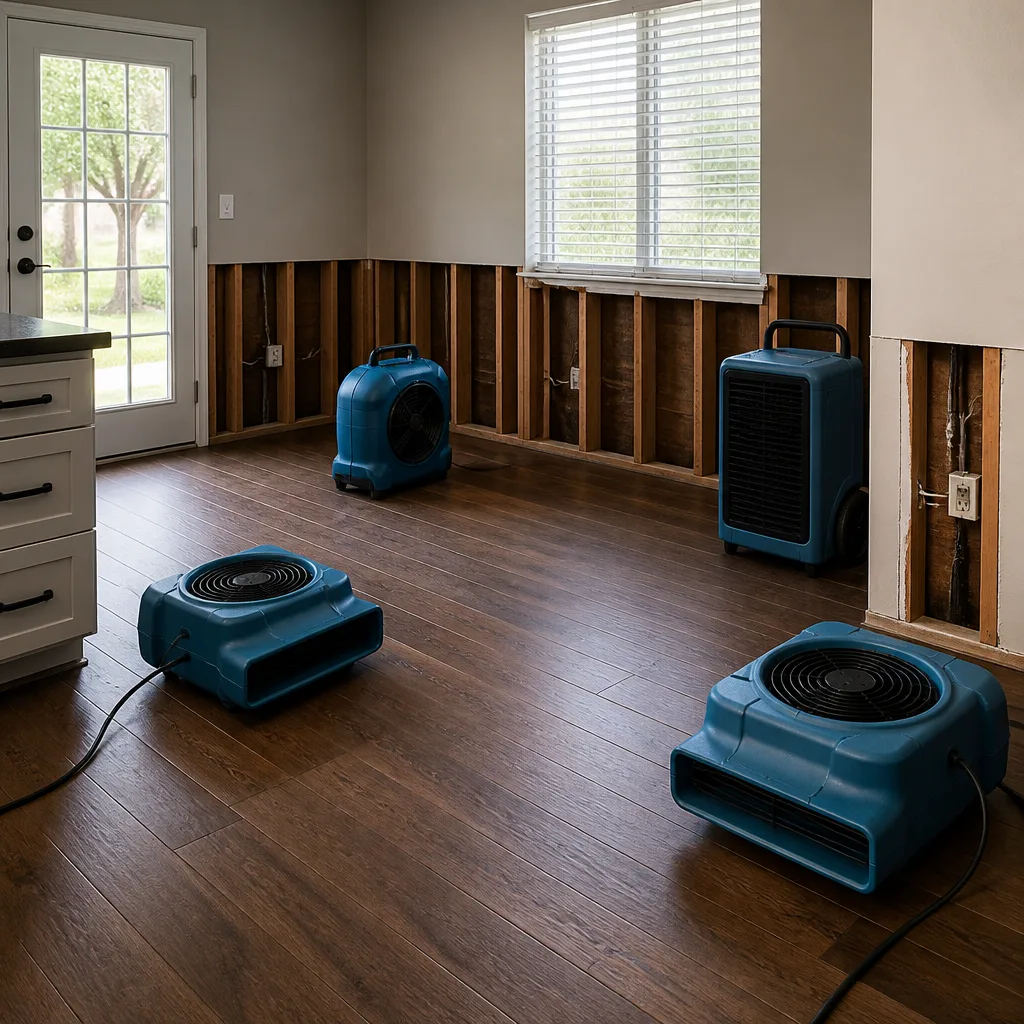
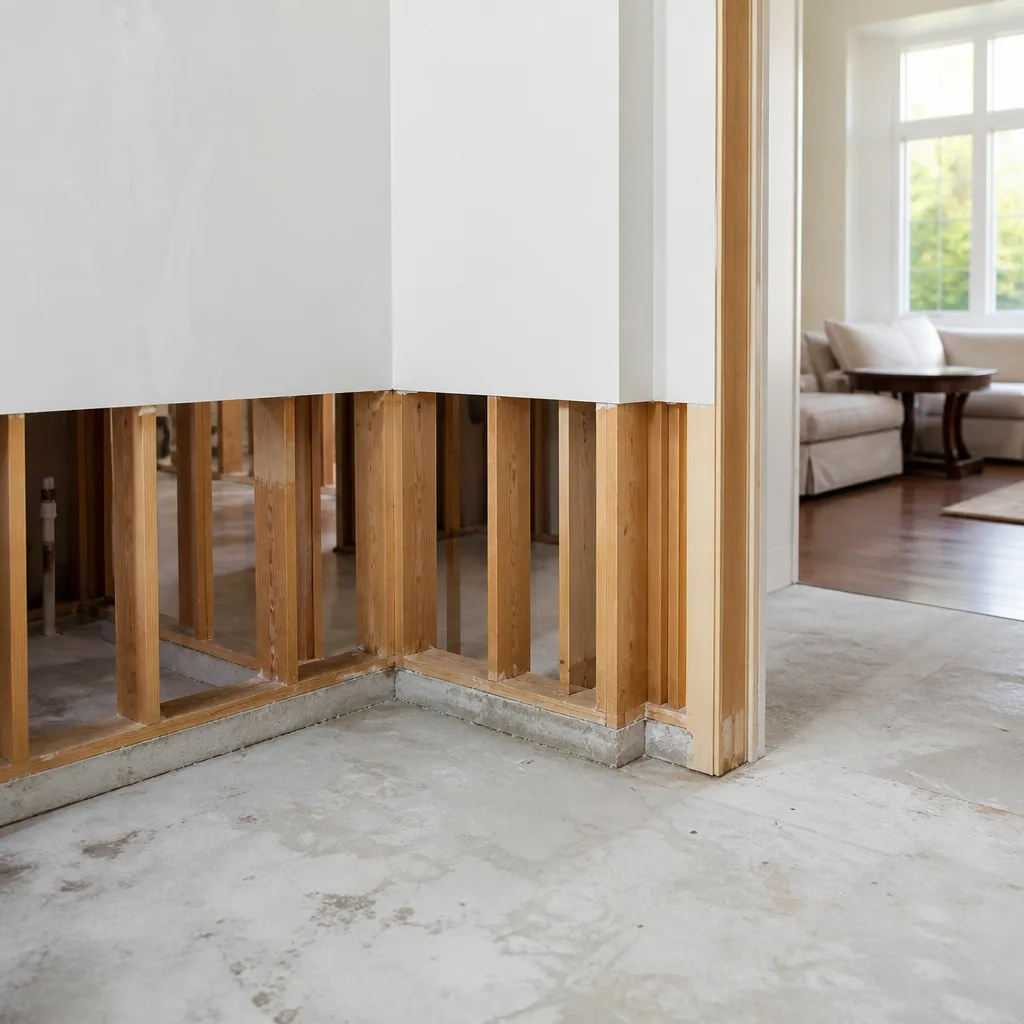

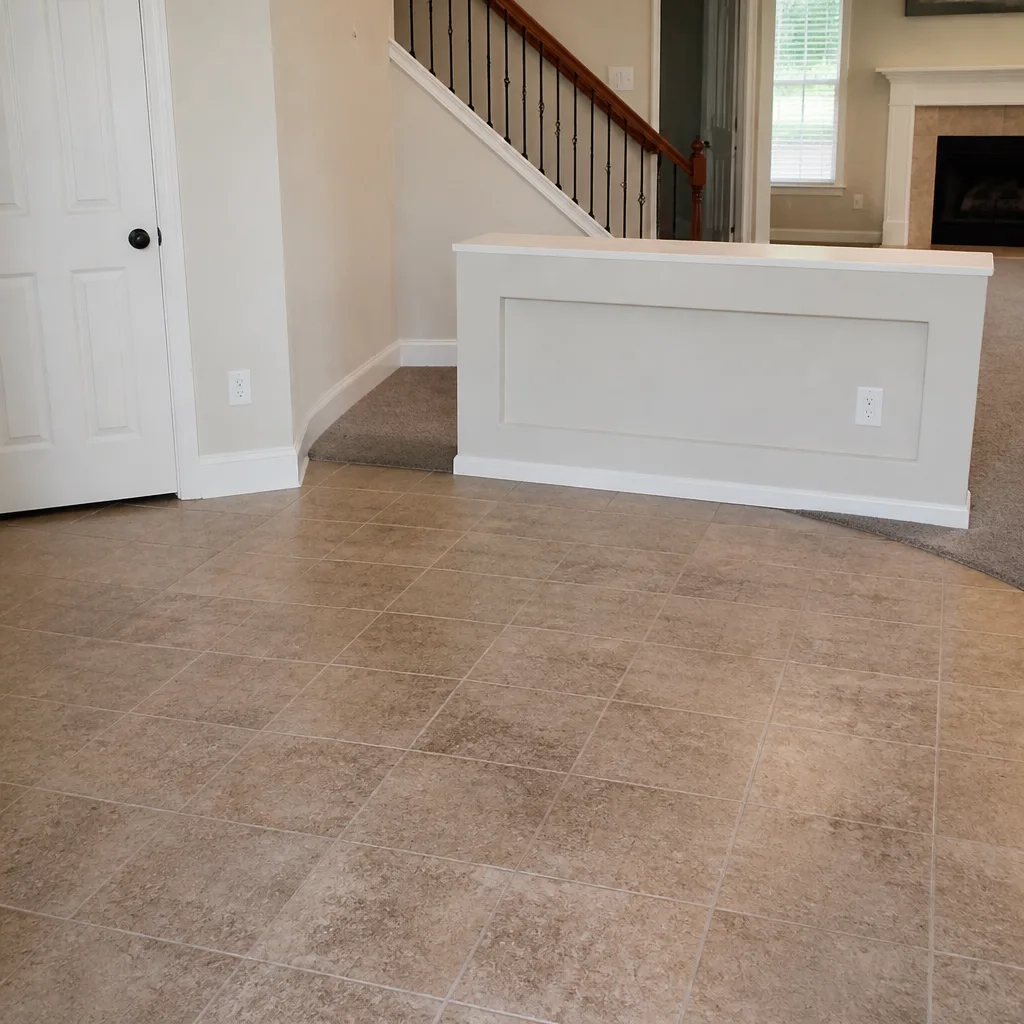

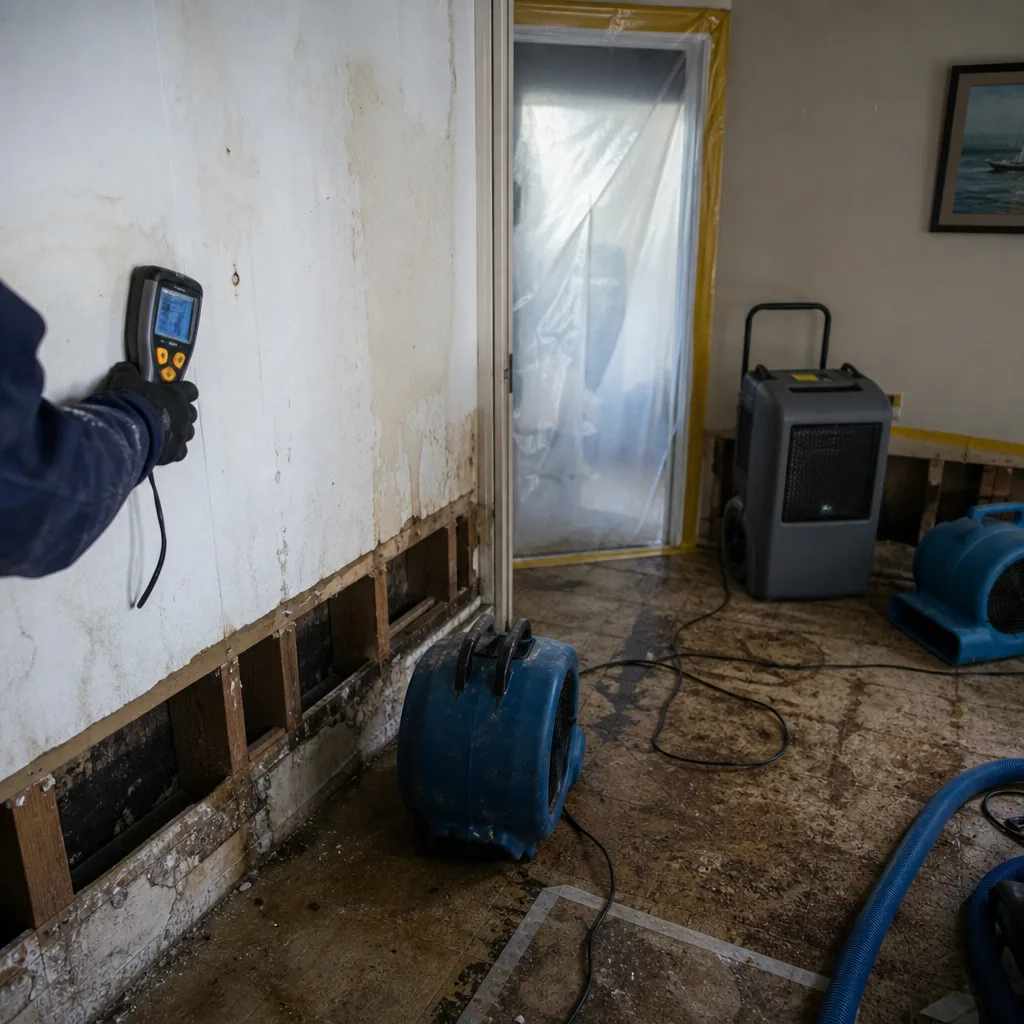 Before
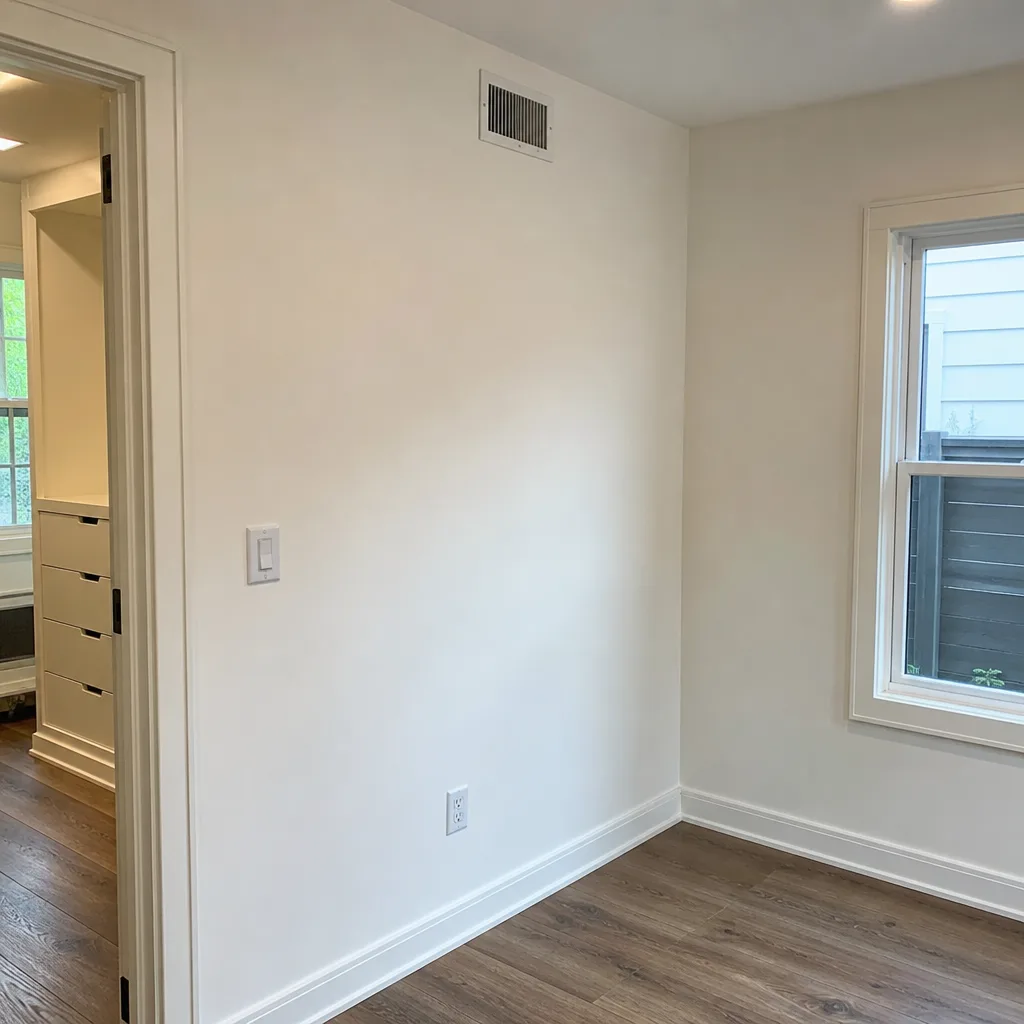 After
After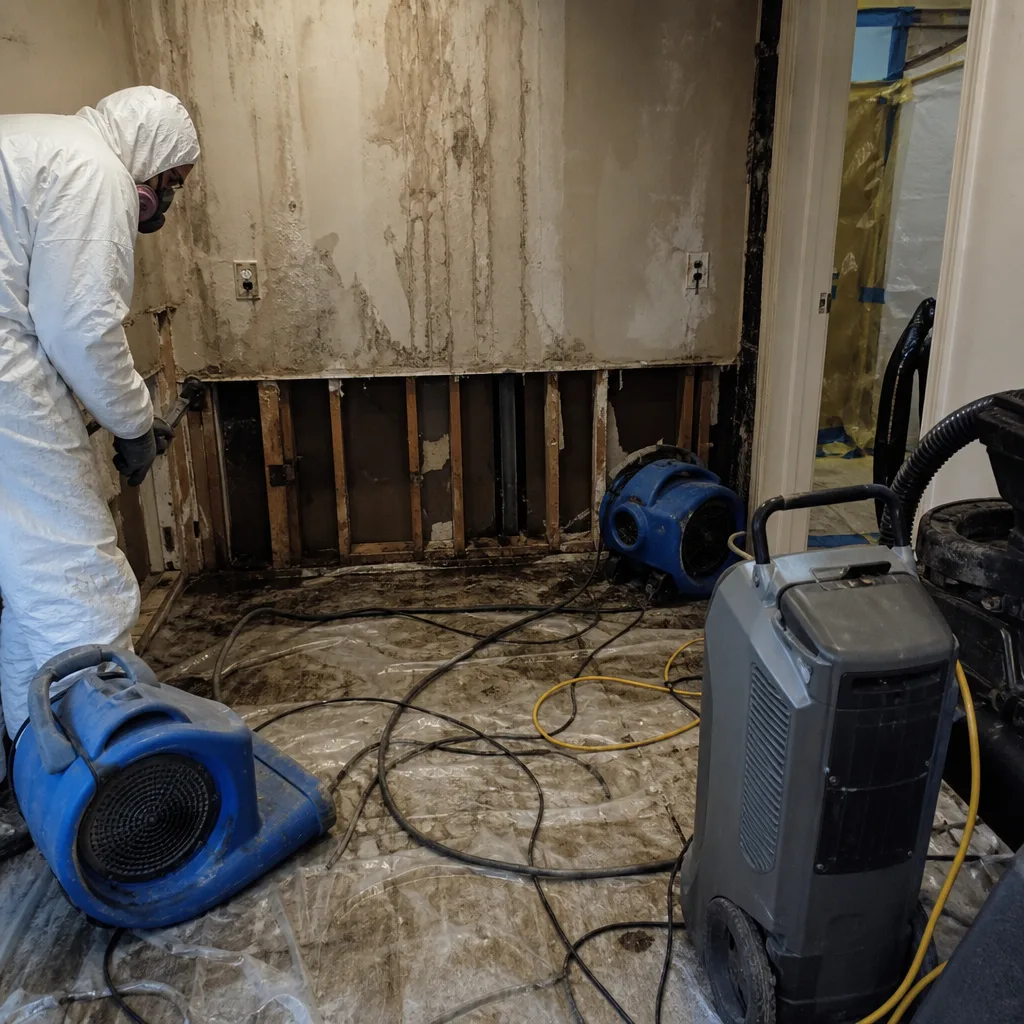 Before
 After
After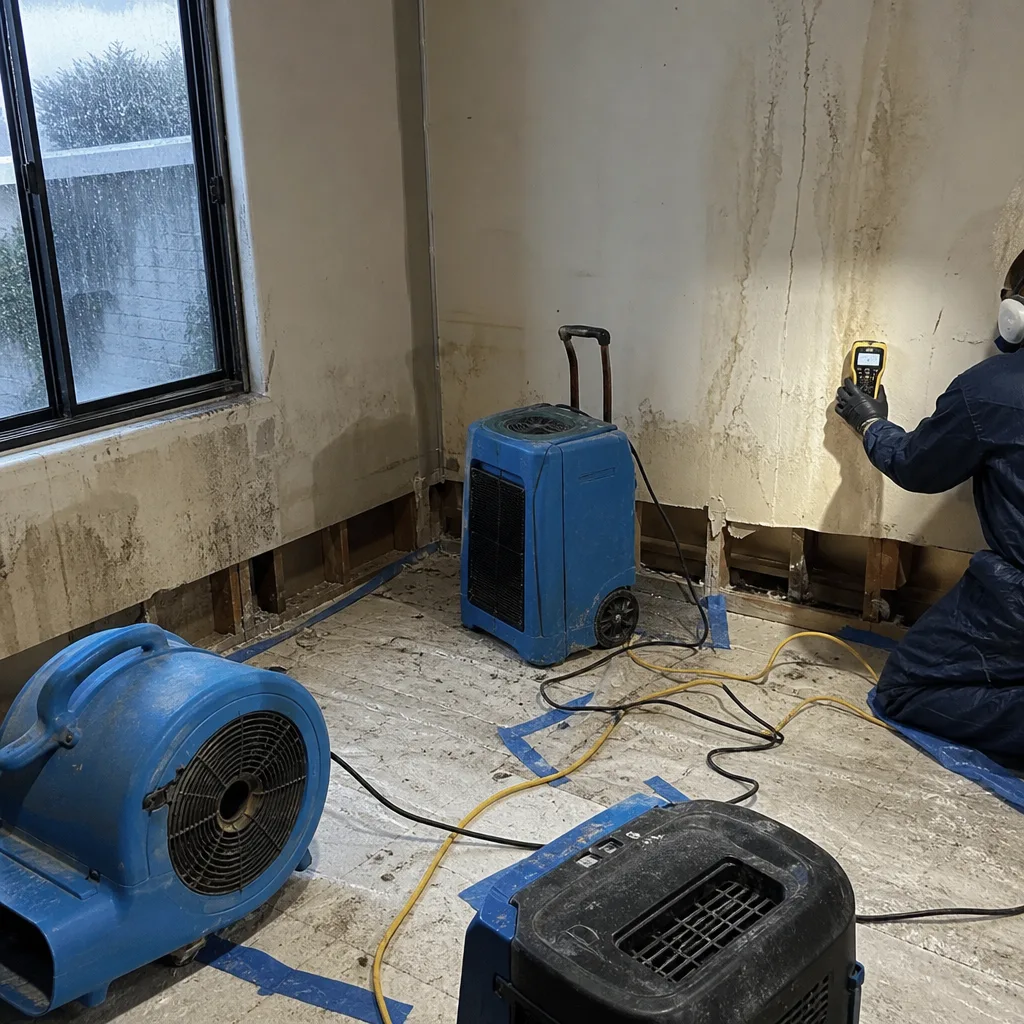 Before
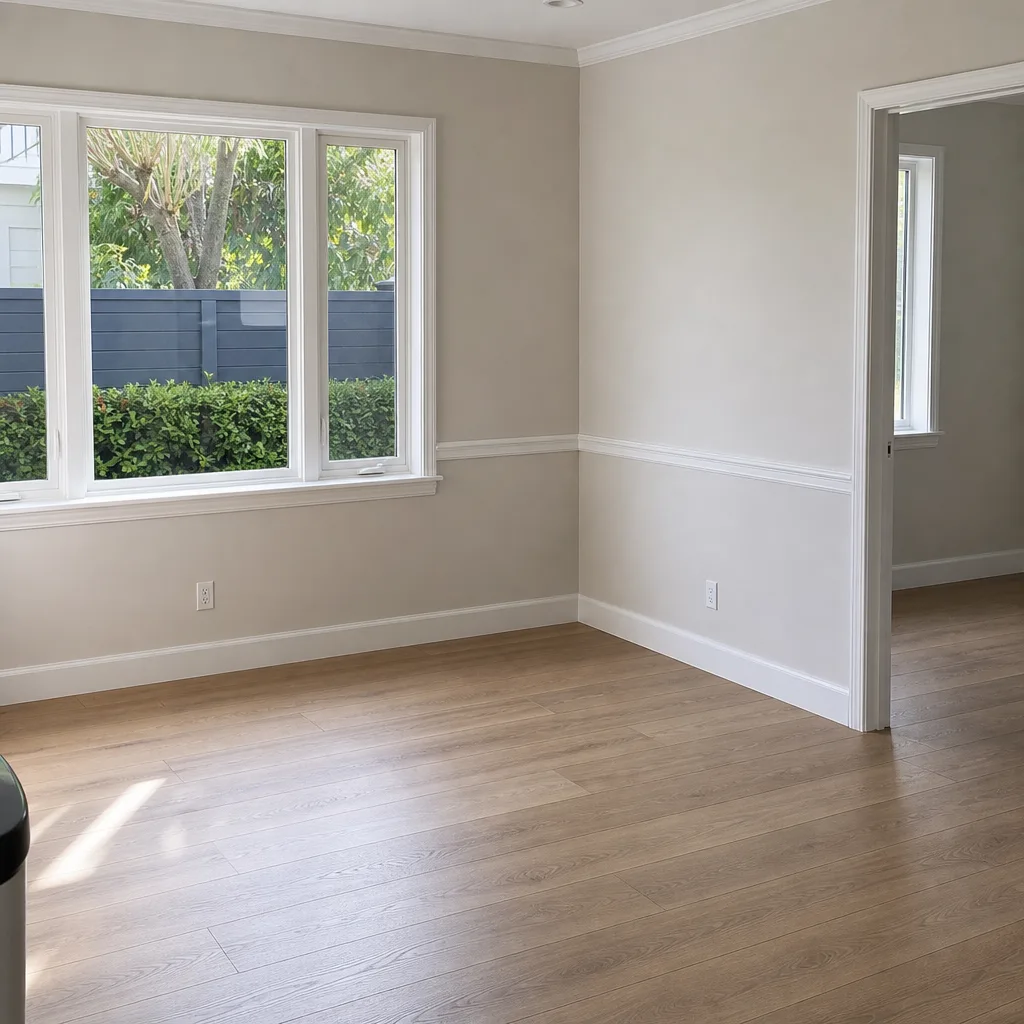 After
AfterWater Damage Restoration Maintenance Checklist for Santa Monica Homeowners
At 70-85% relative humidity year-round, Santa Monica homes sit close enough to the moisture threshold for mold growth (around 60% RH at the surface) that a slow supply line leak can saturate a cabinet base for weeks before the wood shows any warping a homeowner would catch. We’ve restored more than 12,000 homes since 2011, and Damage Restoration Cost Breakdown: The Santa Monica Homeowner’s Reference for 2026 shows the most expensive losses we see aren’t from dramatic pipe bursts. They’re from slow leaks that went unnoticed because the coastal climate masked the warning signs. This checklist is built around measurable thresholds, not visual impressions. You’ll learn the specific moisture content numbers to record, the appliances that fail most often in local housing stock, and how to keep maintenance records that protect your insurance claim if a loss occurs.
Quick Answer
A proper Water Damage Restoration services maintenance checklist for Santa Monica homeowners includes quarterly moisture readings of key building materials, seasonal inspection of high-risk appliances and valves, written documentation of baseline conditions, and post-event checks after rain or Santa Ana winds. Record relative humidity and moisture content percentages in crawl spaces, under sinks, and behind appliances. Keep dated photos and readings to establish pre-loss conditions for insurance purposes.
Table of Contents
- Why Santa Monica’s Climate Hides Water Damage Until It’s Expensive
- Baseline Readings Every Santa Monica Homeowner Should Record in Writing
- The Appliances and Building Systems Most Likely to Fail in Santa Monica Housing Stock
- Seasonal Maintenance Schedule Tied to Santa Monica’s Actual Weather Pattern
- The Documentation Your Insurance Company Will Ask For (and How to Keep It)
- Crawl Space, Exterior, and Hard-to-Reach Checks
- Common Mistakes to Avoid
- When to Call a Professional
- Frequently Asked Questions
- The Bottom Line
 Before
 After
AfterWhy Santa Monica’s Climate Hides Water Damage Until It’s Expensive
Most water damage checklists assume you’ll smell must or see mold. In Santa Monica, that’s a dangerous assumption.
The marine layer that rolls in from the Pacific keeps outdoor relative humidity between 70% and 85% for much of the year. Indoor humidity in a well-ventilated Santa Monica home typically runs 55-65% without any active moisture problem. That means a slow leak raising humidity from 55% to 70% doesn’t trigger the olfactory alarms it would in a drier climate like Phoenix or Denver, where baseline indoor humidity sits at 25-35%.
Wood moisture content tells the real story. In Santa Monica’s ambient conditions, dimensional lumber in a healthy home typically holds 12-15% moisture content (MC). A slow leak behind a kitchen cabinet can push that to 20-25% MC before the homeowner notices any cupping or staining. By 25% MC, mold colonization has already begun on cellulose materials. By 30% MC, wood rot fungi are active. The visual cues most homeowners rely on, warping and discoloration, often appear only after structural damage is underway.
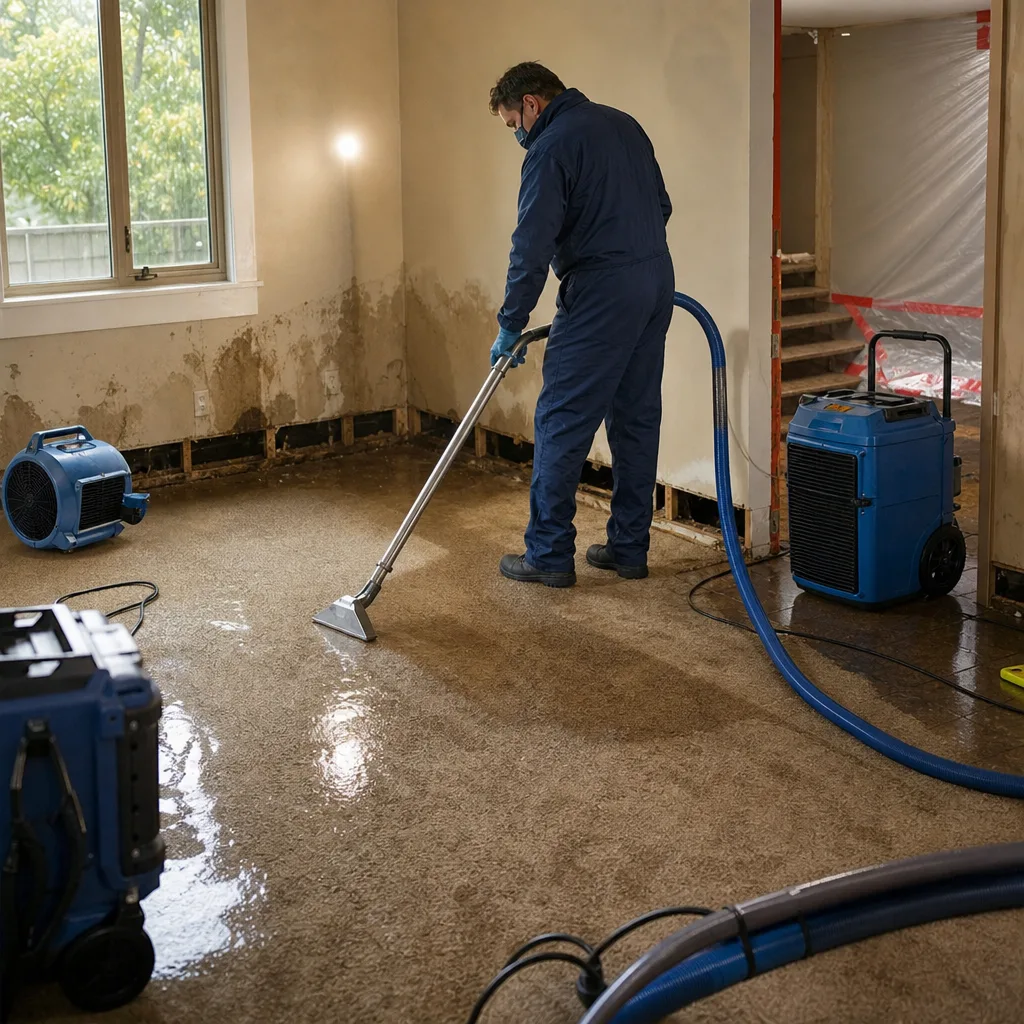
We’ve documented this pattern repeatedly in Santa Monica neighborhoods from Ocean Park to Montana Avenue. A homeowner calls us for what they believe is a recent leak, discovered when a cabinet base finally swelled enough to jam a drawer. Our moisture mapping reveals a moisture gradient extending 8-12 feet from the source, with readings above 20% MC in subflooring that has been wet for six to ten weeks. The repair scope jumps from a localized drying job to full subfloor replacement, cabinet removal, and mold remediation.
The solution is to stop relying on your senses and start relying on numbers. A $30 pin-type moisture meter and a written log will catch what your nose misses.
Baseline Readings Every Santa Monica Homeowner Should Record in Writing
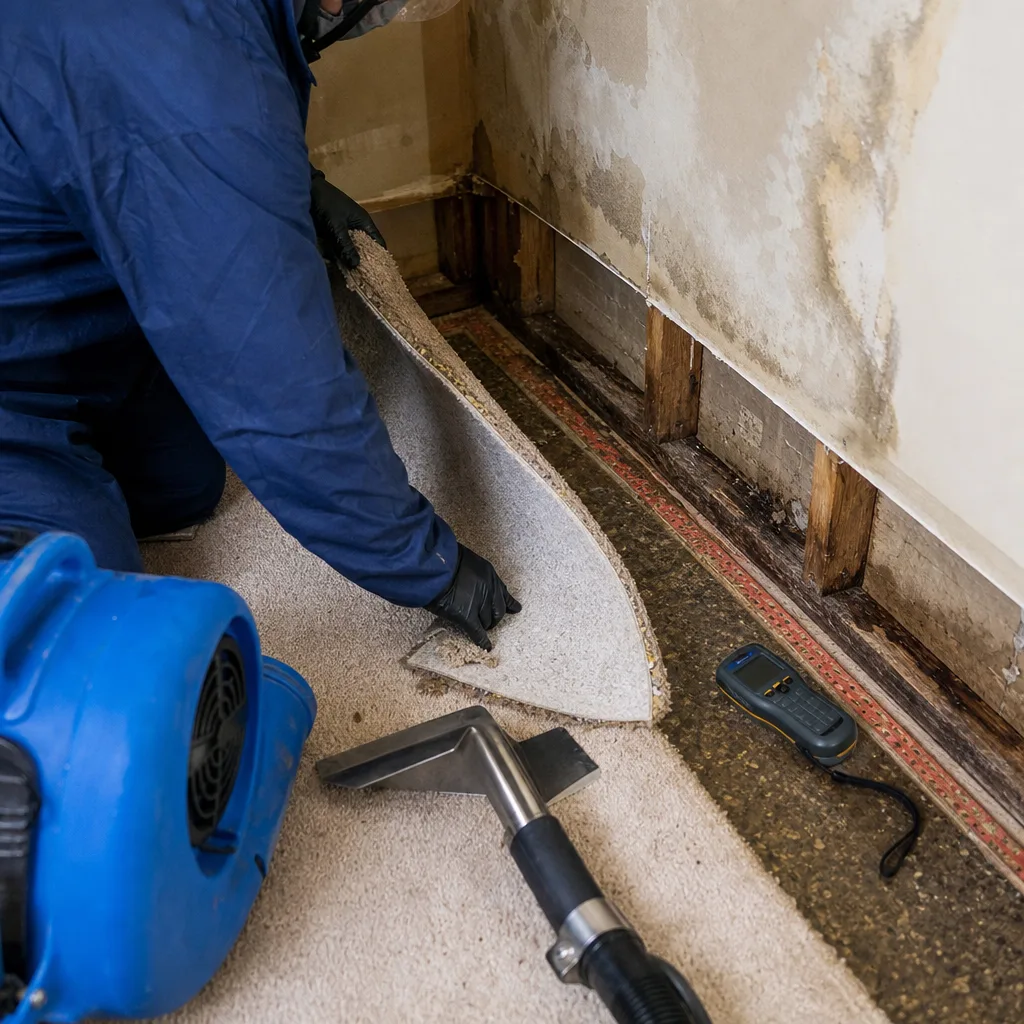
Before you can spot abnormal moisture, you need to know what normal looks like in your specific home. These are the readings we recommend every Santa Monica homeowner establish and update seasonally.
Relative Humidity Targets by Location
| Location | Normal Range (Santa Monica) | Investigate If Above |
|---|---|---|
| Living spaces | 50-60% RH | 65% RH |
| Crawl space / basement | 60-70% RH | 75% RH |
| Under-sink cabinets | 55-65% RH | 70% RH |
| Laundry area | 50-60% RH | 65% RH |
| Attic (if vented) | Within 10% of outdoor RH | 15% above outdoor |
Record these with a digital hygrometer left in place for 48 hours, not a single snapshot reading. RH fluctuates with daily temperature swings, and you want the average.
Moisture Content Targets for Building Materials
Use a pin-type moisture meter on exposed wood surfaces. In Santa Monica’s climate, these are your baselines:
- Dimensional lumber (framing, subfloor): 12-15% MC
- Hardwood flooring: 9-12% MC
- Plywood and OSB sheathing: 12-16% MC
- Drywall (gypsum, paper face): 0.5-1.0% MC (use a non-invasive meter or probe at penetrations)
Record readings at the same points each season. We recommend marking probe locations with small pencil marks on inconspicuous surfaces, then photographing the meter display with the location visible in frame. Date every photo.
Where to Take Baseline Readings
- Under kitchen sink: Probe the cabinet base, the wall framing where supply lines enter, and the subfloor visible through any access panel. The ice maker line connection is the most common failure point we see in Santa Monica kitchens built 1985-2010.
- Behind washing machine: Check the wall surface behind the supply hose connections and the floor beneath the machine. Braided stainless hoses fail at the crimp; rubber hoses degrade from the inside out.
- Water heater area: Probe surrounding framing and the platform or pan. The temperature-pressure relief (TPR) valve discharge line should terminate visibly; if it’s piped into a drain, you won’t see when it opens.
- Crawl space perimeter: Take readings at the rim joist, the sill plate, and mid-span of the subfloor. In Santa Monica’s flat terrain, crawl spaces often have limited ventilation and soil moisture migration.
- Bathroom vanity bases: Similar to kitchen sinks, with additional attention to the toilet supply line and the wax ring area if accessible.
Store these records in cloud storage with automatic backup, not a notebook that can be lost in a flood. Your future insurance claim may depend on proving pre-loss conditions.
The Appliances and Building Systems Most Likely to Fail in Santa Monica Housing Stock
Santa Monica’s housing stock skews older than many assume. The median home was built in 1947, and even “newer” neighborhoods like Sunset Park and Pico feature significant 1960s-1980s construction. The plumbing materials and installation practices of those eras create predictable failure patterns.
Ice Maker Supply Lines
The flexible copper or plastic tubing running from kitchen sink supply valves to refrigerator ice makers is the single most frequent source of slow, hidden leaks we encounter in Santa Monica. These lines operate at full household pressure (typically 60-80 psi) with small-diameter tubing that kinks easily during refrigerator installation or cleaning. The connection at the saddle valve or compression fitting loosens over years of vibration.
Check monthly: pull the refrigerator out, inspect the full line length for kinking or corrosion, and verify the shutoff valve operates smoothly. Replace plastic tubing with braided stainless steel with an auto-shutoff connector. Record the replacement date.
Pressure-Reducing Valves (PRVs)
Santa Monica’s municipal water pressure varies by elevation, with higher-pressure zones in northern neighborhoods like North of Montana. Homes in these areas often have PRVs installed at the main service entry. A failed PRV can either allow excessive pressure (accelerating wear on fixtures and appliances) or create backpressure conditions that stress flexible connections.
Check the PRV annually with a threaded pressure gauge at a hose bib. Ideal static pressure is 50-60 psi. If readings exceed 75 psi or fluctuate significantly, replace the valve. Document the reading with date and location.
Temperature-Pressure Relief Valves on Water Heaters
California plumbing code requires TPR valves to discharge to a visible location or through an air gap. In practice, many Santa Monica homes have TPR lines piped into floor drains or wall cavities where discharge goes unnoticed. A TPR valve that opens repeatedly indicates overheating, overpressure, or valve failure, each of which signals a developing problem.
Test the TPR valve annually by lifting the lever briefly (expect hot water discharge; use caution). If water continues to flow after releasing the lever, or if the valve hasn’t been tested in years, replace it. Verify the discharge line terminates where you can see it.
Washing Machine Supply Hoses
Rubber hoses should be replaced every five years regardless of visible condition; they fail from the inside out due to chlorine degradation. Braided stainless hoses are more durable but not immune; check the crimp fittings for corrosion. The burst pressure of a failed washing machine hose at 3 AM can release hundreds of gallons before you wake.
Dishwasher Drain and Supply Connections
The dishwasher drain hose connection to the garbage disposal or sink tailpiece is a common leak point, particularly in Santa Monica’s older homes where disposals have been replaced multiple times. The rubber or corrugated connection loosens, and the high-loop or air gap may be improperly installed. Check for moisture beneath the sink and at the dishwasher kick plate monthly.
HVAC Condensate Lines
Santa Monica’s mild climate means air conditioning sees seasonal use, and condensate drain lines that sit dry for months can accumulate biofilm and debris. The first heavy cooling day of summer triggers overflow. Check the condensate pan and drain line before first activation each year. Pour a quart of water through the line and verify it flows freely to the termination point.
Seasonal Maintenance Schedule Tied to Santa Monica’s Actual Weather Pattern
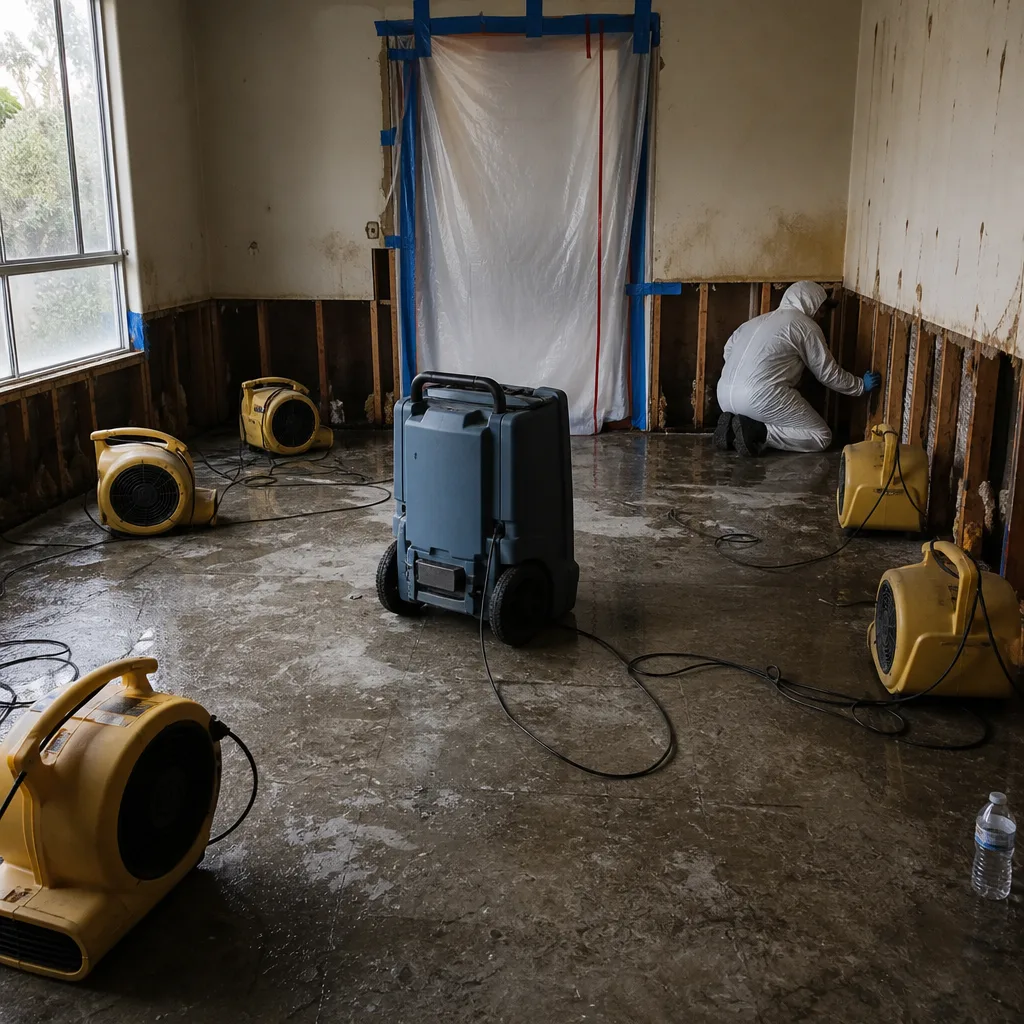
Generic checklists suggest “spring and fall” inspections. Santa Monica’s climate doesn’t follow that rhythm. Use this schedule instead.
Post-Rain Inspection (November-March)
Santa Monica’s rainy season is brief but can be intense, with atmospheric river events delivering multiple inches in 24 hours. Within 48 hours of any significant rainfall:
- Inspect attic spaces for roof leaks, paying attention to valleys, penetrations, and areas below previous repairs. Use a flashlight; daylight visible through roofing materials indicates active penetration.
- Check exterior walls and window frames for water staining, particularly on north-facing exposures where drying is slowest.
- Verify ground drainage around the foundation. Santa Monica’s clay-heavy soils in some areas hold water against foundation walls.
- Inspect crawl space or basement for standing water or elevated humidity. Take fresh moisture readings at your baseline locations and compare to your records.
- Check gutters and downspouts for blockage; many Santa Monica homes have mature trees that shed year-round.
Pre-Summer AC Activation (April-May)
Before first cooling operation:
- Replace HVAC filters and inspect condensate drain lines as described above.
- Check attic ventilation; blocked vents trap moisture and raise cooling load. Santa Monica’s coastal humidity means attics don’t dry as quickly as inland locations.
- Inspect bathroom and kitchen exhaust fans for proper operation and duct termination. Ducts that terminate in attics rather than outdoors dump moisture into the building envelope.
- Take fresh baseline moisture readings in all standard locations.
Post-Santa Ana Wind Event (September-February)
The Santa Ana winds create unique moisture conditions. Their extreme dryness (RH often below 20%) causes rapid surface drying that can mask underlying moisture problems. After any Santa Ana event:
- Check for wind-driven rain intrusion at window and door seals, particularly on south and west exposures.
- Inspect roofing for wind-lifted shingles or tile displacement. Santa Monica’s Mediterranean-style tile roofs are vulnerable to uplift.
- Verify that the rapid surface drying hasn’t caused wood to check or crack, creating new entry points for the next moisture event.
- Re-check indoor humidity levels; the swing from Santa Ana dryness back to marine layer humidity can cause condensation on cooled surfaces if HVAC settings haven’t adjusted.
Annual Deep Inspection (Recommended: October)
Before the rainy season, conduct a comprehensive review of all baseline readings, replace any aging hoses or valves, and update your documentation file. This timing allows any needed repairs to complete before weather exposure increases.
The Documentation Your Insurance Company Will Ask For (and How to Keep It)
We’ve reviewed thousands of claims files, and the documentation gap is where homeowners lose. Insurance adjusters are trained to look for evidence that a loss resulted from a “known condition” or long-term maintenance neglect, which can limit or deny coverage. Your maintenance records are your defense.
What Insurers Consider a “Known Condition”
A “known condition” in insurance terms is damage that existed before the claimed loss, that the policyholder knew or should have known about, and that they failed to address. Slow leaks are the classic example. If your insurer can establish that moisture damage developed over weeks or months, they may classify it as long-term water damage excluded under most policies, rather than sudden and accidental discharge covered under standard provisions.
The maintenance records that defeat this argument are specific, dated, and photographic.
The Four Documents That Matter
1. The Baseline Moisture Log
A simple spreadsheet with columns for: date, location, material type, moisture content reading, relative humidity, temperature, and notes. Update quarterly. If a loss occurs, this log proves your home was maintained within normal parameters and that the damage appeared suddenly.
2. The Maintenance Receipt File
Keep records of all plumbing repairs, appliance replacements, and professional inspections. Note the specific work performed, not just the invoice total. “Replaced washing machine supply hoses, 3/15/2024” is defensible; “Plumbing service, $180” is not.
3. The Photo Record
Date-stamped photos of baseline conditions and any maintenance work. Include wide shots for context and close-ups of specific conditions. Store in cloud backup with automatic sync. At DryMark Restoration Santa Monica, we provide a documented photo record on every visit as a standard deliverable, never an upsell, because we’ve seen what happens when documentation is incomplete; see more guides & resources for additional record-keeping strategies.
4. The Professional Inspection Report
If you’ve had any water damage professional, plumber, or home inspector evaluate your property, keep their written report. These carry weight in claims disputes because they’re prepared by a third party at a time before the loss occurred.
Format That Holds Up
Digital records with automatic cloud backup are superior to paper. Email records to yourself for an automatic timestamp. Use a dedicated email folder or cloud folder structure that’s organized by year and property address. If you own multiple properties, maintain separate files.
The key test: could you produce a complete maintenance history for any specific location in your home within 10 minutes of an adjuster’s request? If not, reorganize your system now.
Crawl Space, Exterior, and Hard-to-Reach Checks
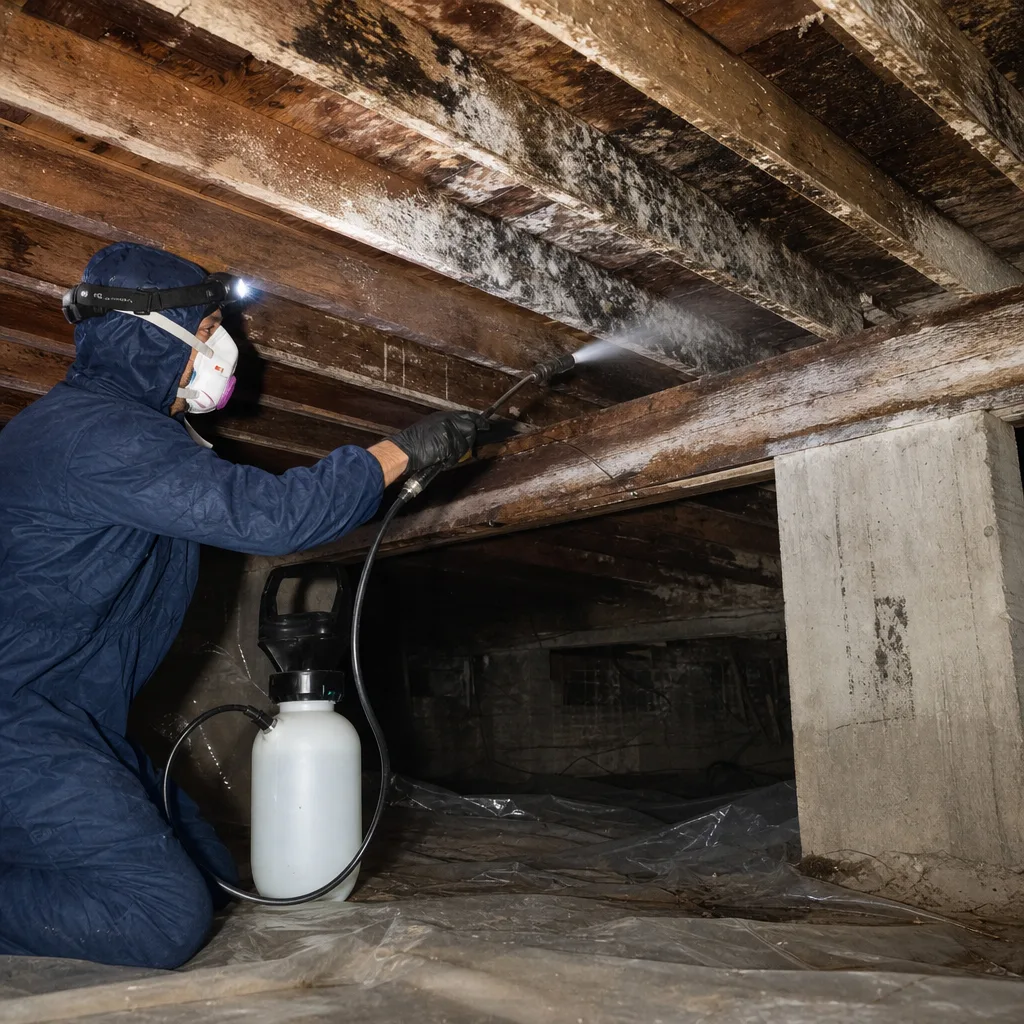
Santa Monica’s flat terrain and older construction mean many homes have crawl spaces with limited access and ventilation. These spaces are moisture reservoirs that can damage the structure slowly and invisibly.
Crawl Space Inspection Protocol
- Access and safety: Verify the access opening is unobstructed and large enough for entry. Bring a headlamp, moisture meter, and respirator if mold is suspected. Never enter a crawl space alone.
- Visual inspection: Look for standing water, efflorescence on foundation walls (white mineral deposits indicating water migration), and wood discoloration. Check the vapor barrier, if present, for displacement or damage.
- Moisture readings: Take readings at the sill plate, rim joist, subfloor mid-span, and any posts or piers. Compare to your baseline immediately; don’t wait until you’re back inside.
- Ventilation assessment: Calculate the ventilation ratio (net free vent area to crawl space square footage). California building code requires 1 square foot of net free vent area per 150 square feet of crawl space, unless a vapor barrier is installed on the ground surface, in which case the ratio relaxes to 1:1,500. Many Santa Monica homes fall short of even the relaxed standard.
- Ground cover: A proper 6-mil polyethylene vapor barrier covering 100% of the ground surface, overlapped and taped at seams, prevents soil moisture migration. Gaps or thin material allow continuous moisture loading.
Exterior and Foundation
Walk the perimeter after rain. Pooling water against the foundation indicates grading problems, clogged drains, or broken irrigation lines. In Santa Monica’s climate, soil against foundation walls stays damp for extended periods, creating a constant moisture drive inward.
Check irrigation system heads for proper aim; water spraying against stucco or siding causes deterioration and interior moisture migration. Many Santa Monica homes have mature landscaping with root systems that can damage underground drainage.
Window and Door Seals
Older single-pane windows and original weatherstripping in pre-1970s Santa Monica homes are common moisture entry points. The marine layer deposits salt residue that degrades seals faster than inland climates. Inspect caulking and weatherstripping annually; replace when brittle or gapped.
Common Mistakes to Avoid
- Relying on smell alone. In Santa Monica’s humid baseline conditions, mold growth stays below the odor threshold longer than in drier climates. By the time you smell must, colony density is already significant and the remediation scope has expanded.
- Using a single moisture reading. One elevated reading might be a meter malfunction or surface condensation. Take readings at multiple points and compare to your baseline log. A pattern of elevation across multiple locations indicates a real moisture source.
- Ignoring the ice maker line. This $15 part causes more expensive Santa Monica kitchen restorations than any other single component. It’s out of sight behind the refrigerator and rarely inspected until the cabinet base collapses.
- Storing records only on paper. Water damage destroys paper. The maintenance log you need for your claim can’t be in the drawer that’s now underwater. Cloud backup is mandatory, not optional.
- Skipping post-Santa Ana checks. The rapid drying after Santa Ana events creates false confidence. Surface dryness doesn’t indicate subsurface conditions. Always verify with meter readings.
- Delaying professional assessment of ambiguous readings. If your moisture meter shows 18% MC in framing and your baseline is 13%, that’s not “probably fine.” It’s a 38% elevation that warrants investigation. Early professional drying with documented psychrometric data prevents scope expansion.
- Assuming new construction is exempt. Santa Monica’s building boom in the 2010s-2020s produced homes with complex plumbing manifolds, tankless water heaters with sensitive pressure requirements, and integrated appliances with proprietary supply connections. These fail differently than older systems, not less frequently.
When to Call a Professional
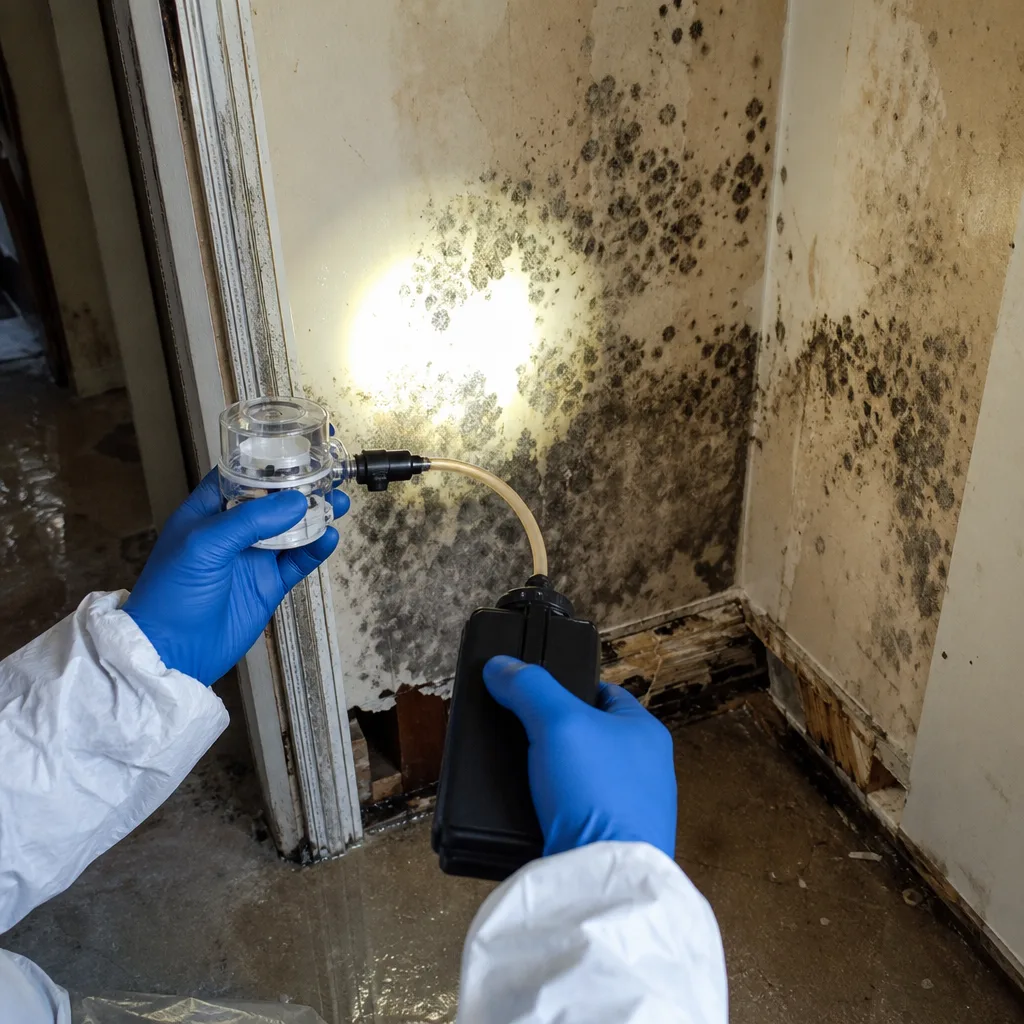
Some conditions exceed homeowner maintenance and require documented professional intervention. Call for assessment if you find: moisture content readings exceeding 20% in any wood framing or subfloor; visible mold growth of any size; persistent humidity above 70% RH in conditioned spaces despite ventilation; water staining that reappears after cleaning; or any leak you cannot source within 30 minutes of investigation.
Documented professional drying with daily moisture logs, photo records, and written scopes produces the evidence trail that insurance claims require. Water Damage Restoration in Santa Monica from DryMark Restoration Santa Monica includes all of these as standard deliverables, not upsells. We provide free estimates in Santa Monica, and our live phone coverage means you’ll speak to a person, not a voicemail tree, when you call (213) 816-0810.
Frequently Asked Questions
Record baseline moisture readings quarterly at minimum, with additional checks after any rain event, Santa Ana wind period, or plumbing work. The marine layer climate means conditions change gradually; quarterly frequency catches trends before they become problems. Call (213) 816-0810 if any reading exceeds your baseline by more than 5% moisture content.
In Santa Monica’s climate, dimensional lumber above 20% moisture content indicates active moisture intrusion requiring investigation. The structural damage threshold begins around 25% MC, and wood rot fungi activate at 28% MC sustained over time. Your baseline for healthy framing is typically 12-15% MC; any sustained reading above 18% warrants professional assessment.
Coverage depends on whether the insurer classifies the damage as “sudden and accidental” or a “known condition” excluded under long-term water damage provisions. Your maintenance records are the decisive factor: dated baseline readings, repair receipts, and photo documentation prove you maintained the property and didn’t ignore a developing problem. Without this documentation, insurers routinely deny slow-leak claims. DryMark Restoration Santa Monica provides photo-documented assessments that strengthen your claim file from the first visit.
The refrigerator ice maker supply line causes more hidden, expensive kitchen damage than any other single appliance in our Santa Monica experience. The small-diameter tubing operates at full household pressure, is often installed with minimal support, and sits concealed behind the refrigerator for years. Replace plastic or copper lines with braided stainless steel, and inspect during quarterly moisture checks.
Santa Ana winds drop relative humidity to 10-20% for brief periods, causing rapid surface drying that can mask underlying moisture problems. Wood surfaces may read normal while subsurface moisture remains elevated. Always verify with probe-type moisture meters at depth, not surface readings, after Santa Ana events. The subsequent return to marine layer humidity can also cause condensation on surfaces cooled by dry-air exposure.
Maintain four categories: quarterly moisture and humidity logs with dates and locations; maintenance and repair receipts with specific work descriptions; date-stamped photos of baseline conditions and any work performed; and professional inspection reports from plumbers, home inspectors, or restoration contractors. Store all in cloud backup with automatic sync. This documentation transforms a disputed “known condition” denial into a payable claim.
The Bottom Line
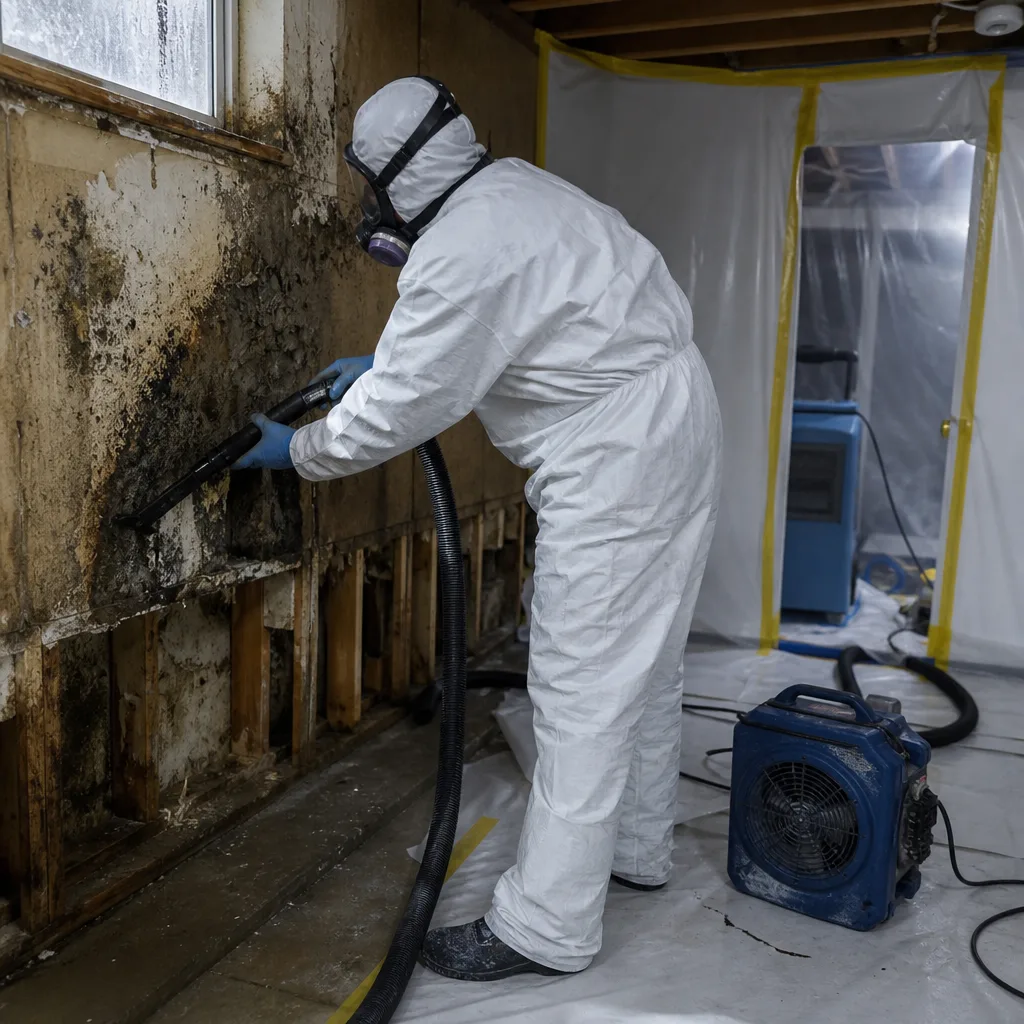
Santa Monica’s coastal climate creates a unique water damage risk profile: moisture problems develop slowly, stay hidden by high baseline humidity, and become expensive before visible cues appear. The maintenance checklist that works here is built on measurable thresholds, not visual inspection. Record quarterly moisture content and relative humidity readings at defined locations. Inspect the specific appliances and valves that fail most often in local housing stock. Tie your schedule to Santa Monica’s actual weather pattern: post-rain, pre-summer AC activation, and post-Santa Ana wind. Keep maintenance documentation in a format that holds up to insurance scrutiny. And when readings exceed thresholds or sources remain unclear, call for professional assessment with documented evidence, not guesswork.
DryMark Restoration Santa Monica home provides Water Damage Restoration in Santa Monica with the documentation standards that turn restoration invoices into payable claims: written prices before work begins under Haven Standard, Clause 1; photo records on every visit; and daily drying logs with psychrometric data. For Mold Remediation in Santa Monica or Fire & Smoke Damage Restoration in Santa Monica, the same documentation standards apply. Call (213) 816-0810 for a free estimate. Live phone coverage, 24 hours a day, 7 days a week, no voicemail.
Written by Alicia Brennan, Owner at DryMark Restoration Santa Monica, serving Santa Monica since 2011.