
Last updated September 23, 2026
Free visual inspection and a written scope of work before any mitigation begins - photos, moisture readings, and drying logs go in your claim file
The scope we write is the scope we bill. Anything new gets shown to you, in writing, before we touch it.
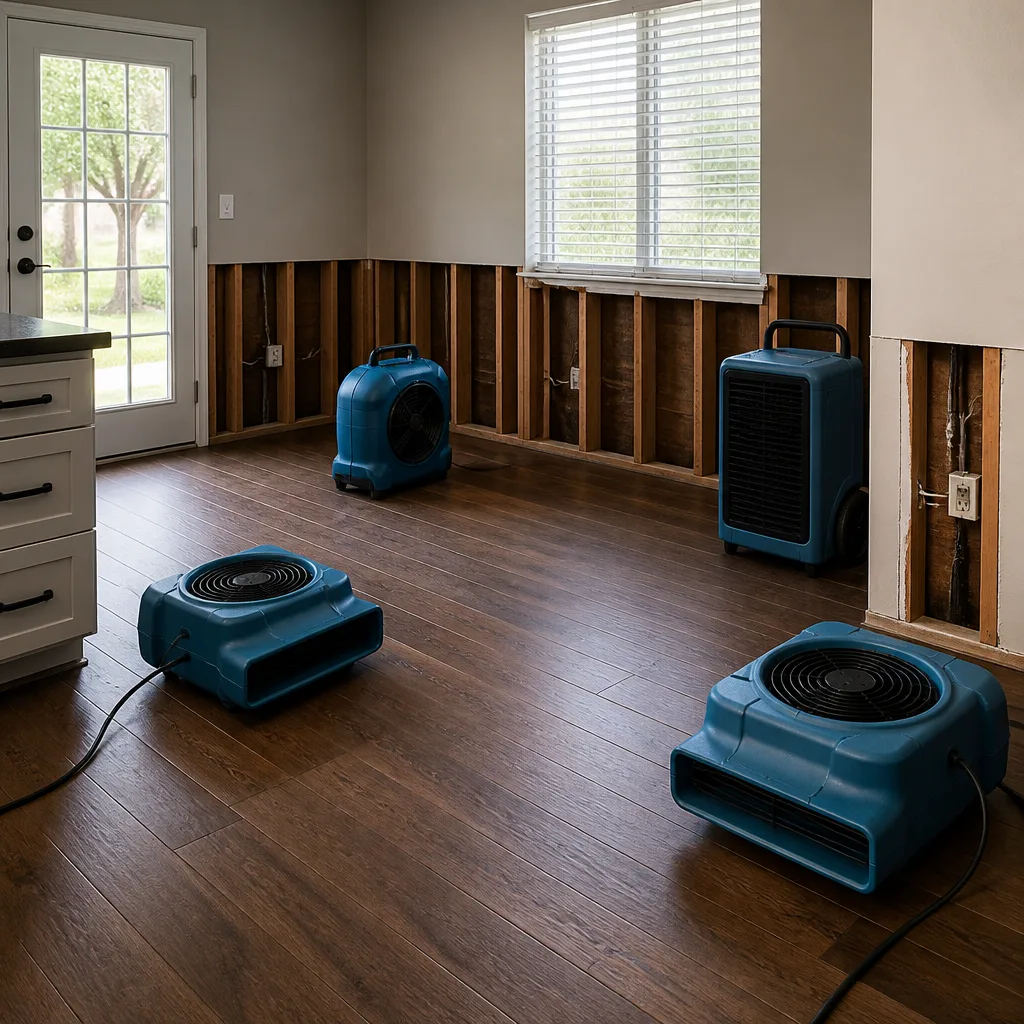
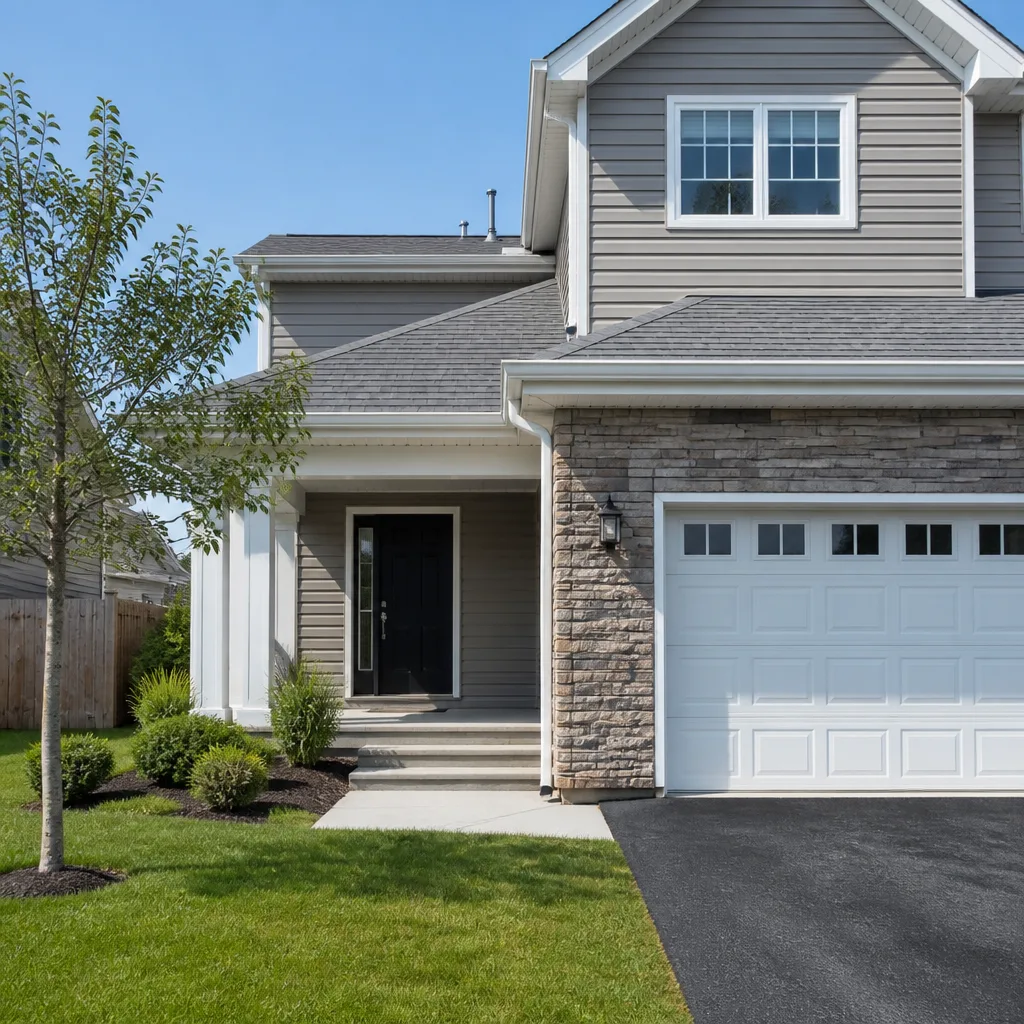
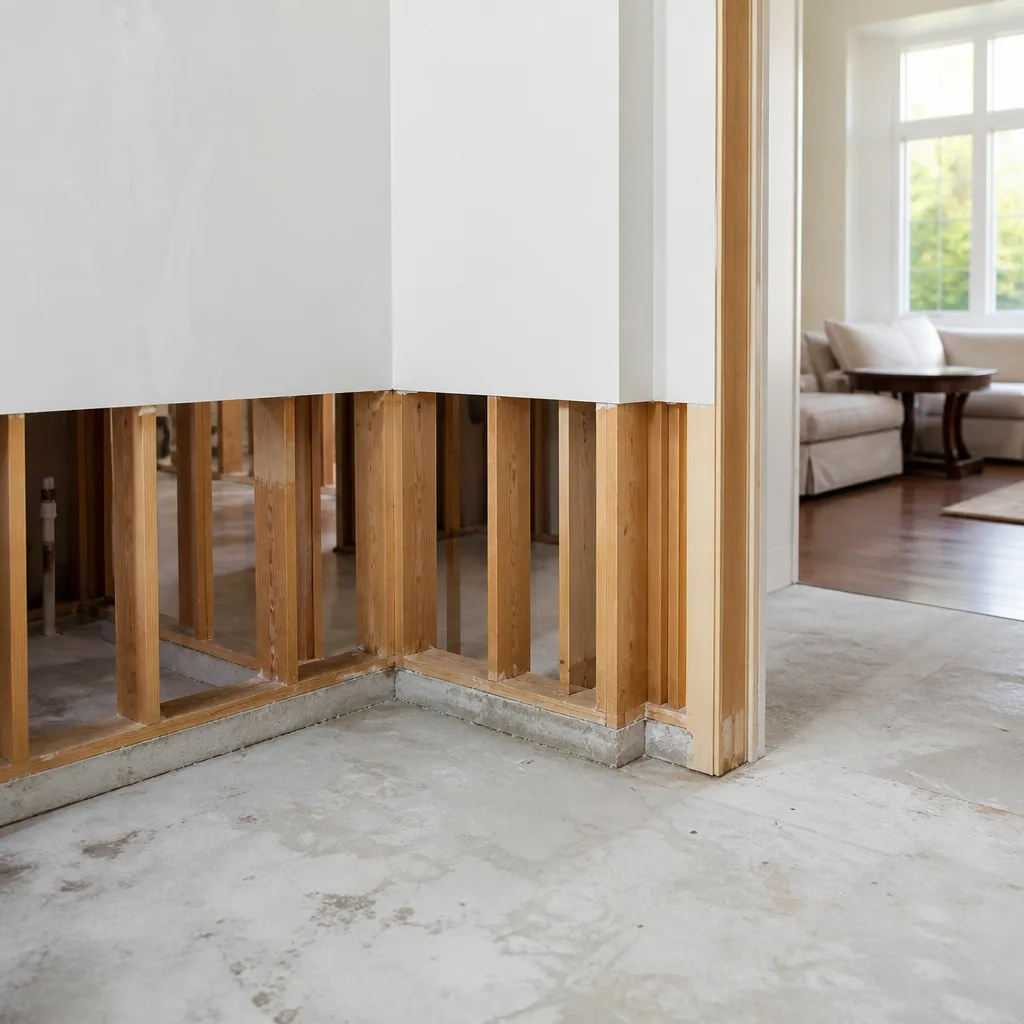
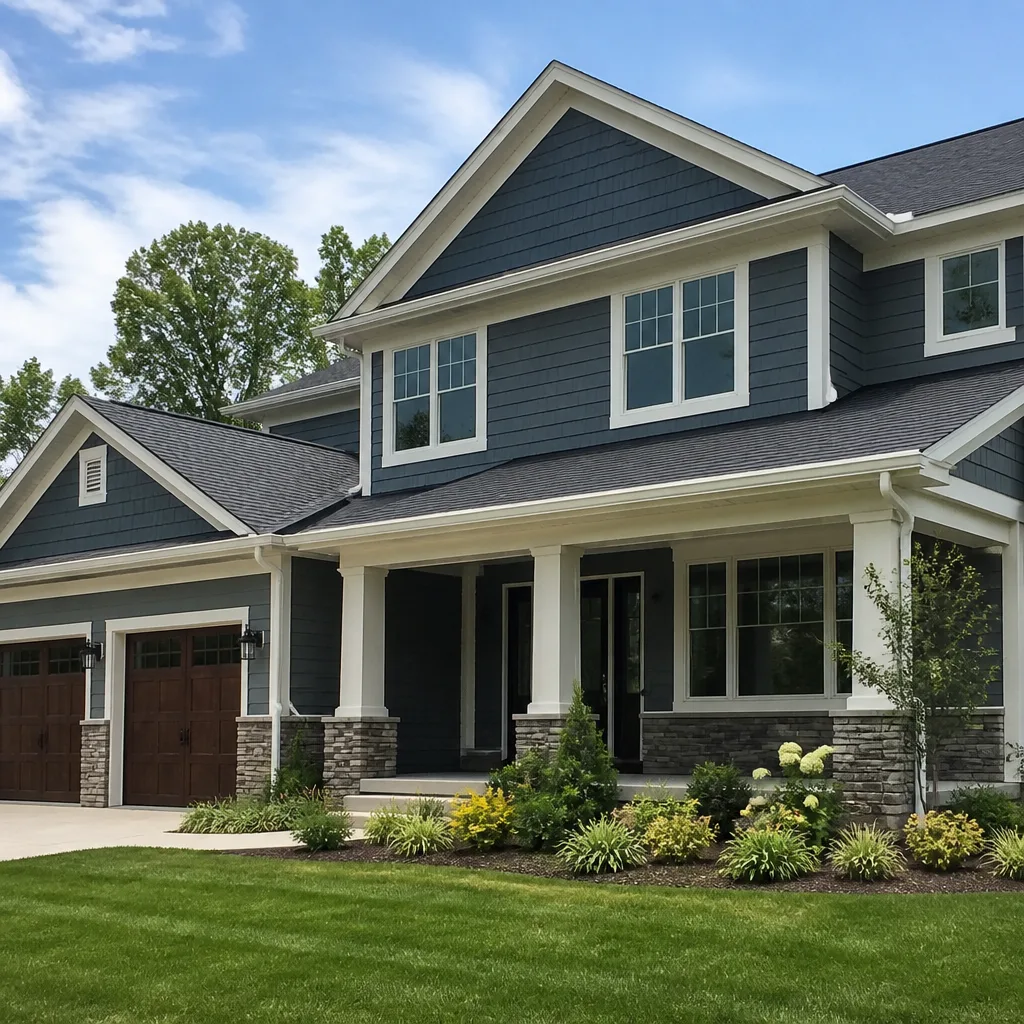
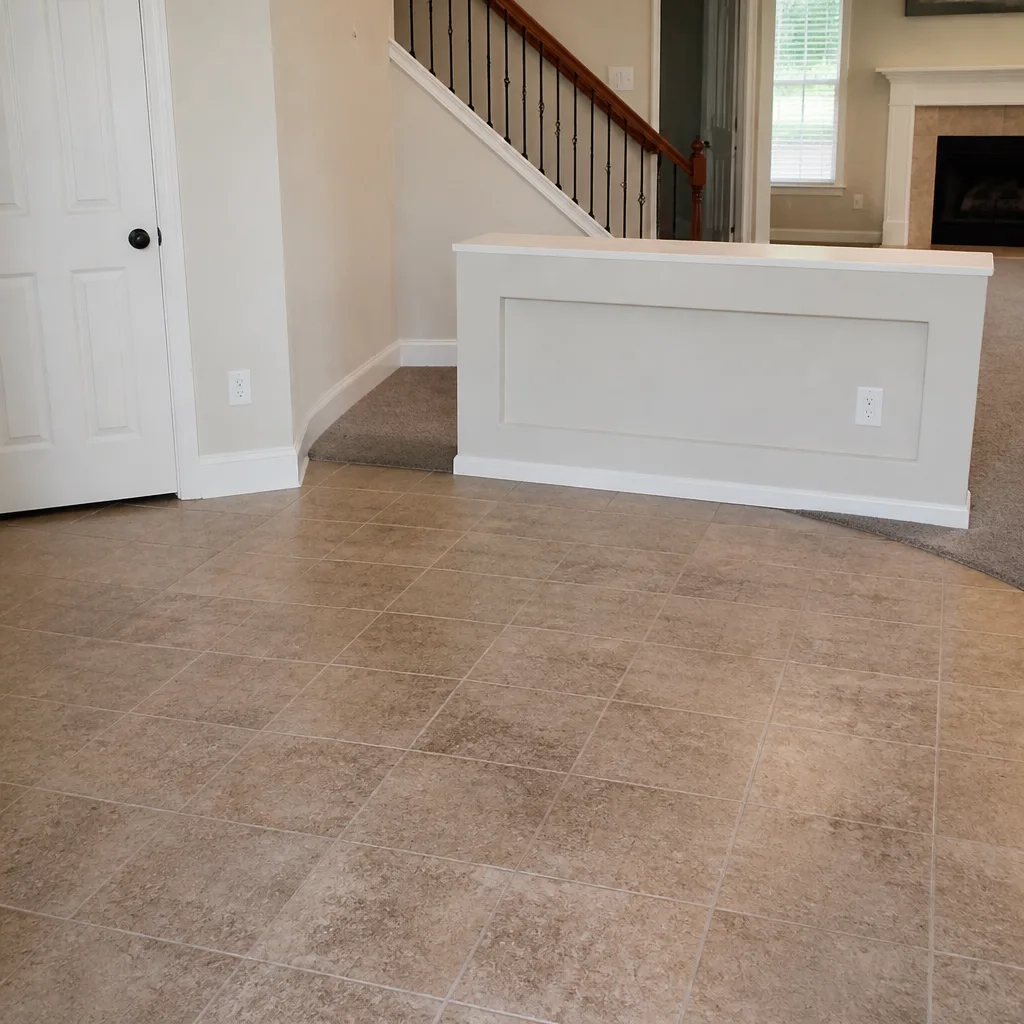
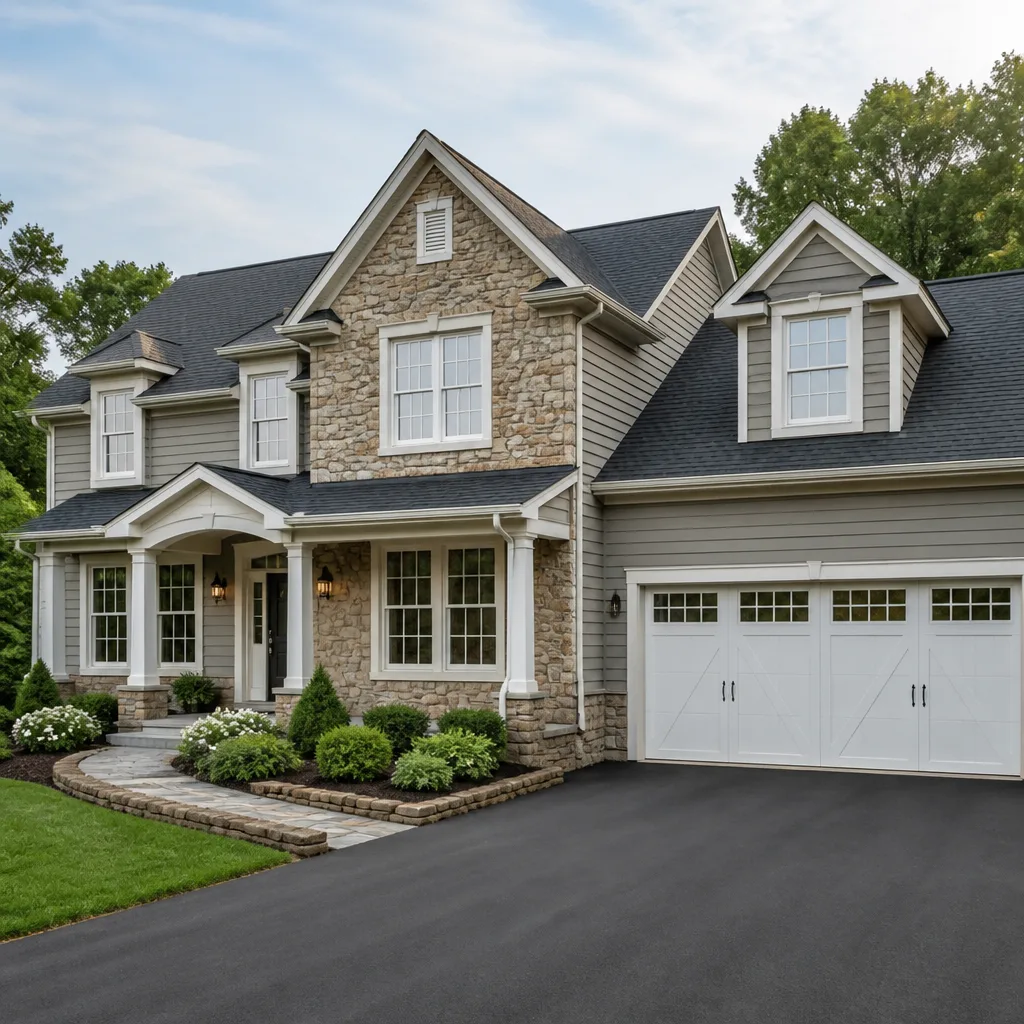
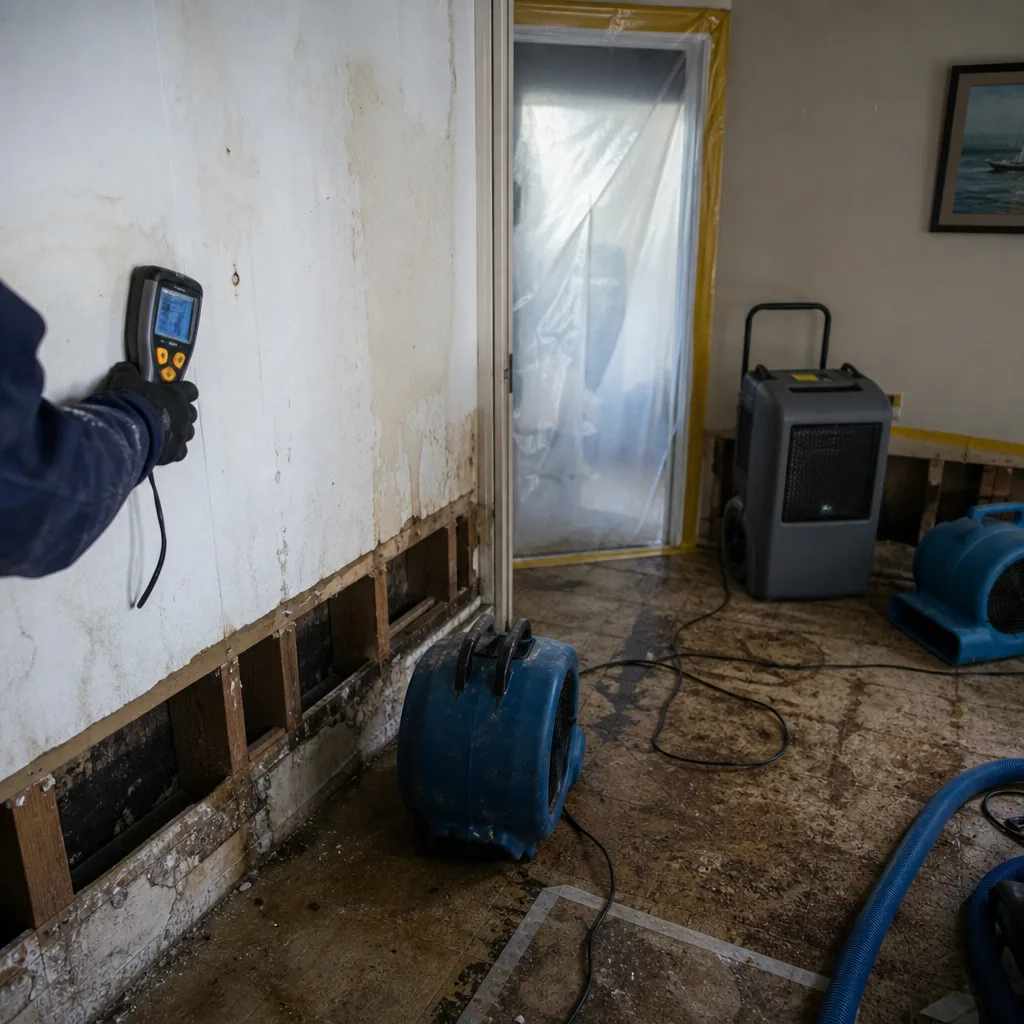 Before
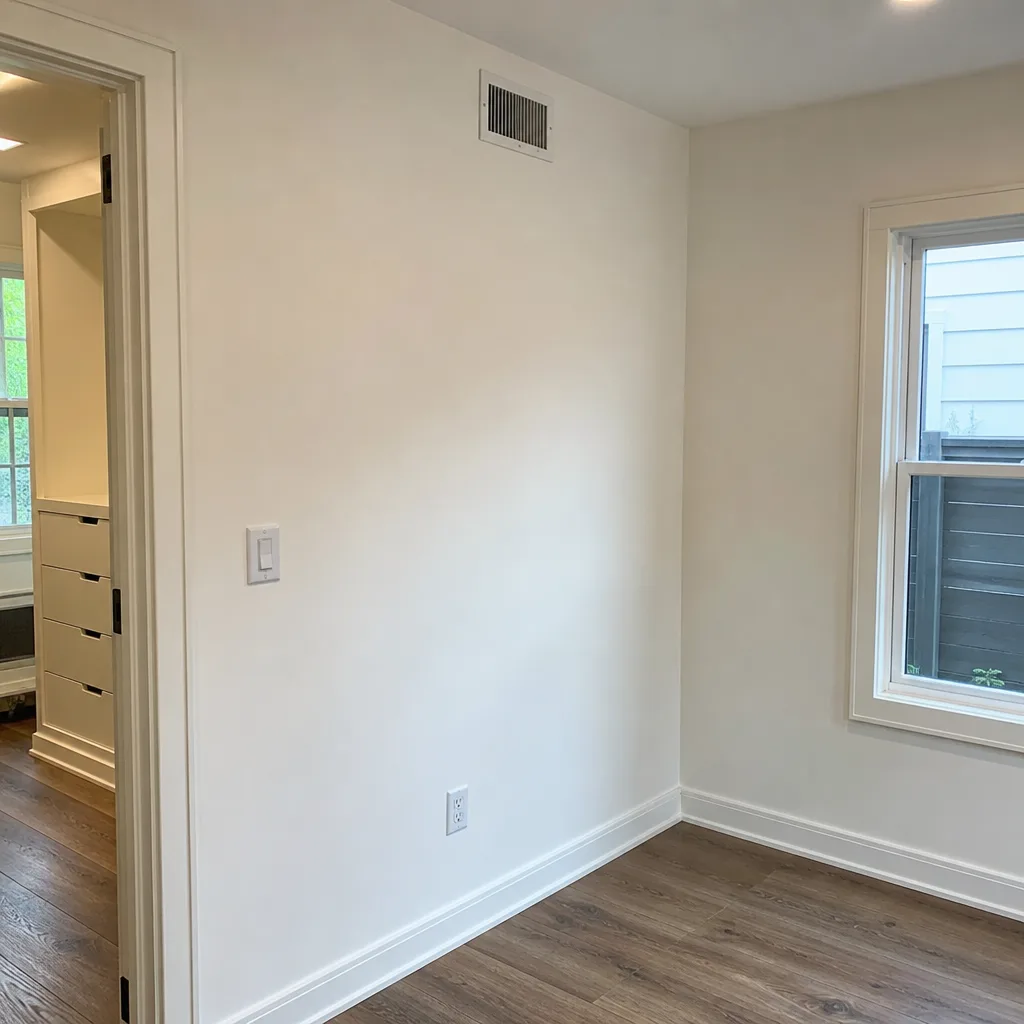 After
After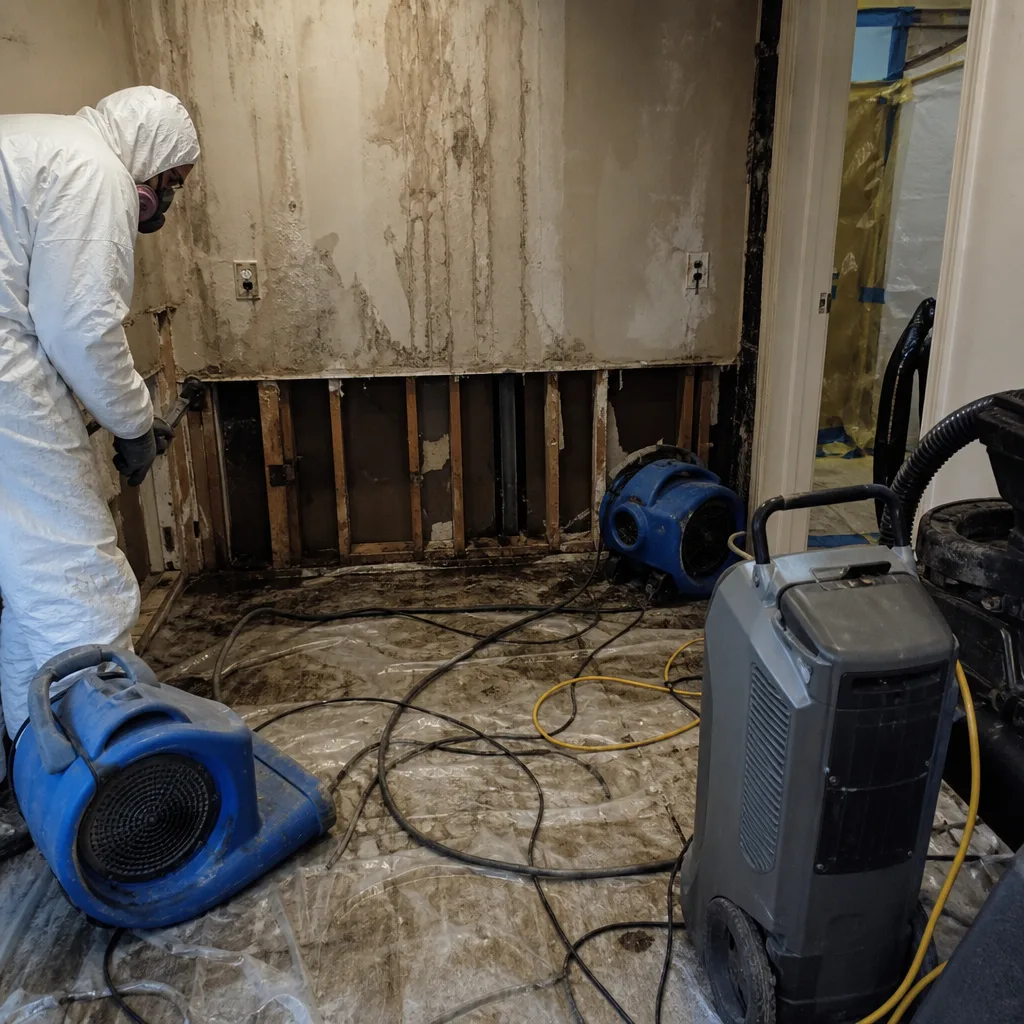 Before
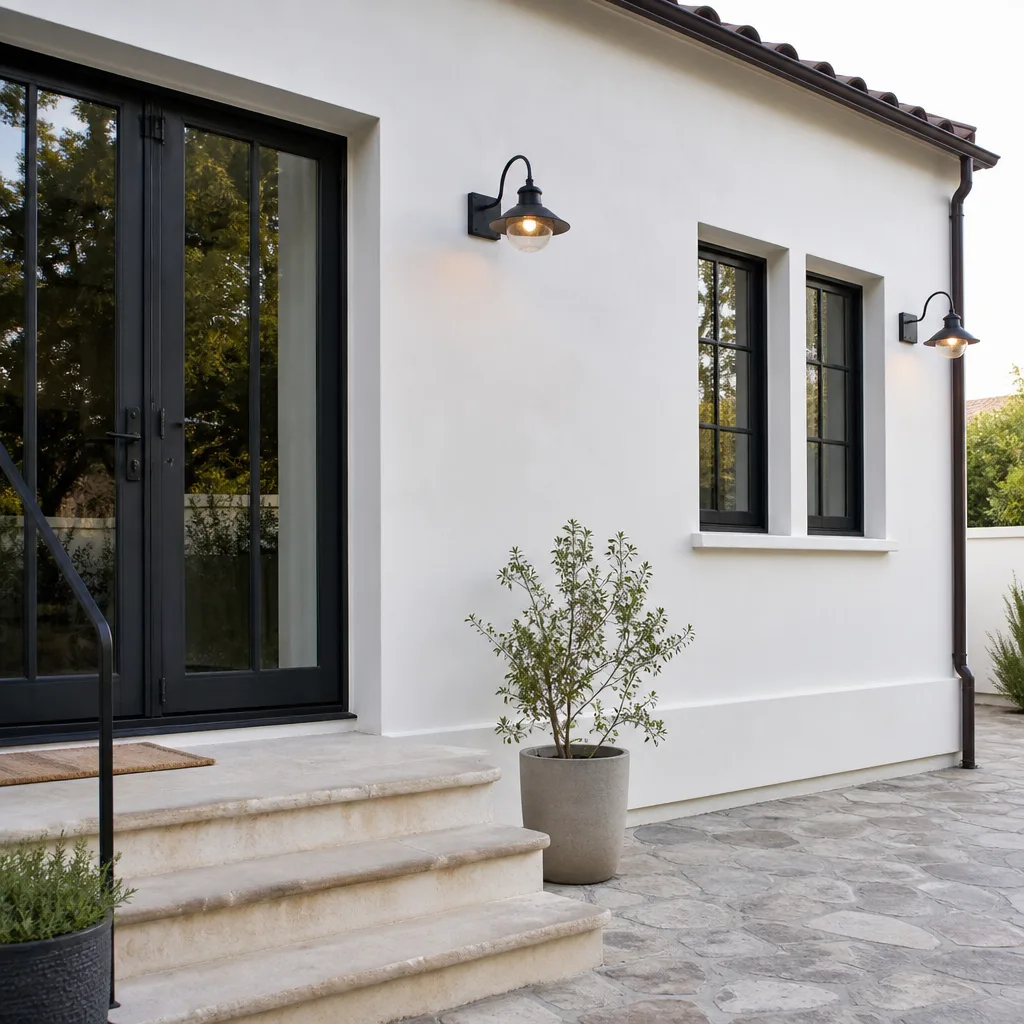 After
After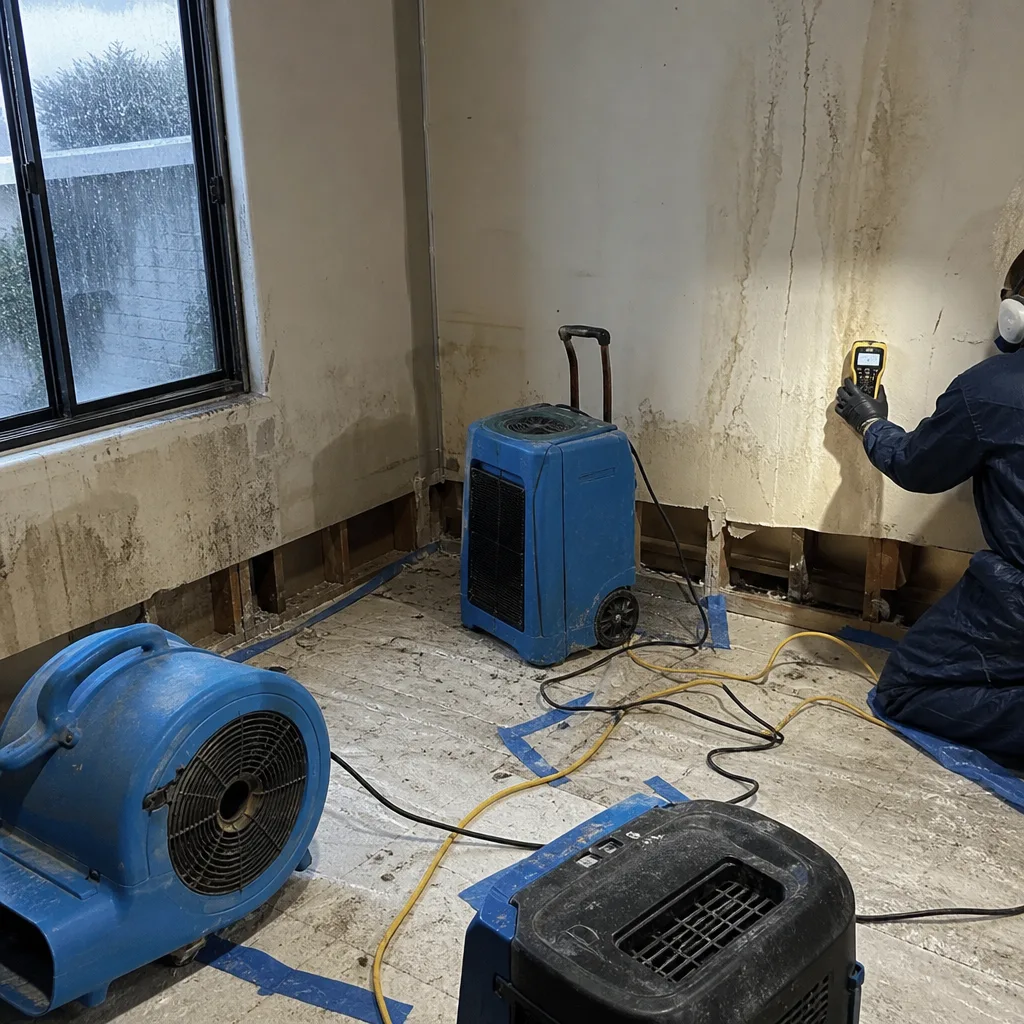 Before
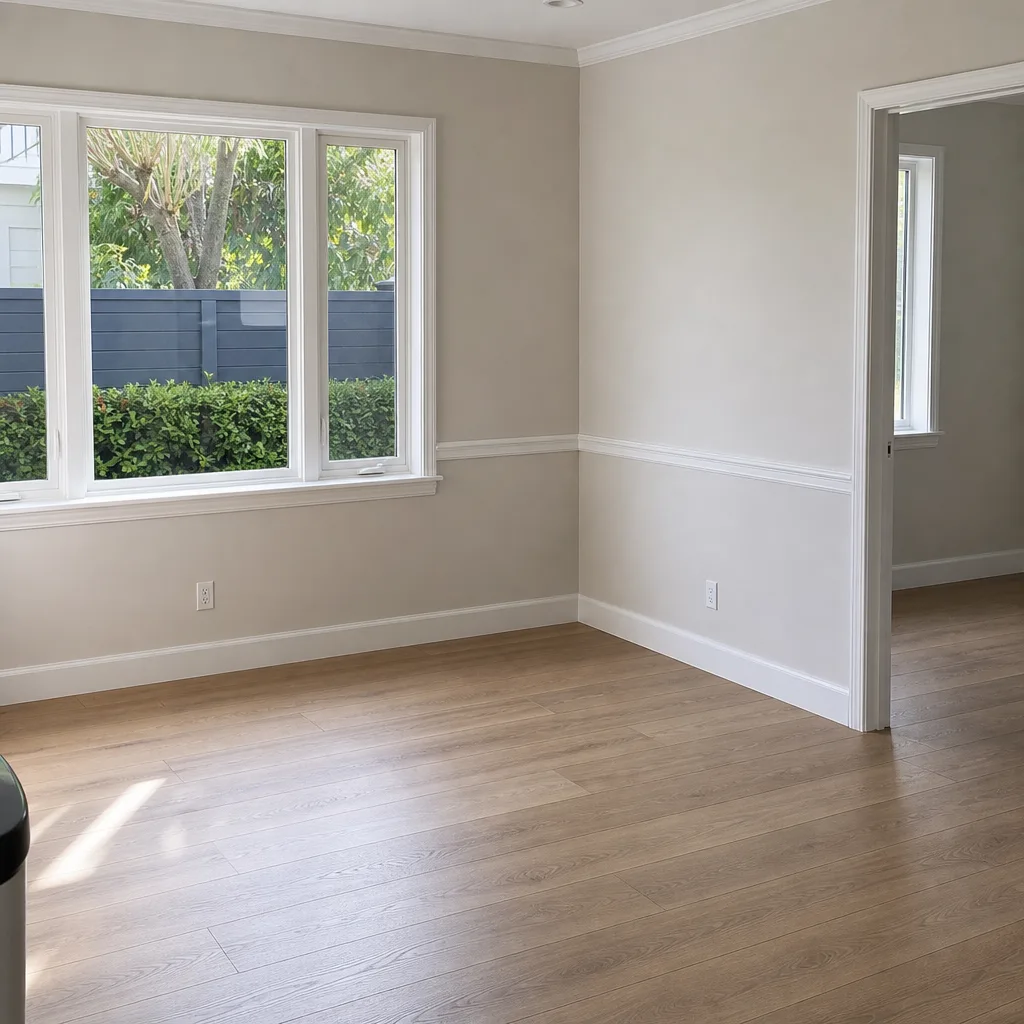 After
AfterThe Complete Guide to Damage Restoration in Santa Monica
Most Santa Monica homeowners don’t lose money at the damage site. They lose it in the paperwork gap between what a contractor documents and what an insurer will actually pay. A restoration job with no daily moisture logs is, from your insurer’s perspective, a job with no proof it was done, and Santa Monica’s coastal humidity means a single undocumented wet reading can turn a paid claim into a disputed one. In this guide and our more guides & resources, we’ll walk through every phase of restoration through the lens of what a claims adjuster needs to see, not what a contractor needs to sell. You’ll learn how marine layer moisture affects drying science, why pre-war bungalows and newer condos need different documentation, and the exact checklist that separates clean claim approvals from supplement fights.
Quick Answer
Damage restoration in Santa Monica is the process of returning a property to pre-loss condition after water, fire, mold, storm, or biohazard damage, documented with daily moisture readings, photo records, and written scopes that satisfy insurer review. Because Santa Monica’s marine layer creates humidity readings 15-25% higher than inland California baselines, proper restoration requires psychrometric monitoring calibrated to coastal conditions, not standard inland drying targets. A fully documented job with IICRC-compliant logs typically costs $3,500-$12,000 for water damage mitigation and $8,000-$35,000 for reconstruction, with most Santa Monica insurers approving claims that include timestamped photo records and daily drying logs without requiring supplements. For detailed pricing factors, see our Damage Restoration Cost Breakdown: The Santa Monica Homeowner’s Reference for 2026.
Table of Contents
- What Is Damage Restoration, Really?
- The Santa Monica Climate Challenge: Why Coastal Drying Is Different
- The Documentation Chain That Gets Claims Paid
- Pre-War Bungalows vs. New Condos: Different Scopes, Different Permits
- What The Haven Standard Covers at Each Restoration Phase
- The Single Most Common Reason Santa Monica Restoration Invoices Get Denied
- Costs, Timelines, and What to Expect
- Common Mistakes to Avoid
- When to Call a Professional
- Frequently Asked Questions
 Before
 After
AfterWhat Is Damage Restoration, Really?
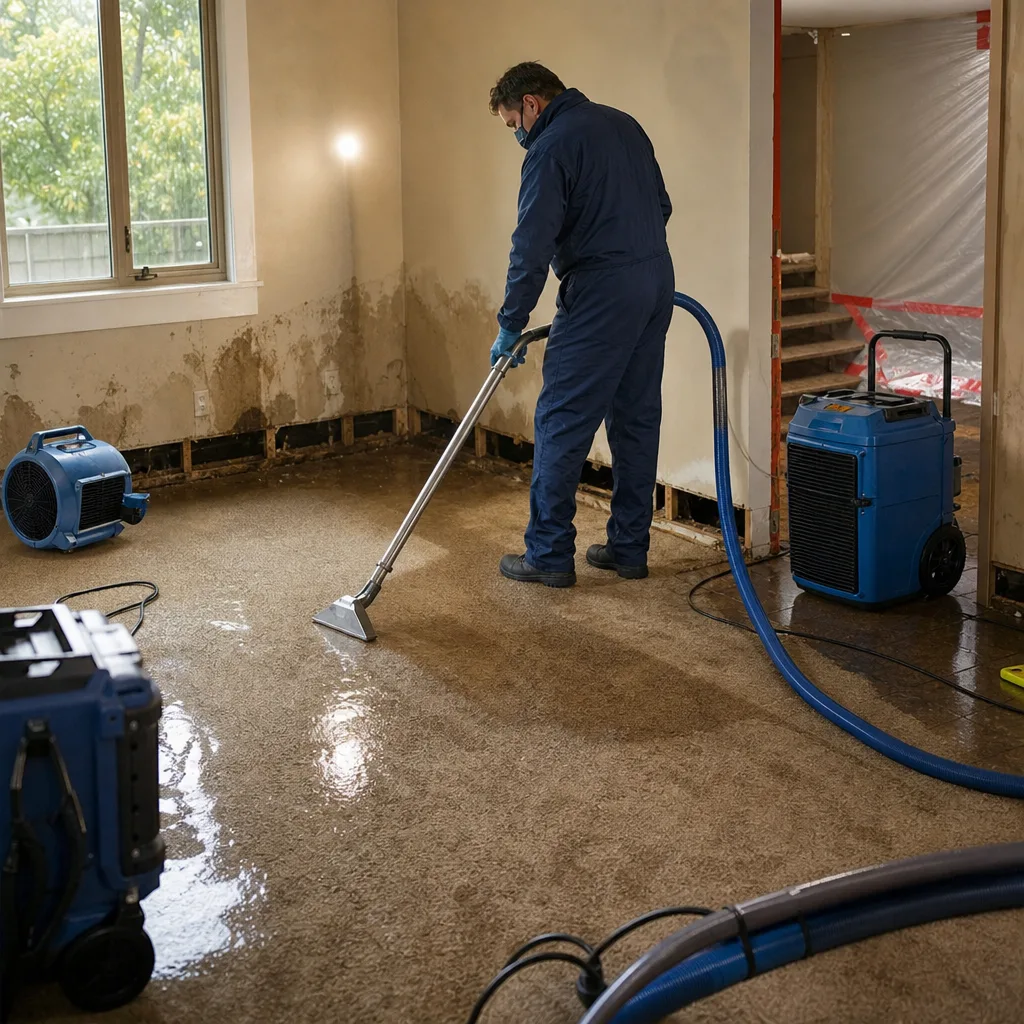
Damage restoration is not cleaning. It is not repair. It is the controlled process of returning a structure and its contents to pre-loss condition through documented mitigation, remediation, and reconstruction, with each phase producing evidence that an insurer can verify.
At DryMark Restoration Santa Monica home, we break restoration into five distinct phases, each with its own documentation requirements:
- Emergency Mitigation: Stopping active damage. For water, this means extraction and establishing a drying perimeter. For fire, it means board-up and soot containment. Every action is photo-timestamped.
- Assessment & Scope: Measuring what exists. Moisture readings, material classifications, affected square footage, and a written price before any work begins. Haven Standard, Clause 1.
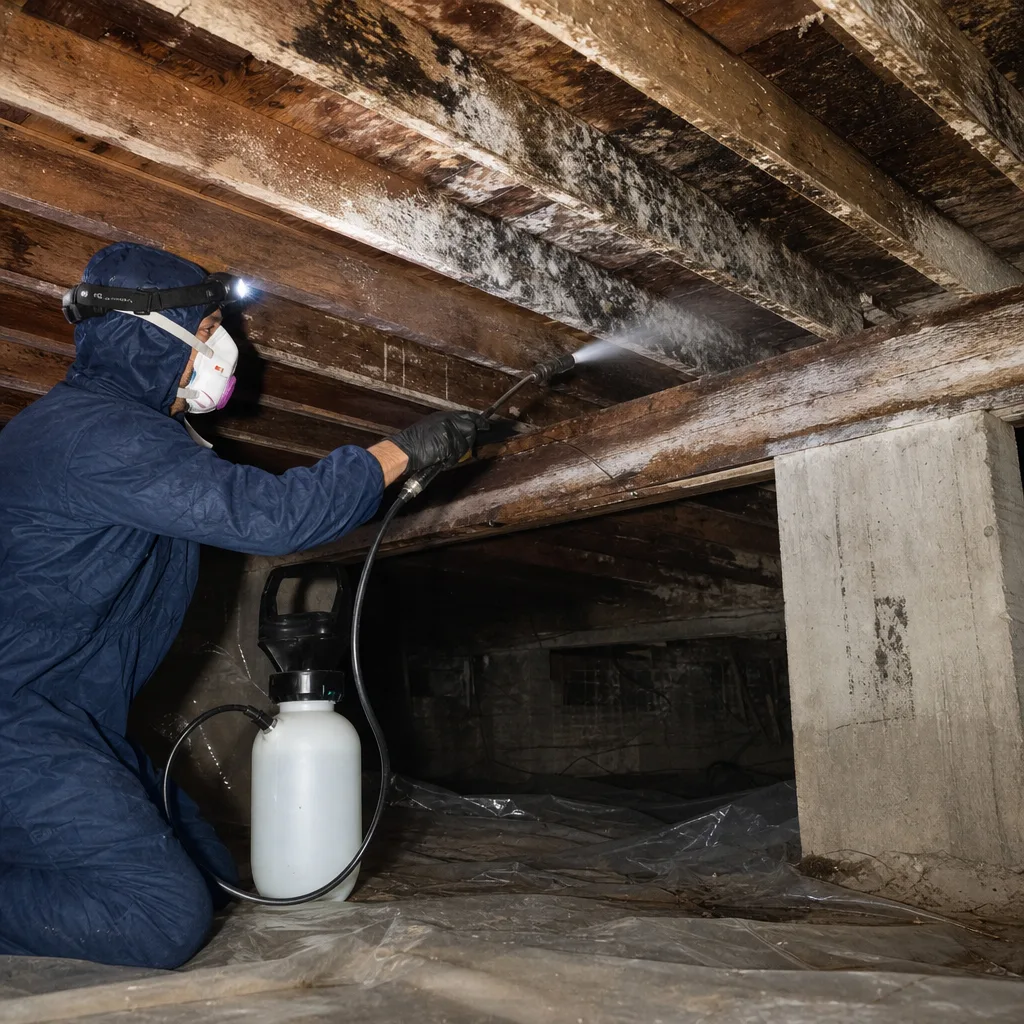
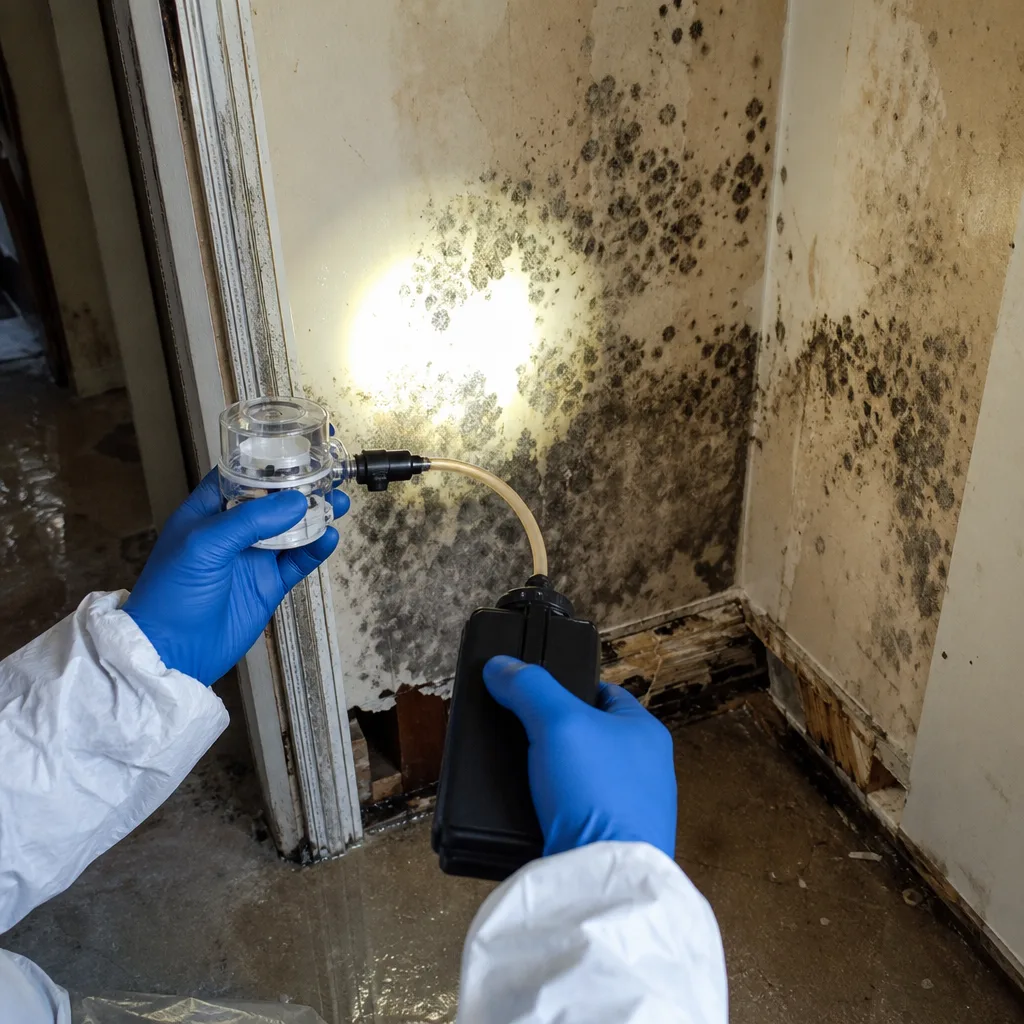
- Remediation: Removing damaged material and eliminating contamination. Mold abatement, sewage sanitization, smoke-impacted drywall removal. Air quality tests and clearance documentation.
- Structural Drying / Stabilization: Returning materials to equilibrium moisture content. Daily psychrometric logs showing temperature, relative humidity, and specific humidity. Equipment from XPOWER, B-Air, and Injectidry systems monitored to IICRC standards.
- Reconstruction: Rebuilding to pre-loss condition. Permitted work, inspected completions, final photo record matching initial damage photos.
Each phase produces a deliverable: a written scope, a daily log, a photo record, or a signed completion certificate. Without these, you have a contractor’s word against an adjuster’s checklist. In our experience since 2011, the word loses.
We’ve restored over 12,000 homes, and the ones that paid out cleanly shared one trait: the homeowner could produce a document for every claim the adjuster questioned. The ones that stalled typically had a handshake agreement and a single “before” photo.
The Santa Monica Climate Challenge: Why Coastal Drying Is Different
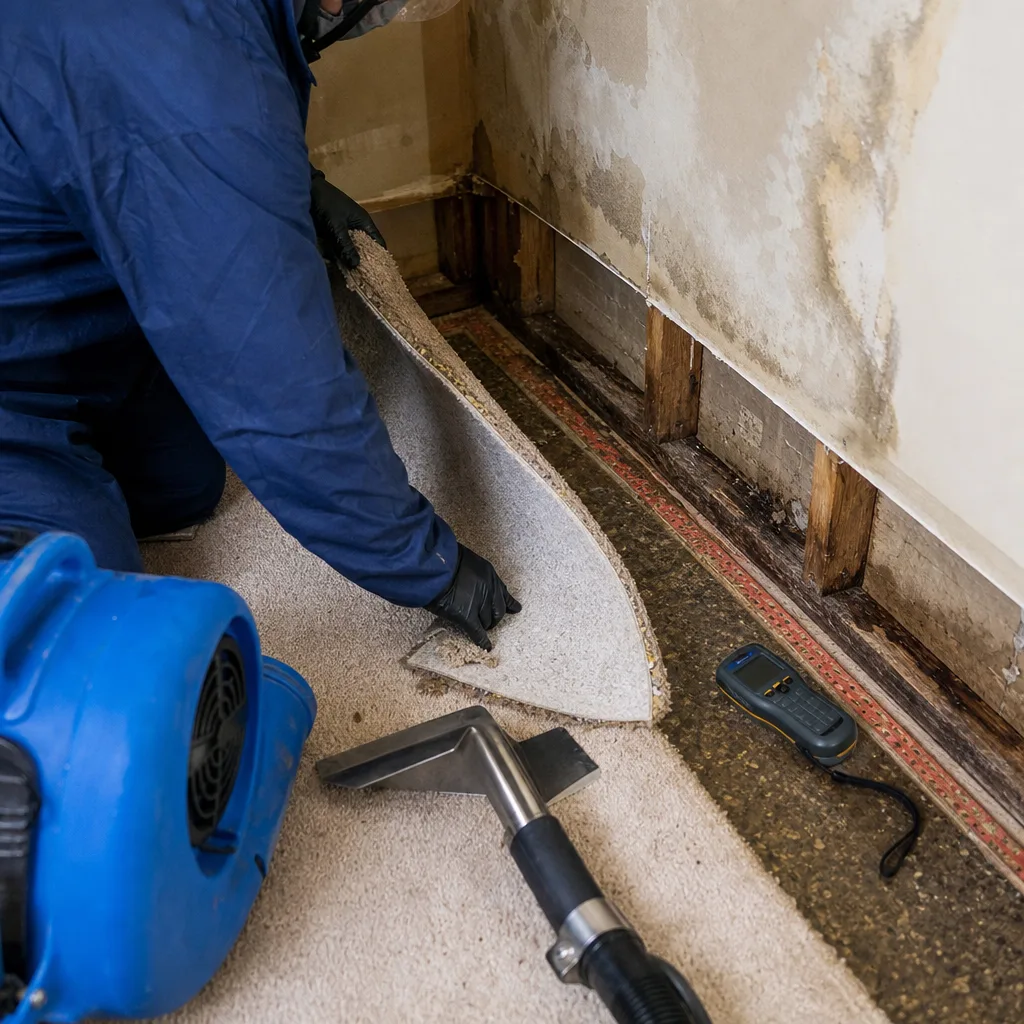
Santa Monica sits at the edge of a marine layer that rolls in most mornings between May and October, pushing relative humidity to 75-85% by 9 AM before burning off to 55-65% by afternoon. This diurnal swing creates a drying environment fundamentally different from Pasadena, the San Fernando Valley, or Riverside.
Standard IICRC drying targets assume an ambient relative humidity of 30-50% during active drying. In Santa Monica, especially in ground-floor units north of Montana Avenue and in the canyon-adjacent neighborhoods near Rustic Canyon and Pacific Palisades borders, we regularly see ambient readings of 65-70% even with dehumidification running. A technician who sets equipment for inland conditions and walks away will produce daily logs that show progress on paper while materials remain wet in reality.
Here’s what that means in practice:
- Vapor pressure differential: This is the engine that drives drying, the difference between the moisture in wet materials and the moisture in the air. In Santa Monica’s marine layer, the air starts closer to saturation, so the differential is smaller. Drying takes longer, and the documentation must show why. We log outdoor relative humidity alongside indoor readings to demonstrate that extended drying time was environmentally necessary, not equipment insufficient.
- Secondary moisture sources: Salt air corrodes HVAC condensate lines and window weep holes in ways that inland properties don’t experience. We’ve documented cases in Ocean Park and Sunset Park where “mystery” moisture readings traced to a corroded condensate drain that appeared intact visually. The photo record caught the corrosion; the moisture meter confirmed the source.
- Material equilibrium: Wood framing in Santa Monica stabilizes at a higher moisture content than identical framing in Burbank. A 12% reading might indicate dryness inland; here, it can still support mold growth in enclosed wall cavities. Our drying logs specify target moisture content by material and location, not generic percentages.
When we deploy Phoenix dehumidifiers and Injectidry cavity drying systems in Santa Monica properties, we adjust our psychrometric calculations for coastal baselines. The daily log shows the adjustment. The adjuster sees the reasoning. The claim moves.
The Documentation Chain That Gets Claims Paid
Every restoration company in Santa Monica will tell you they document their work. Few can produce the complete chain that satisfies a post-loss review. Here is what the chain actually looks like, and what each link proves to an adjuster.
Link 1: Initial Psychrometric Readings
Before any equipment runs, we record temperature, relative humidity, specific humidity, and dew point in the affected area, an unaffected control area, and outdoors. This establishes the environmental baseline and proves that our drying targets account for actual conditions, not assumptions. In a Santa Monica condo near the pier, we once documented an outdoor dew point of 62°F at 7 AM, explaining why indoor drying to 50% relative humidity required 36 hours longer than the same square footage in Culver City.
Link 2: Daily Drying Logs
Every 24 hours, we record the same readings at the same points, plus equipment operating hours and any adjustments. These logs are submitted with the invoice. An adjuster can trace the drying curve and verify that equipment was actually running. A gap in the log is a gap in proof. A flat curve with no explanation is a red flag. Our logs include technician initials and timestamps.
Link 3: Photo Timestamps
We photograph every room on every visit: wide shots establishing location, detail shots showing material condition, and meter readings showing numerical values. Photos are GPS-tagged and time-stamped automatically. In Santa Monica’s dense rental market, where tenants turnover frequently, these photos also protect property owners from disputes about pre-existing conditions.
Link 4: Written Scope of Work
Haven Standard, Clause 1: a written price before any work begins. The scope lists each line item with quantity, unit price, and total. No “allowances.” No “TBD.” The homeowner signs before work starts. The adjuster compares it to the final invoice. If they match, approval is routine. If they don’t, the signed scope is the reference point.
Link 5: Material Classification & Disposal Records
Fire and biohazard jobs require documentation of what was removed and how it was disposed. In Santa Monica, where Caltrans and SCAQMD regulations govern certain waste streams, disposal manifests with generator numbers are essential. We include them standard.
Link 6: Clearance Documentation
Mold remediation ends with an independent air quality sample, not our assessment. Fire restoration ends with a certificate of deodorization. Water mitigation ends with verified equilibrium moisture content. Each certificate is dated, signed, and referenced in the final invoice.
A break in any link gives an adjuster reason to delay. A complete chain gives them reason to pay.
Pre-War Bungalows vs. New Condos: Different Scopes, Different Permits
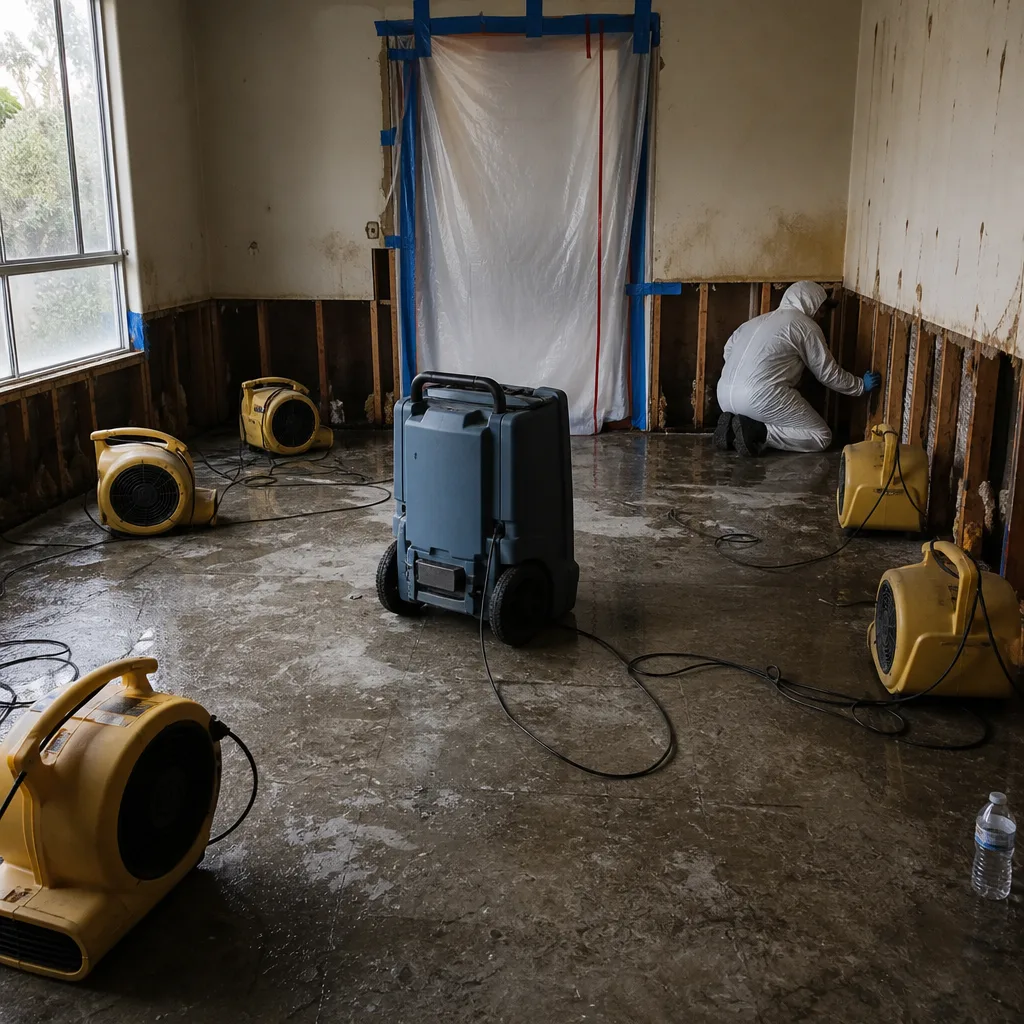
Santa Monica’s building stock spans roughly a century, and the restoration documentation required differs sharply by era. Understanding these differences before work starts prevents scope revisions that delay claims.
Pre-War Bungalows (1920s-1940s)
These properties, concentrated north of Wilshire and in the Montana Avenue corridor, present specific challenges:
- Plaster and lath construction: Unlike modern drywall, plaster doesn’t wick moisture uniformly. A moisture meter reading of 15% at one point might mask 25% saturation two inches away. Our documentation includes multiple readings per wall section and explains the material’s non-homogeneous behavior.
- Knob-and-tube wiring remnants: Even when abandoned, these systems create abatement complexities if disturbed by water or fire damage. Santa Monica requires licensed electrical evaluation before wall closure if wiring is exposed. We document the electrician’s clearance in our photo record.
- Asbestos-containing materials: Pre-1980 insulation, floor tiles, and joint compound require testing before disturbance. In Santa Monica, the Building & Safety Division requires asbestos survey documentation for permits involving demolition in pre-1979 structures. We coordinate testing and include results in the job file.
- Foundation ventilation: Many bungalows have crawl spaces with original venting that doesn’t meet current code. Moisture trapped in these spaces after water damage requires specific drying protocols and often, post-mitigation ventilation upgrades that must be permitted separately from the restoration scope.
Mid-Century and Newer Condos (1960s-Present)
Santa Monica’s condo inventory, from Ocean Avenue towers to newer construction near the Expo Line, has different documentation needs:
- HOA coordination: Water damage in a multi-unit building requires documentation of common area versus unit-specific damage. We’ve seen claims delayed six months while insurers dispute whether a pipe chase is HOA or owner responsibility. Our initial scope identifies the boundary and photographs both sides.
- Fire-rated assemblies: Condo renovations must restore fire separation between units. A simple drywall patch after water damage may require Type X fire-rated board with taped and mudded seams inspected by the city. Our scopes specify the rating and include inspection sign-off.
- Balcony waterproofing: Post-2015 California balcony legislation (SB 721, SB 326) means any balcony damage triggering inspection must be documented for future reserve studies. We provide photo records formatted for HOA engineer review.
The permit path differs too. Pre-war work often triggers historical review if exterior-visible. Condo work requires HOA architectural committee approval. We research these requirements-along with Damage Restoration Permits, Codes & Inspections in CA: What You Need to Know-before writing the scope so the price we quote is the price the job costs.
What The Haven Standard Covers at Each Restoration Phase
The Haven Standard is not a marketing document. It is a checklist that maps to the criteria adjusters use when reviewing restoration invoices. Founded in 2011 by a former claims adjuster, Back to Dry built this standard around the documentation gap that costs homeowners their claims. Here’s how it applies phase by phase.
Emergency Response: Clause 3
Live person answers every call, 24 hours a day, 7 days a week. No voicemail trees. The person who answers documents the call time, the reported damage type, and the dispatch commitment. This timestamp becomes the first entry in the job file. Adjusters verify response time against policy requirements; our call log is discoverable evidence.
Assessment: Clause 1
Written price before any work starts. Every time. No exceptions. The scope lists each line item with quantity, unit, and price. The homeowner signs. The crew cannot add items without a signed change order. This prevents the most common dispute: “I never agreed to that.”
Documentation: Clause 4
Photo record on every visit. Included standard, never an upsell. Our technicians carry tablets with automatic GPS and timestamp. Photos upload to the job file before they leave the property. The homeowner receives a link. The adjuster receives access on request.
Personnel: Clause 2
Background-checked, uniformed technicians. Named, licensed, insured. License number documented on the work order. In Santa Monica, where many homeowners are not present during restoration (second homes, rental properties, travel schedules), knowing who entered your property and when is not optional.
Equipment: Clause 5
Professional-grade drying systems from Dri-Eaz, Phoenix, XPOWER, B-Air, and Injectidry. Equipment is logged by serial number, placed according to psychrometric calculation, and monitored daily. The drying log shows equipment model, placement date, and removal date. An adjuster can cross-reference rental records.
Completion: Clause 6
365-Day Done Right Promise. If it’s not done right, we make it right. A signed guarantee, not a verbal assurance. In Santa Monica’s coastal environment, where materials can behave unpredictably, this matters. We’ve returned at month eight to address efflorescence that traced to a missed vapor barrier detail. No charge. The original scope and photo record showed where the detail was missed; we owned it.
Dispute Resolution: Clause 7
Free Second Opinion on any competitor’s written estimate. Bring another company’s scope and we’ll review it at no charge. Often we find missing items that would have generated supplements later, or inflated line items that would have triggered adjuster scrutiny. Either way, the homeowner has better information.
Each clause produces a document. The documents form a file. The file gets the claim paid.
The Single Most Common Reason Santa Monica Restoration Invoices Get Denied
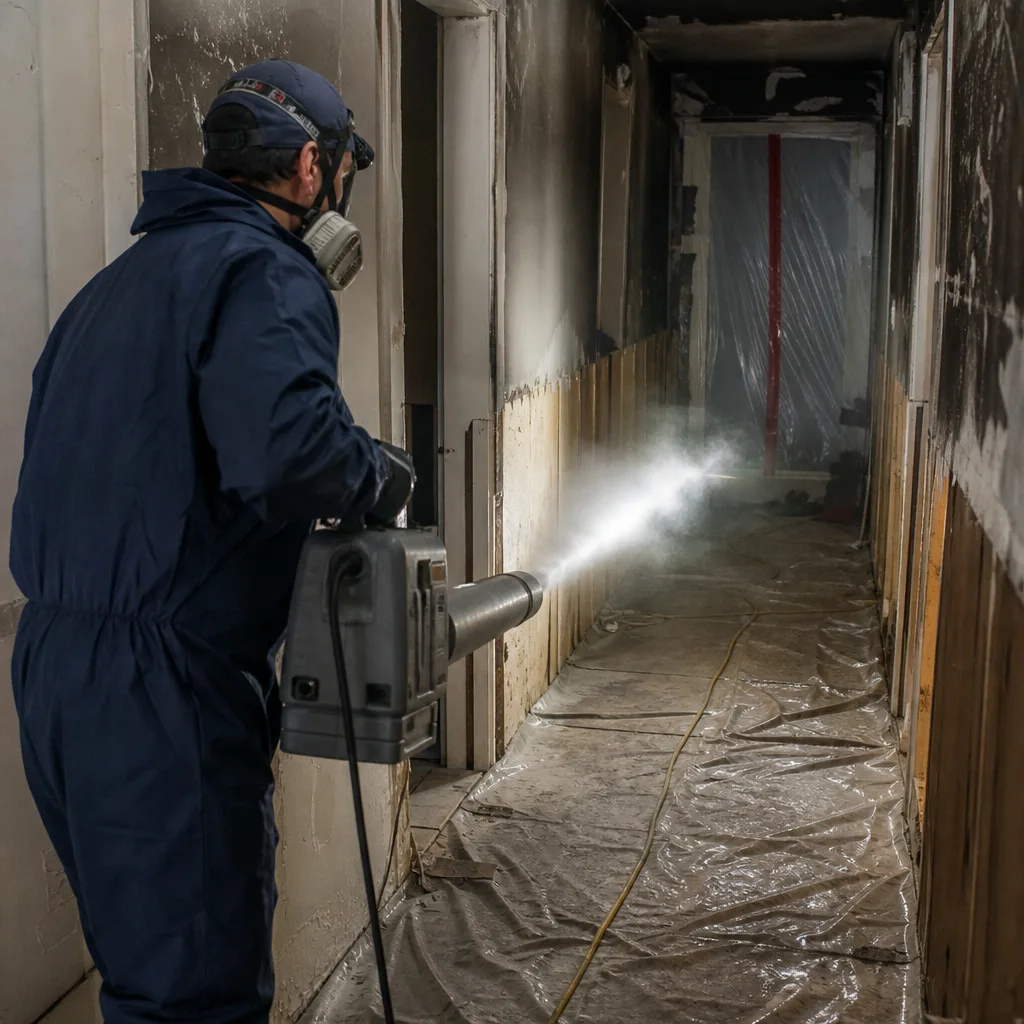
It is not fraud. It is not overbilling. It is the gap between what was done and what can be proved, specifically in the transition from mitigation to reconstruction.
Here is the scenario we see repeatedly. A water damage mitigation produces clean drying logs and gets approved. The same contractor then submits a reconstruction invoice for drywall, paint, and flooring. The adjuster denies 40% of the reconstruction, citing “insufficient documentation of pre-loss condition.”
The problem: the mitigation photos show wet drywall being removed. They do not show what that drywall looked like before it got wet. Was it smooth finish or textured? Was the paint flat or semi-gloss? Was the flooring original oak or a 2015 laminate replacement? Without documentation of pre-loss condition, the adjuster defaults to the cheapest like-kind replacement. The homeowner gets basic flat paint when they had custom color-matched eggshell. They get standard oak when they had quarter-sawn white oak.
Specific example from a 2023 Santa Monica job: A homeowner on 14th Street near Montana had water damage from a failed washing machine hose. Mitigation was documented thoroughly, approved at $4,200. Reconstruction included $8,400 for drywall, paint, and baseboard in a living room with Venetian plaster finish and custom stained poplar baseboard. The adjuster allowed $3,800 for standard drywall and painted MDF baseboard. The difference was $4,600.
The contractor had no pre-loss photos of the plaster finish. The homeowner had no renovation records from 2019. The dispute took four months. Final resolution: $2,900 additional allowance based on comparable properties in the neighborhood, still $1,700 short of actual replacement cost.
The fix is simple and costs nothing: photograph pre-loss condition before beginning mitigation. We do this on every job. Wide shots of each room. Detail shots of finishes. Close-ups of material transitions. These photos take ten minutes and save thousands in disputes. They are the single highest-ROI documentation step in restoration, and most contractors skip them.
Costs, Timelines, and What to Expect
Restoration costs in Santa Monica reflect coastal labor rates, specific material requirements, and the documentation intensity that separates payable claims from disputed ones. Below are ranges we see for typical jobs, with the caveat that every job is scoped in writing before work begins under Haven Standard, Clause 1.
Water Damage Mitigation
- Category 1 (clean water), limited area: $3,500-$6,500
- Category 2 (gray water), multiple rooms: $6,500-$12,000
- Category 3 (black water / sewage): $10,000-$18,000
- Daily equipment rental during active drying: $150-$400/day
Mold Remediation
- Localized area (<10 sq ft): $1,500-$3,500
- Moderate contamination (10-100 sq ft): $3,500-$8,500
- Extensive / HVAC-integrated: $8,500-$25,000
- Independent air quality clearance: $400-$800
Fire & Smoke Damage Restoration
- Light smoke, contents cleaning: $4,500-$9,000
- Moderate structural damage: $12,000-$35,000
- Major reconstruction required: $35,000-$150,000+
Reconstruction (Post-Mitigation)
- Drywall replacement, standard finish: $3.50-$6.50/sq ft
- Painting, standard: $2.50-$4.50/sq ft
- Flooring, mid-grade replacement: $8-$18/sq ft
- Custom finishes, historic match: $15-$40/sq ft
Timelines
Emergency mitigation begins same-day for active water or fire damage. Drying typically requires 3-5 days in Santa Monica’s coastal conditions, compared to 2-4 days inland. Mold remediation timelines depend on containment and clearance testing, usually 3-7 days. Reconstruction is scheduled, not dispatched; it requires permit research, material ordering, and scope finalization. A written timeline is provided with the reconstruction scope.
Insurance direct billing is available; we coordinate with adjusters and provide documentation packages formatted for their review systems. Photo documentation and drying logs are included in all mitigation work, never billed separately.
Common Mistakes to Avoid
- Starting mitigation before photographing pre-loss condition. Without photos of finishes, fixtures, and material quality, reconstruction defaults to the cheapest like-kind replacement. We photograph before touching anything.
- Accepting a verbal estimate for emergency work. Haven Standard, Clause 1 exists because verbal estimates become disputed estimates. A written price protects both parties. If a contractor won’t put it in writing before starting, that is information.
- Ignoring marine layer effects on drying timelines. A contractor who promises inland drying speeds in Santa Monica is either inexperienced or planning to bill for equipment that runs longer than necessary. Ask how they adjust psychrometric targets for coastal humidity.
- Failing to verify permit requirements for pre-war properties. Asbestos testing and historical review can add days to a project. A scope that doesn’t account for these steps will generate change orders or code violations.
- Not requesting daily drying logs during active mitigation. These are your proof of proper drying. A contractor who won’t share them daily may not be keeping them. Our logs are accessible to homeowners in real time.
- Skipping the second opinion on a competitor’s estimate. Our Free Second Opinion has identified missing moisture barrier specifications, inadequate equipment counts, and scope items that would have generated supplements. It costs nothing and often saves thousands.
- Assuming reconstruction is covered because mitigation was approved. These are separate claim segments with separate documentation requirements. Pre-loss photos and material specifications are essential for reconstruction approval.
When to Call a Professional
Call immediately when water is actively flowing, when you smell smoke or see soot, when mold covers more than a few square inches, or when sewage is present. Not sure whether your situation qualifies? Review Damage Restoration Warning Signs: A Santa Monica Homeowner’s Reference Guide. These situations worsen structurally and become more expensive within hours, not days. For water damage, every hour of delay can extend drying time by a day in Santa Monica’s humid coastal environment.
Also call when an insurer has already sent an adjuster and you need documentation that matches their review criteria. The gap between what a contractor does and what an adjuster can approve is where claims stall. We build documentation for that gap from the first visit.
DryMark Restoration Santa Monica offers free estimates in Santa Monica. Call (213) 816-0810. A live person answers 24 hours a day, 7 days a week. We’ll provide a written scope before any work begins, documented to IICRC standards, with a photo record on every visit and the 365-Day Done Right Promise on completion.
Frequently Asked Questions
Water damage mitigation typically runs $3,500-$12,000 depending on contamination category and affected area, while reconstruction after mitigation ranges from $8,000-$35,000 for typical residential jobs. Exact costs depend on material finishes, permit requirements, and whether the property is a pre-war bungalow with potential asbestos concerns or newer construction. Call (213) 816-0810 for a written estimate with line-item pricing, free of charge.
Most Santa Monica homeowner policies cover sudden and accidental damage from water, fire, and storm events, but coverage depends on documentation quality. Claims with complete photo records, daily drying logs, and written scopes are approved at higher rates and faster than those with incomplete files. We document to insurer review standards and coordinate directly with adjusters. Call (213) 816-0810 to review your specific policy situation.
For active emergencies, we dispatch same-day with a live person answering every call, 24 hours a day, 7 days a week. Response time to Santa Monica properties from our dispatch point is typically under 90 minutes during normal traffic. Reconstruction work is scheduled, not emergency-dispatched, and requires permit research and material ordering first. Call (213) 816-0810 for current emergency availability.
Water damage beyond a few square feet requires professional drying because moisture hides in wall cavities and subflooring where consumer equipment cannot reach. Mold contamination beyond 10 square feet should not be disturbed without containment, as spores spread through HVAC systems. Fire and smoke damage requires specialized cleaning agents and ozone treatment. We offer a Free Second Opinion on any competitor’s estimate if you’re unsure about scope.
We coordinate directly with adjusters, providing documentation packages formatted for their review systems: photo records with timestamps, daily drying logs, written scopes with line-item pricing, and disposal manifests. Our founder was a claims adjuster; we know what adjusters need to see to approve without supplements. You remain the policyholder and final decision-maker on all work.
Santa Monica’s marine layer maintains higher ambient humidity than inland areas, which reduces vapor pressure differential and extends drying time by 20-40% compared to Valley or Inland Empire baselines. Our psychrometric calculations account for this, and our daily logs document the environmental conditions that justify extended equipment runtime. Without this documentation, adjusters may question why drying took longer than standard inland timelines.
The Bottom Line
Damage restoration in Santa Monica succeeds or fails in the documentation, not the demolition. The marine layer, the mix of building eras, and the density of insurance review all create conditions where a well-documented job pays cleanly and a poorly documented job disputes for months. The Haven Standard was built from an adjuster’s perspective to close that gap: written price before work begins, photo record on every visit, daily drying logs, and a 365-Day Done Right Promise backed by signed guarantee. Whether you’re facing water damage in a 1920s bungalow north of Montana or smoke damage in a condo overlooking the Pacific, the principle is identical: prove what you did, prove it was necessary, and prove it was done right.
Written by Alicia Brennan, Owner at DryMark Restoration Santa Monica, serving Santa Monica since 2011.